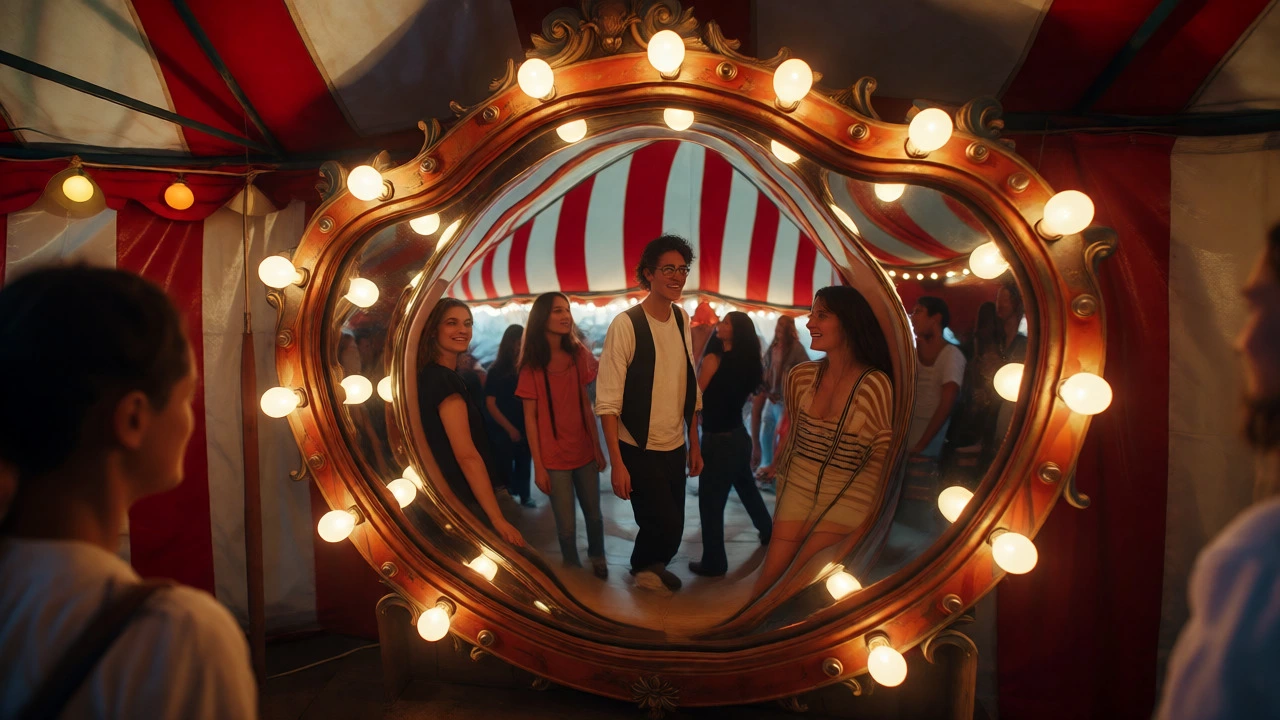
Distorted Mirror Simulator
A standard flat mirror reflects light at the same angle it hits, providing a true reflection with no distortion.
Common Use: Bathrooms, dressing rooms.
You walk into a carnival tent or a quirky antique shop, look into a glass surface, and suddenly you are ten feet tall, or completely squashed, or your head looks like a balloon. You laugh, but then a question hits you: what are crazy mirrors called? The short answer is that most people call them funhouse mirrors, but the technical term depends entirely on how the glass is shaped. These aren't just random pieces of warped glass; they are precise optical tools designed to trick your brain by bending light in specific ways.
If you've ever tried to buy one for your hallway or a themed party, you might have gotten confused by terms like "distorted," "warped," or "anamorphic." This guide breaks down exactly what these mirrors are, why they make you look ridiculous, and which type you actually need depending on whether you want a funny photo op or a weird home decor piece.
The Official Names: Funhouse vs. Distorted
When someone asks about "crazy mirrors," they are usually referring to funhouse mirrors. This is the colloquial name for any mirror that intentionally distorts reflection. However, in optics and manufacturing, these fall under the broader category of distorted mirrors. There isn't one single scientific name because the distortion comes from different physical shapes.
Think of it this way: all funhouse mirrors are distorted mirrors, but not all distorted mirrors are funhouse mirrors. For example, a security mirror in a convenience store is a distorted mirror (specifically a convex one), but nobody calls it a funhouse mirror because its job is safety, not comedy. The term "crazy mirror" is purely descriptive slang used by the public. If you are shopping online, searching for "funhouse mirror" will get you the theatrical, exaggerated ones. Searching for "distorted wall art" might get you subtler, artistic versions.
How They Work: Concave and Convex Magic
To understand why you look like a giant or a dwarf, you need to know the two main players in this game: concave mirrors and convex mirrors. Your standard bathroom mirror is flat (planar), reflecting light at the same angle it hits it. Warped mirrors change that angle.
A concave mirror curves inward, like the inside of a spoon. When you stand close to it, it magnifies your image. Stand too far back, and you flip upside down. In a funhouse setting, a concave section makes your body part look huge-think of a giant nose or massive legs. Conversely, a convex mirror bulges outward, like the back of a spoon. This scatters light, making everything appear smaller and farther away. That’s why a wide-angle view in a car side mirror makes objects look tiny. In a funhouse, a convex section shrinks your torso or head, creating that classic "tiny person" effect.
Most real-world "crazy" mirrors combine both. They aren't perfectly round bowls; they are wavy sheets of glass with alternating concave and convex curves. This mix creates the chaotic stretching and squeezing that defines the genre.
| Mirror Type | Shape Description | Visual Effect | Common Use Case |
|---|---|---|---|
| Flat (Planar) | Straight, no curve | True reflection, no distortion | Bathrooms, dressing rooms |
| Concave | Curves inward (like a cave) | Magnification (makes things bigger) | Makeup mirrors, telescopes, funhouse legs |
| Convex | Curves outward (bulging) | Minification (makes things smaller/wider) | Security mirrors, car side mirrors, funhouse heads |
| Compound/Wavy | Mixed curves in one sheet | Stretching, squashing, twisting | Carnivals, art installations, novelty decor |
Beyond the Carnival: Other Types of Distorted Glass
If you think "funhouse" is the only label, you're missing out on some fascinating variations. Depending on the context, these mirrors go by other names that hint at their purpose or design.
Anamorphic Mirrors
You might see these in modern art galleries or high-end home decor. Anamorphic mirrors use extreme curvature to distort an image so much that it becomes unrecognizable unless viewed from a specific angle or through a special lens. Unlike a carnival mirror where everyone sees a funny version of themselves, an anamorphic piece might look like a swirl of colors until you step to the exact right spot, revealing a clear portrait. These are less about comedy and more about perspective tricks.
Warp Mirrors
This is a common term in the antique market. A warp mirror is typically a vintage piece from the Victorian era or early 20th century. They were often made with slight imperfections in the glass casting process or intentional gentle waves. They don't turn you into a monster; they just add a subtle, dreamy ripple to your reflection. People collect these for their historical charm and the soft-focus aesthetic they provide.
Infinity Mirrors
While not always "crazy" in the comedic sense, infinity mirrors create a visual distortion of depth. By placing a mirror against a half-silvered mirror with lights in between, they create the illusion of a tunnel going on forever. This is a spatial distortion rather than a bodily one, but it definitely qualifies as a "mind-bending" mirror experience.
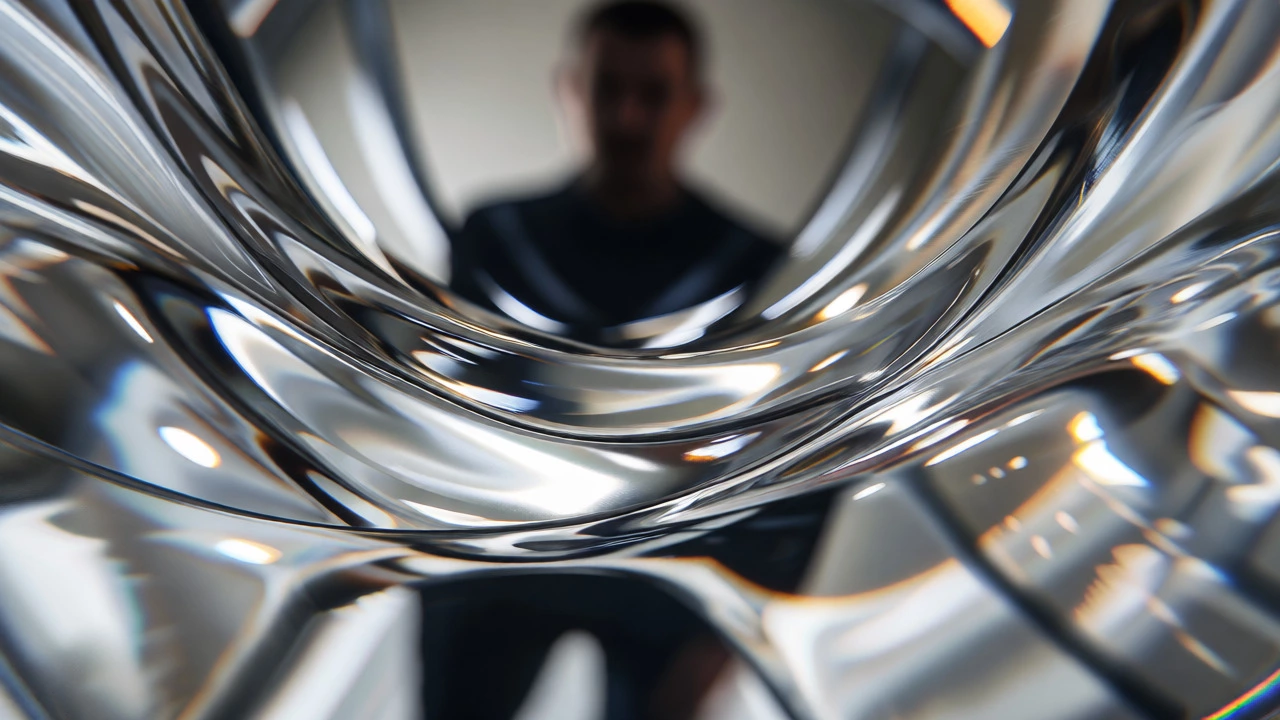
Why Do We Love Them? The Psychology of Distortion
Why do we pay good money to look bad? It’s not just about the laughs. Psychologists suggest that distorted mirrors help us detach from our self-image. When you see yourself stretched vertically, you momentarily stop worrying about your actual appearance. It’s a form of visual play. In a social setting, a funhouse mirror acts as an icebreaker. It forces shared laughter, lowering social barriers instantly.
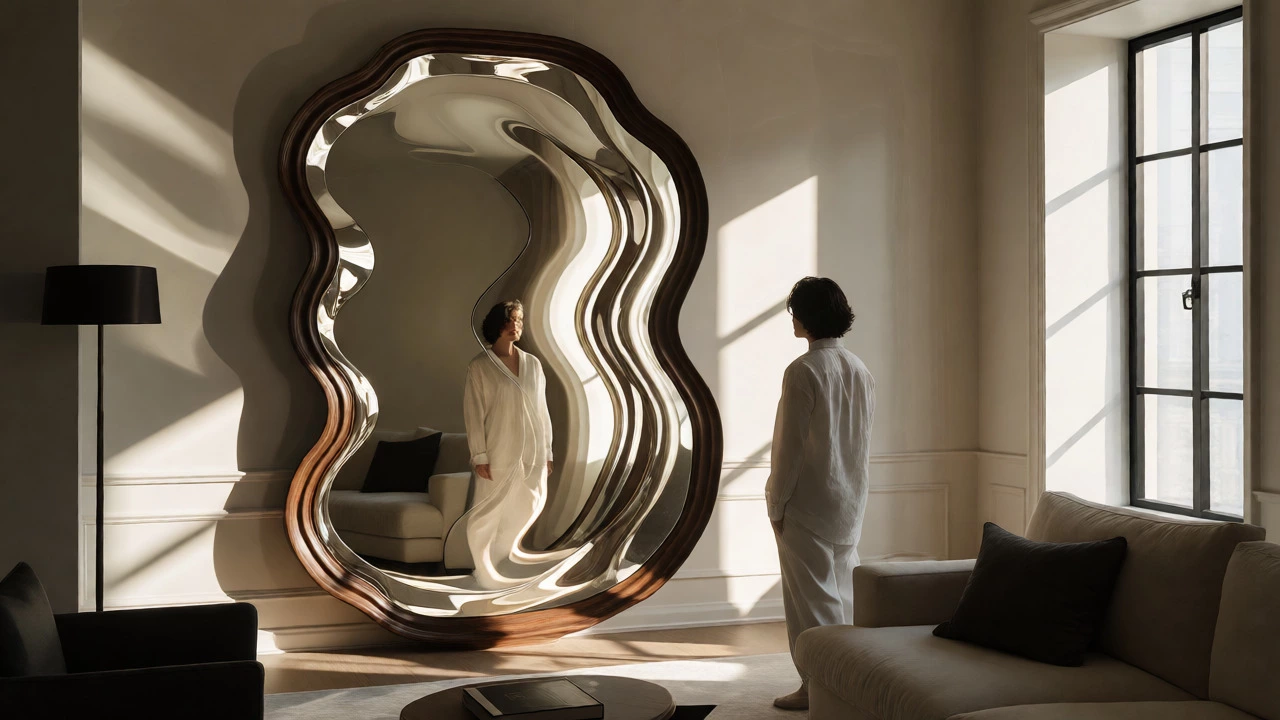
For homeowners, these mirrors serve a different function: conversation starters. A small, tastefully framed warp mirror in a living room adds character without dominating the space. It signals that the homeowner has a sense of humor and appreciates oddities. Just be careful with placement-you don’t want a highly distorted mirror in a narrow hallway where guests might bump into it while trying to check their hair.
Buying Guide: What to Look For
So, you’ve decided you want a "crazy mirror." Here is how to navigate the market without buying a dud.
- Check the Frame: Cheap funhouse mirrors often come in flimsy plastic frames that warp over time. Look for wood or metal frames that hold the glass tension evenly. If the frame bends, the distortion changes unpredictably.
- Glass vs. Acrylic: Real glass provides sharper reflections but is heavy and breakable. Acrylic (plastic) mirrors are lighter and safer for homes with kids, but lower-quality acrylic can yellow over time or show scratches easily. For a true "classic" feel, go for glass.
- Degree of Distortion: Test it before you buy if possible. Some mirrors stretch you by 50%, others by 200%. Decide if you want a subtle elongation or a full cartoon caricature. Online reviews often include photos, which are crucial here.
- Mounting Hardware: Because these mirrors are often heavier due to curved glass thickness, ensure the mounting kit is robust. Standard picture hooks may fail. Use anchors suitable for the weight.
Troubleshooting Common Issues
Even simple mirrors can cause headaches. Here are quick fixes for common problems.
The Reflection is Too Blurry: This is often a sign of low-quality silvering on the back of the glass. If it’s new, return it. If it’s vintage, try cleaning it with a vinegar-water solution (1:1 ratio). Avoid ammonia-based cleaners like Windex, as they can damage old silver coatings.
It Doesn't Look Funny Anymore: Sometimes, lighting kills the effect. Distorted mirrors rely on shadows and highlights to emphasize the warping. If you hang it in flat, even overhead lighting, the distortion might look muddy. Try adding a directional spotlight or a warm lamp nearby to accentuate the curves.
Seams are Visible: Many large funhouse mirrors are made by joining smaller panels. If you see a vertical line cutting through your face, it’s likely a seam. High-end pieces hide these with decorative molding. If yours doesn't, consider framing it heavily to distract from the join.
Frequently Asked Questions
Are all funhouse mirrors concave?
No. Most effective funhouse mirrors use a combination of concave and convex curves. A purely concave mirror would just make you look huge or inverted. To get the "stretchy" or "squashed" look simultaneously, manufacturers alternate between inward-curving (concave) and outward-bulging (convex) sections within the same pane of glass.
Can I install a distorted mirror in my bathroom?
You can, but it’s risky for daily grooming. Distorted mirrors make it hard to apply makeup or shave accurately because they alter proportions. If you love the look, use it as a secondary decorative mirror, not your primary grooming station. Keep a small, flat mirror nearby for practical tasks.
What is the difference between a warp mirror and a funhouse mirror?
The main difference is intensity and intent. A funhouse mirror is designed for extreme, comedic exaggeration, often turning humans into caricatures. A warp mirror (often vintage) offers a gentler, more artistic distortion, creating a rippled or fluid effect without necessarily making you look monstrous. Warp mirrors are generally considered more sophisticated for interior design.
Do distorted mirrors cost more than regular mirrors?
Generally, yes. Manufacturing curved glass requires specialized molds and cooling processes, which increases production costs compared to flat glass. Additionally, larger funhouse mirrors require thicker glass to prevent structural failure, further driving up the price. Vintage warp mirrors can also command higher prices due to rarity and age.
How do I clean a curved mirror without breaking it?
Use a microfiber cloth and a mild glass cleaner. Avoid spraying liquid directly onto the mirror, especially if it has a wooden frame, as moisture can seep behind the glass and cause delamination. Instead, spray the cloth, then gently wipe following the curve of the glass. Never press hard on the center of a large curved mirror, as this is the point of highest stress.