Rug Size Calculator
Select Room Type
Recommended Rug Size
Ever walked into a room and felt something was off-even though everything looked nice? More often than not, the problem isn’t the furniture, the paint, or the lighting. It’s the rug. And the fix isn’t buying a bigger one-it’s understanding the rug rule.
What Is the Rug Rule?
The rug rule is a simple guideline for placing area rugs in rooms so they look intentional, balanced, and grounded. It’s not about matching colors or patterns. It’s about how much of your furniture sits on the rug-and how much doesn’t. The most common version says: all major furniture legs should rest on the rug. But that’s just the start.
This rule exists because rugs aren’t just floor coverings. They’re visual anchors. A rug that’s too small makes a room feel disjointed. One that’s too big swallows the space. The right size and placement make the room feel connected, calm, and put together.
Why the Rug Rule Matters
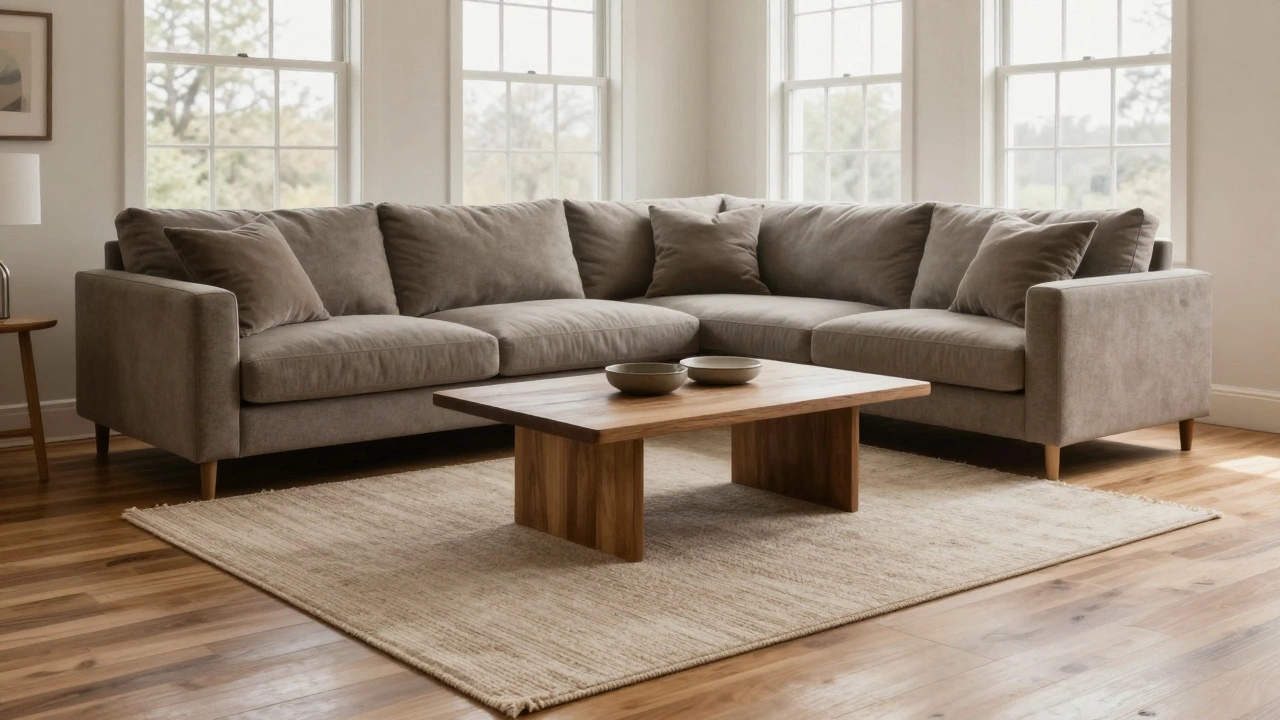
Think about a living room with a coffee table and two sofas. If only the coffee table sits on the rug, and the sofas hover above the edge like islands, the space feels awkward. Your eyes don’t know where to rest. The rug becomes an afterthought, not a foundation.
But if the front legs of both sofas and the coffee table sit on the rug? The room breathes. It feels intentional. Even if the back legs of the sofas are off the rug-which is perfectly fine-the connection between the pieces creates harmony.
This isn’t just about aesthetics. A properly sized rug also improves acoustics. Hard floors echo. A rug absorbs sound. And if the rug’s too small, you’re only muffling a tiny patch of the floor. That’s why people in older homes, especially in places like Oxford, often use large rugs-they’re practical as much as they’re pretty.
The Classic Rug Rule: Living Room Edition
In a living room, follow this simple formula:
- Place the rug so the front legs of your sofa and armchairs rest on it.
- Make sure your coffee table sits entirely on the rug.
- Leave at least 12 to 18 inches of floor showing between the rug and the walls.
- If your room is large, go bigger. A rug that’s 8x10 or 9x12 is often the sweet spot.
Some people prefer the all-furniture-on rule: every piece of seating, including the back legs of the sofa, sits on the rug. That works great in smaller rooms where you want to create the illusion of more space. But in larger rooms, leaving the back legs off can help define zones without overwhelming the floor.
Here’s a real example: A 12x15 living room with a 9x12 rug. The sofa sits with front legs on the rug. Two armchairs are angled slightly, their front legs also on the rug. The coffee table is centered. The back legs of the sofa? Off. The result? A cozy, grounded seating area that doesn’t feel cramped.
Bedroom Rug Rule: It’s Different
Bedrooms don’t follow the same logic. Here, the rug isn’t about connecting furniture-it’s about comfort underfoot.
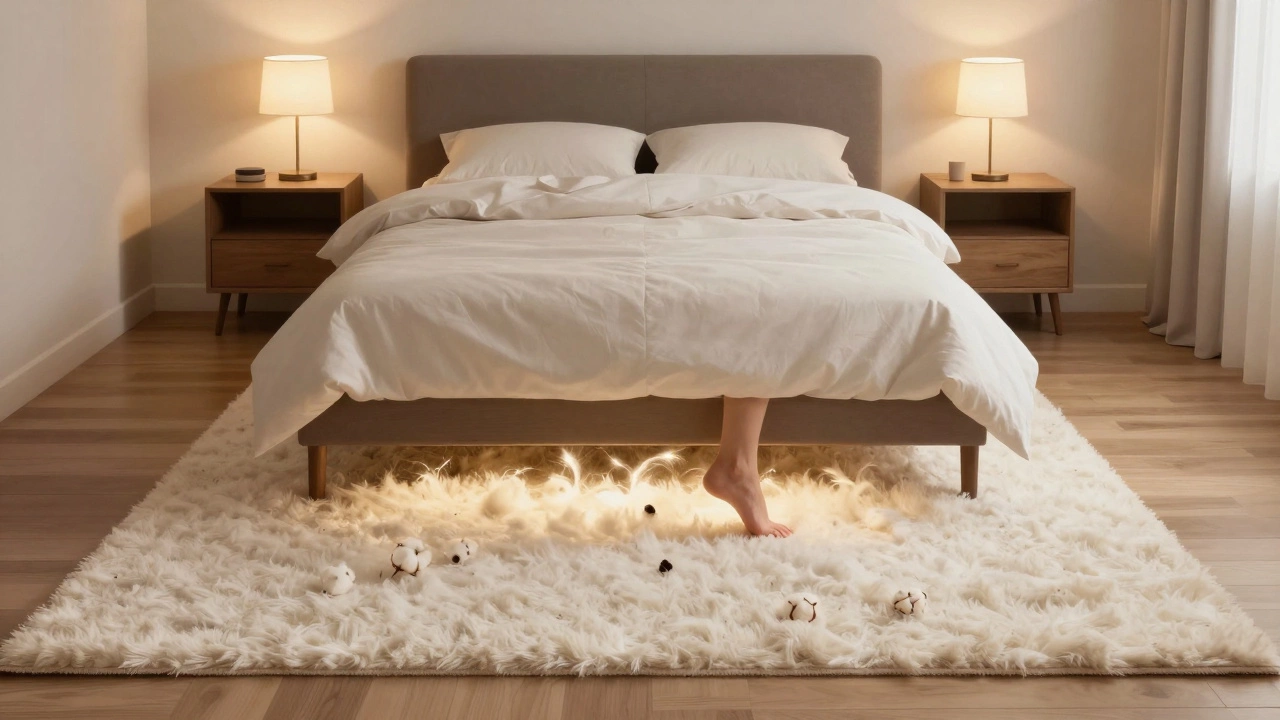
The standard approach: Place a rug so that it extends at least 18 inches beyond each side of the bed. That way, when you step out of bed, your feet land on something soft.
For a queen bed (60x80 inches), a 9x12 rug works well. For a king (76x80), go for 10x13 or larger. Some people place two smaller rugs-one on each side of the bed-instead of one long one. That’s fine, as long as they’re the same size and aligned.
Avoid tiny rugs under the foot of the bed. They look like an afterthought. And never place a rug so that only the bottom third of the bed sits on it. That breaks the visual flow and makes the bed look like it’s floating.
Dining Room: Don’t Forget the Chairs
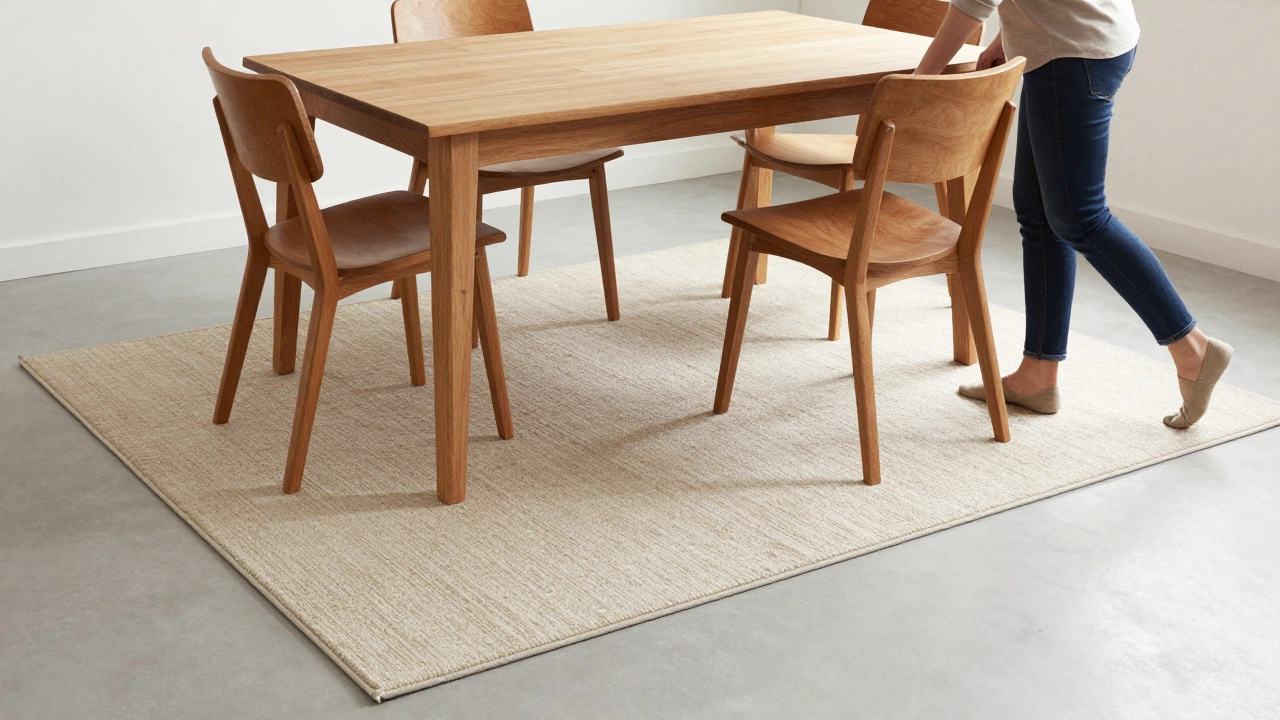
The dining room rug rule is simple but often ignored: the rug must be big enough to fit all four legs of every chair-even when they’re pulled out.
Measure your table, then add at least 24 inches on all sides. So if your table is 6 feet long, your rug should be at least 10 feet long. That way, when someone pulls out a chair to serve themselves or stand up, the chair doesn’t catch on the edge of the rug.
Woven rugs or low-pile options work best here. High-pile rugs can get caught under chair wheels or make sliding chairs harder. And if you have a round table? Use a round rug. It keeps the shape consistent and avoids awkward corners.
Hallways and Entryways: Size Is Everything
These spaces are often overlooked, but they’re high-traffic zones. A rug here should be long enough to cover the walking path-usually 2 to 3 feet wide and as long as the hallway allows.
For a narrow entryway, a runner rug (2x8 or 2x10) is ideal. Make sure it’s at least 6 inches away from each wall. If you have a small foyer, place the rug so it sits under the front half of your console table. That creates a visual anchor without blocking the doorway.
Never use a square rug in a long hallway. It breaks the flow. And avoid slippery backs-entryways get wet. Look for rugs with non-slip backing or add a rubber pad underneath.
Common Mistakes and How to Fix Them
Even people who know the rug rule mess up. Here are the top three errors:
- Too small: A rug that’s only under the coffee table. Fix: Go bigger. At least 12 inches beyond the front of your sofa.
- Too big: A rug that touches all four walls. Fix: Step back. Leave 12 to 18 inches of floor showing. It makes the room feel larger.
- Wrong shape: A round rug under a rectangular table, or a square rug in a long hallway. Fix: Match the shape of the space or the furniture.
Another mistake? Buying a rug based on price, not size. A cheap 5x8 rug might look fine in the store, but in your 14x16 living room, it’ll look like a postage stamp. Always measure your space before you buy.
How to Measure for the Right Rug
Here’s how to get it right every time:
- Sketch your room layout. Include furniture placement.
- Use painter’s tape to mark where you think the rug should go.
- Stand back. Walk around. Does it feel balanced?
- Check clearance: 12 to 18 inches from walls, enough space for chair movement.
- Measure the tape outline. That’s your rug size.
If you’re buying online, always check the return policy. Rugs are heavy. You don’t want to be stuck with one that doesn’t fit.
Material Matters Too
The rug rule isn’t just about size-it’s about function. In high-traffic areas like hallways or kitchens, choose durable materials: wool, nylon, or polypropylene. Avoid silk or delicate fibers.
In bedrooms, go soft. Cotton, shag, or low-pile wool feels better under bare feet. In dining rooms, avoid plush rugs. They trap crumbs and make cleaning harder.
And don’t forget the pad. A good rug pad prevents slipping, reduces noise, and extends the life of the rug. It’s not optional. It’s part of the rule.
Final Tip: Trust Your Eyes
The rug rule is a guideline, not a law. If you love how a smaller rug looks in your space, go for it. But if something feels off, it probably is. Start with the rule. Then tweak it to fit your life.
Think of it like seasoning food. The rule is the salt-enough to bring out the flavor, not drown it. Once you get the balance right, your room will feel settled. Not perfect. Not staged. Just right.
What if my sofa is too big for the rug?
If your sofa is too large to fit entirely on the rug, prioritize the front legs. It’s fine if the back legs are off the rug-this actually helps define the seating area without overwhelming the space. Choose a rug that’s at least 12 inches wider than the sofa on each side, and make sure the coffee table sits fully on it. This creates a grounded, balanced look even with oversized furniture.
Can I use two rugs in one room?
Yes, especially in large open-plan spaces. Use one rug for the seating area and another for a reading nook or dining zone. Make sure they’re in complementary colors or patterns-avoid clashing styles. A good trick is to pick one rug as the main and let the second echo its color palette. This keeps the room cohesive without looking messy.
Should the rug match the couch?
No. Matching is outdated. Instead, aim for harmony. If your couch is navy, choose a rug with a hint of blue, or go neutral with texture. Patterns can tie things together-like a rug with flecks of the same color as your throw pillows. The goal is connection, not carbon-copy colors.
How often should I replace my rug?
A quality rug can last 15 to 25 years with proper care. Wool rugs hold up best in high-traffic areas. Rotate your rug every year to even out wear. Vacuum regularly and clean spills immediately. If the backing is crumbling or the pile is flattened in high-walk zones, it’s time to replace it-not because it’s old, but because it’s lost its function.
Is a rug pad really necessary?
Yes. A rug pad prevents slipping, protects your floor from scratches, reduces noise, and helps the rug keep its shape. Even in low-traffic rooms, it’s worth the investment. Look for felt or rubber pads that are slightly smaller than the rug. They’re affordable and easy to install.