Bedding Layer & Material Guide
Your Sleep Profile
Fill out your profile and click "Build My Bed Layer" to see your recommended setup!
You might think a bed is just a mattress and a pillow, but anyone who has ever spent an hour trying to fit a stubborn corner of a sheet knows there is a whole science to it. Bedding isn't just one thing; it is a system of layers designed to keep you warm, protect your investment, and make your bedroom feel like a hotel suite. If you are staring at a wall of linens and wondering why there are five different types of sheets, you are in the right place.
Quick Summary of Bedding Essentials
- Base Layers: Mattress protectors and fitted sheets.
- Comfort Layers: Flat sheets and blankets.
- Top Layers: Duvets, comforters, and quilts.
- Accents: Pillows, shams, and decorative throws.
The Foundation: Protecting Your Mattress
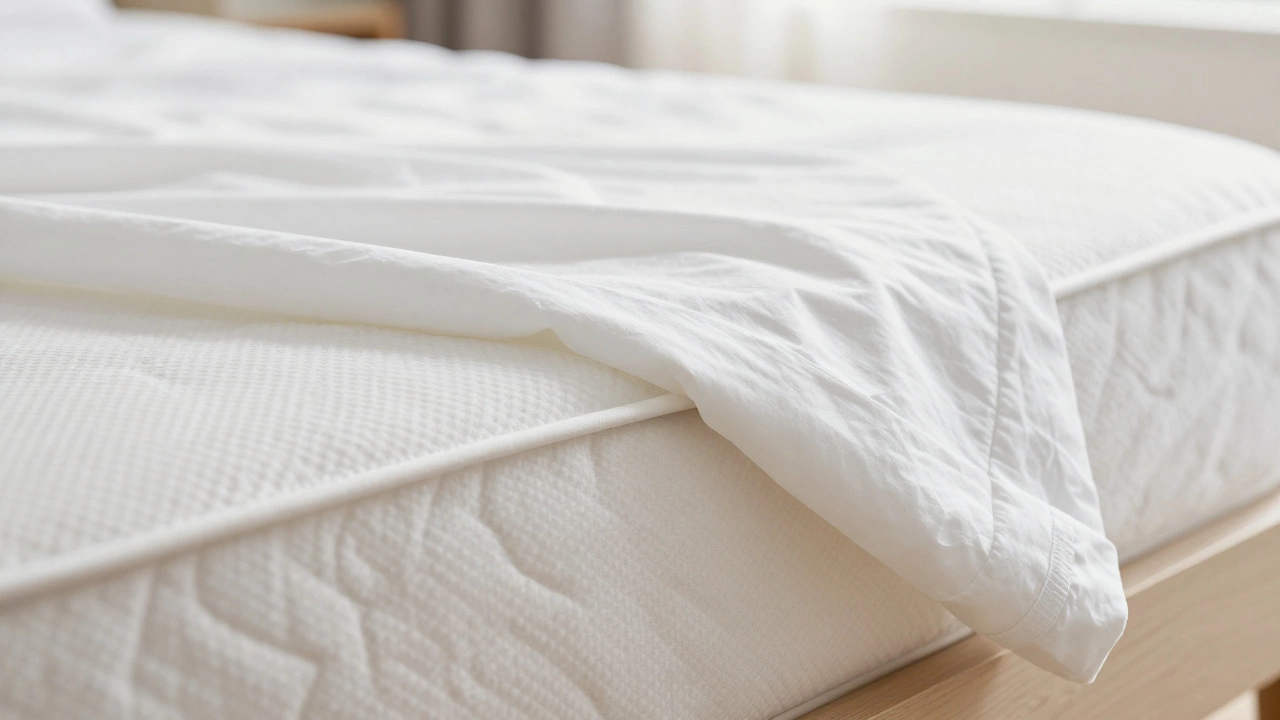
Before you even think about the soft stuff, you need to protect the big investment. A Mattress Protector is a thin layer that goes over the entire mattress. Unlike a topper, which is for comfort, a protector is about hygiene. It keeps sweat, skin cells, and accidental spills from soaking into the foam or springs.
If you have allergies, look for a waterproof or hypoallergenic protector. These usually feature a polyurethane backing that stops dust mites from moving into your bed. Without this layer, a mattress can absorb several pounds of dead skin and moisture over a decade, which is a thought you probably don't want while trying to fall asleep.
The Sheet Set: Where You Actually Touch
When people talk about "sheets," they usually mean a set. A standard set contains three main pieces. First is the Fitted Sheet. This has elastic corners and hugs the mattress tightly. Its job is to provide a smooth surface and protect the mattress from direct skin contact.
Then you have the Flat Sheet. In the US, this is common, but in many European countries, people skip it entirely. It sits between you and your blanket, acting as a barrier. Because it's the layer that touches your skin most often, it's the one that needs washing every single week.
Finally, there are pillowcases. These are just bags for your pillows, but the material matters. If you have sensitive skin, switching from a standard cotton to a Silk or satin pillowcase can reduce friction on your face and hair, preventing those morning "sleep creases."
| Material | Breathability | Durability | Best For... |
|---|---|---|---|
| Egyptian Cotton | High | Very High | Luxury and longevity |
| Linen | Extreme | High | Hot summer nights |
| Microfiber | Medium | Medium | Budget-friendly/Easy care |
| Bamboo Viscose | High | Medium | Sensitive skin/Cooling |
Warmth Layers: Duvets vs. Comforters vs. Quilts
This is where most people get confused. They all look like "big blankets," but they function differently. A Duvet is essentially a fluffy insert filled with down or synthetic fibers. It doesn't have a decorative cover on its own, which is why it needs a Duvet Cover. This is a fabric shell that buttons or zips around the duvet. The magic here is that you only have to wash the cover, not the giant fluffy insert.
A Comforter, on the other hand, is a single quilted piece of bedding. The filling is sewn directly into the fabric. You don't use a cover with a comforter; you just throw it on the bed. They are generally flatter than duvets and are often sold as part of a matching set with sheets.
If you want something lighter, there is the Quilt. Quilts are made by stitching together layers of fabric. They are denser and flatter than comforters and are perfect for layering in the autumn or as a decorative top layer during the winter.
The Finishing Touches: Pillows and Accents
Your bed isn't complete without the right support. Most people use a combination of sleeping pillows and decorative ones. Pillow Shams are those fancy pillowcases that match your duvet or comforter and often have a decorative border. They aren't really for sleeping; they are for making the bed look "finished."
Then you have the throw blanket. This is a small, decorative piece of fabric draped over the foot of the bed. While it looks great for interior design, it's also a lifesaver when you're just slightly chilly and don't want to unwrap yourself from the main duvet.
How to Layer Your Bed Like a Pro
If you want that high-end hotel feel, you can't just toss a blanket on the mattress. You need a strategy. Start with your mattress protector, then the fitted sheet. Add the flat sheet, followed by a lightweight blanket or quilt. Top it off with your duvet. This layering allows you to adjust your temperature throughout the night by kicking off one layer without freezing.
For those who struggle with "bed-making," the easiest route is a bedding set. These bundles usually include the sheets and the pillowcases, ensuring that everything matches perfectly without you having to hunt for the same shade of "eggshell white" across three different brands.
Common Bedding Mistakes to Avoid
One big mistake is choosing a thread count that is too high. You'll see packages claiming 1,000 or 2,000 thread counts, but often this is a marketing trick where they use multi-ply yarns to inflate the number. In reality, a 300 to 500 thread count cotton sheet is often more breathable and comfortable than a stiff, heavy 1,000 count one.
Another pitfall is ignoring the size of the duvet insert. If your duvet is the exact same size as your mattress, it will hang flat. For that "cloud-like" look, choose a duvet that is one size larger than your bed. For a Queen bed, a King-sized duvet provides a beautiful drape on the sides.
Do I really need a flat sheet?
It depends on your preference and climate. The flat sheet protects your duvet or comforter from body oils and sweat, meaning you can wash the sheets weekly but only wash the heavy duvet every few months. If you live in a very hot climate, a flat sheet is often all you need for coverage.
What is the difference between a duvet and a comforter?
A duvet is a two-piece system: a fluffy insert and a removable cover. A comforter is a single, quilted piece of bedding. Duvets are more versatile because you can change the cover to update your room's look, while comforters are generally easier to put on the bed since there is no stuffing to wrestle into a cover.
How often should I wash my bedding?
Sheets and pillowcases should be washed once a week to remove dead skin and oils. Mattress protectors should be washed every 2-3 months. Duvet covers can usually go 1-2 months depending on whether you use a flat sheet underneath them.
What is the best fabric for hot sleepers?
Linen and bamboo are the best choices for hot sleepers. Linen is highly breathable and wicks moisture away from the skin, while bamboo is naturally cool to the touch and very smooth. Avoid polyester or heavy microfiber, as they trap heat and can make you sweat.
What are pillow shams used for?
Pillow shams are decorative covers designed to stand upright against the headboard. Unlike standard pillowcases, they usually have a flange (a border of extra fabric) and are made from heavier materials to match the duvet or quilt. They are meant for style, not for sleeping on.
Next Steps for Your Bedroom
If you are starting from scratch, start with the base. Get a high-quality mattress protector first to save your mattress from wear and tear. Then, decide if you are a "sheet person" or a "duvet person." If you hate laundry, a duvet with a removable cover is your best bet. If you want a clean, modern look, go for a matching comforter set.
For those looking to upgrade, try experimenting with fabric. If you've only ever used cotton, try a set of linen sheets for the summer. You'll be surprised at how much a simple change in material can improve your sleep quality and the overall vibe of your room.