Luxury Rug Cost Calculator
Compare the long-term value of a luxury rug versus a machine-made rug. Enter the costs and lifespans to see how much you'll save over time.
Cost Comparison Results
Based on your inputs:
Luxury Rug
- Annual cost: £0.00
- Total cost over 100 years: £0.00
Machine-made Rug
- Annual cost: £0.00
- Total cost over 100 years: £0.00
Your luxury rug costs 0% less annually and £0.00 less over 100 years compared to a machine-made rug.
A luxury rug isn’t just a big, pretty floor covering. It’s something you feel underfoot, something that lasts decades, and something that carries history, craftsmanship, and value you can see and touch. If you’ve ever stood in a high-end home and noticed how the floor seems to hum with quiet elegance, that’s often a luxury rug at work. It doesn’t shout. It doesn’t need to. Its presence is felt in texture, weight, and detail.
What Makes a Rug Truly Luxury?
Not every expensive rug is a luxury rug. Some are just large, brightly colored, and mass-produced with synthetic fibers. A true luxury rug is defined by three things: material, craftsmanship, and origin. These aren’t optional extras-they’re the foundation.
The finest luxury rugs are made from natural fibers: wool, silk, or a blend of both. Wool from Tibet, Iran, or New Zealand is prized for its density and resilience. Silk, often used for intricate patterns, gives a luminous sheen that changes with the light. You’ll rarely find polyester or nylon in a genuine luxury piece. If the label says ‘premium’ but lists synthetic fibers, it’s not luxury-it’s marketing.
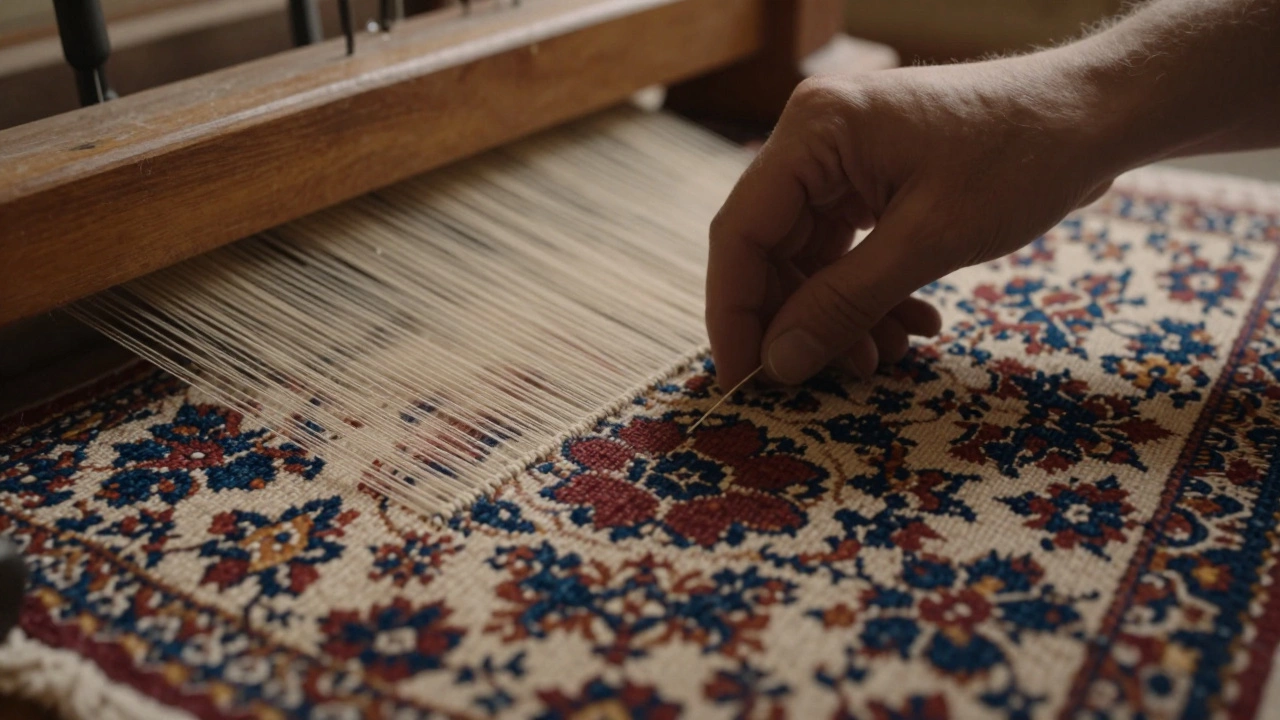
Hand-knotted construction is non-negotiable. Each knot is tied by hand, one at a time. A high-end Persian rug might have 500 to over 1,000 knots per square inch. Compare that to a machine-made rug, which might have 100 knots per square inch at most. The difference shows in the detail: you can see individual threads in a hand-knotted rug, and the pattern has subtle variations that machines can’t replicate. That’s not a flaw-it’s proof of human skill.
Origin matters too. The best rugs come from regions with centuries of weaving tradition: Iran (Persia), Turkey, Afghanistan, India, and parts of China. These aren’t just places on a map-they’re living schools of design. A Kashan rug from Iran has a different structure, dye recipe, and pattern language than a Bokhara from Turkmenistan. You’re not just buying a rug; you’re buying a cultural artifact.
How Much Should You Expect to Pay?
Luxury rugs don’t come with price tags that make sense on Amazon. A small 5x8 hand-knotted wool rug might start at £2,000. A larger silk-and-wool piece with fine detailing can easily reach £15,000 or more. That sounds steep-until you consider lifespan.
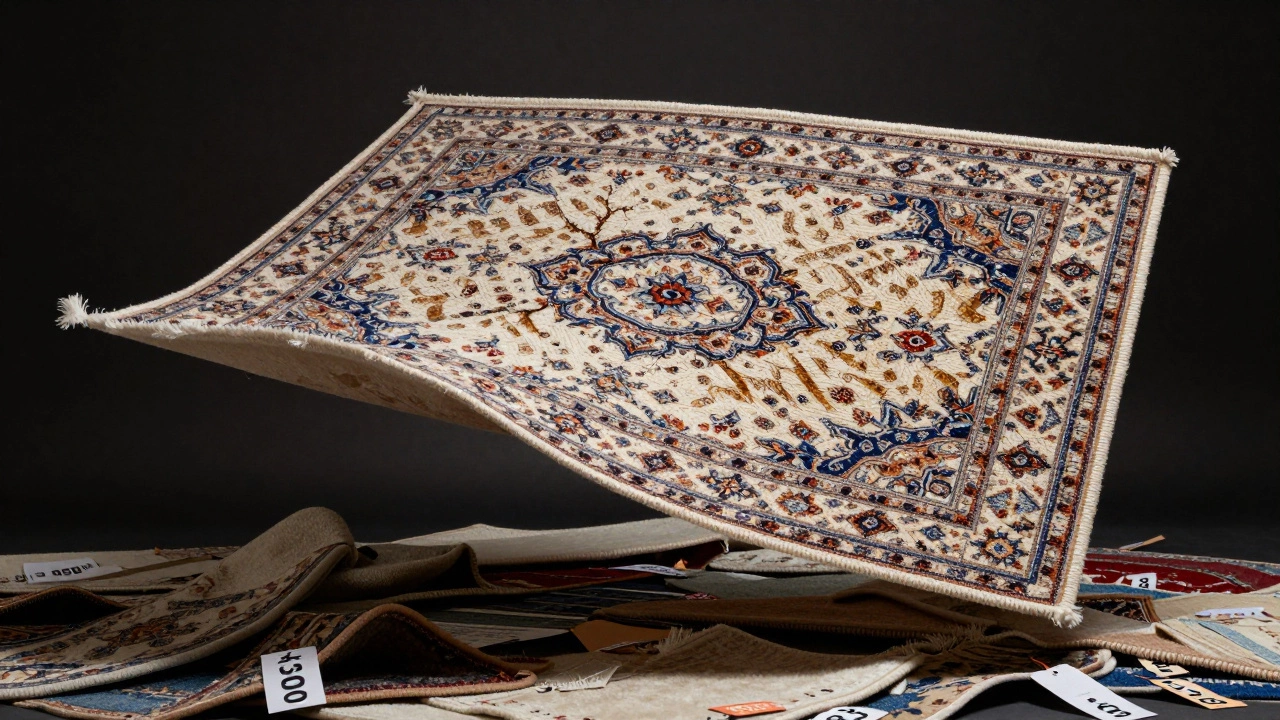
A well-made luxury rug can last 100 years or longer. It’s not something you replace every five years. It’s passed down. Think of it like fine furniture or vintage watches. You’re paying for durability, not just appearance. A machine-made rug from a big-box store might cost £300, but it will flatten, fade, and fray in under a decade. That’s £30 a year. A luxury rug at £10,000 that lasts 80 years? That’s £125 a year. Suddenly, the math changes.
Another factor: dyes. Natural dyes-made from plants, insects, and minerals-create colors that deepen and soften over time. They age gracefully. Synthetic dyes, common in cheaper rugs, fade to dull or blotchy shades within a few years. If you run your fingers over a luxury rug and feel slight texture differences in the color, that’s natural dye at work. It’s not uneven-it’s alive.
How to Spot a Real Luxury Rug
Here’s how to tell if you’re looking at something real or just a well-lit photo:
- Check the back. On a hand-knotted rug, the pattern on the back mirrors the front, though slightly blurred. On a machine-made rug, the back is a flat, uniform mesh with no visible knots.
- Look for slight imperfections. Handmade rugs have tiny irregularities-maybe a knot is slightly off, or a color shifts subtly. These aren’t flaws. They’re signatures of the weaver.
- Test the fringe. On a real hand-knotted rug, the fringe is an extension of the warp threads, not sewn on. If the fringe looks glued or stitched, it’s not authentic.
- Smell it. Natural wool and silk have a faint, clean odor. Synthetic fibers can have a chemical or plastic smell.
- Ask for provenance. Reputable sellers will tell you where it was made, who wove it, and what materials were used. If they can’t-or won’t-walk away.
There’s one more test: hold the rug up to the light. A true luxury rug will show depth. Light doesn’t just reflect off it-it travels through the fibers. You’ll see shadows in the pile, subtle gradients in color. That’s the difference between surface and soul.
Why People Choose Luxury Rugs
People don’t buy luxury rugs because they’re trendy. They buy them because they’re timeless. They’re not just decorative-they’re structural to a room’s character.
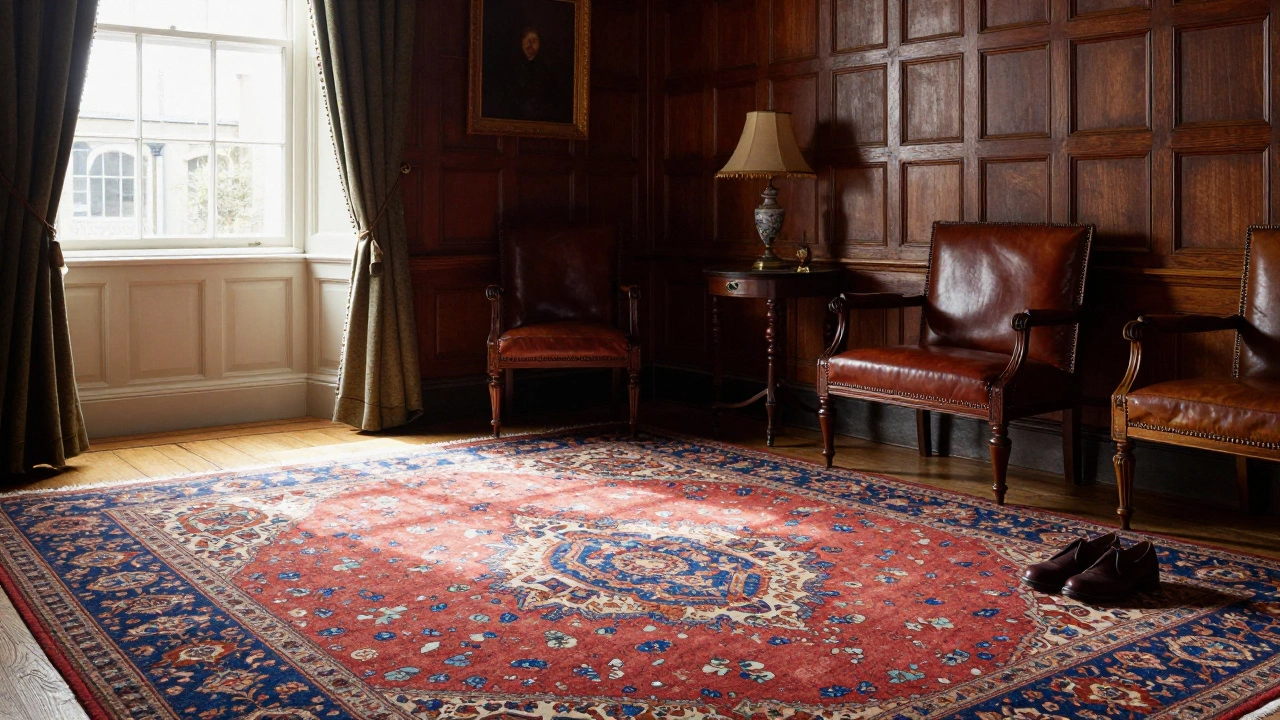
In Oxford, where historic homes blend with modern living, luxury rugs often anchor spaces with quiet authority. A deep red Heriz rug in a Georgian drawing room doesn’t compete with the wood paneling-it complements it. A cream-colored Tabriz rug in a minimalist apartment adds warmth without clutter. They’re not filler. They’re the foundation.
Many buyers also value the human story behind each rug. In some villages in Afghanistan, a single rug can take six months to weave. A woman might work six hours a day, tying 3,000 knots daily. That’s 540,000 knots for one rug. When you sit on that rug, you’re sitting with her hands, her patience, her silence.
There’s also emotional value. Luxury rugs become part of family memory. They’re the rug under the Christmas tree, the one your child crawled on, the one your grandmother loved. They outlive trends, furniture, even homes.
What to Avoid When Buying
There are traps everywhere. Here’s what to watch for:
- ‘Oriental-style’ rugs from China. Many are machine-made and use cheap synthetic dyes. They mimic patterns but lack the soul of true Persian or Turkish weaving.
- Too-good-to-be-true prices. A 9x12 silk rug for £1,500? That’s impossible. Silk is expensive. Hand-knotting is labor-intensive. If the price feels wrong, it is.
- Overly bright colors. Luxury rugs have depth. Their colors are rich, not neon. If it looks like it came from a party supply store, it’s not luxury.
- No return policy or documentation. Reputable dealers offer certificates of authenticity, material breakdowns, and return windows. If they don’t, they’re not confident in what they’re selling.
Also, avoid buying online without seeing the rug in person. Photos lie. Lighting, camera angles, and filters can make a mediocre rug look stunning. Always ask for a sample swatch or visit a showroom. Feel the pile. Run your hand over it. Let your fingers be your judge.
How to Care for a Luxury Rug
These rugs aren’t delicate, but they need respect. Vacuum once a week with a suction-only setting-no beater bar. Rotate it every year so wear is even. If it gets stained, don’t reach for bleach. Blot gently with cold water and a clean cloth. For deep cleaning, hire a specialist who understands natural fibers. Most dry cleaners will ruin it.
Keep it away from direct sunlight. UV rays fade natural dyes faster than anything else. If you have a sunlit room, use curtains. And never place heavy furniture directly on top for long periods-use rug pads to distribute weight.
With proper care, your rug won’t just survive-it will thrive. The colors will mellow. The pile will soften. It will become more beautiful with age, not less.
Where to Find Authentic Luxury Rugs
Start with dealers who specialize in antique and hand-woven pieces. In the UK, shops in London’s Mayfair or Oxford’s independent design districts often carry curated collections. Look for members of the British Antique Dealers’ Association or the Oriental Rug Importers Association. They adhere to ethical sourcing and transparency standards.
Don’t overlook auctions. Christie’s, Sotheby’s, and smaller regional auction houses often have rugs from private collections. These come with documentation and provenance. You might pay more, but you’ll know exactly what you’re getting.
Online, stick to trusted names like Rugs USA (for curated pieces), Nourison (for high-end reproductions), or small artisans on Etsy who show weaving videos and material certificates. If a site has no contact info, no about page, and no photos of the weavers-walk away.
Buying a luxury rug isn’t a purchase. It’s an investment in beauty, history, and craftsmanship. It’s not about having the most expensive thing in the room. It’s about having the one thing that will still be there, still beautiful, when everything else has changed.
Is a luxury rug worth the money?
Yes-if you plan to keep it long-term. A luxury rug costs more upfront, but it lasts 80 to 100 years. Compared to replacing a cheap rug every 5-10 years, it’s more economical over time. Plus, it holds value. Some antique rugs appreciate. Even modern ones retain 70-90% of their resale value if cared for.
Can a luxury rug be used in high-traffic areas?
Absolutely. Wool, especially from high-altitude regions, is naturally resilient and stain-resistant. Hand-knotted rugs are dense and durable. Many luxury rugs in historic homes in London and Oxford see daily foot traffic for decades. Just use a quality rug pad to reduce friction and avoid dragging heavy furniture across it.
What’s the difference between Persian and Turkish rugs?
Persian rugs (from Iran) often use the asymmetric (Persian) knot and feature intricate floral and medallion designs. Turkish rugs use the symmetric (Ghiordes) knot and tend toward geometric patterns like stars and diamonds. Persian rugs are typically finer, with higher knot counts. Turkish rugs are sturdier and often bolder in color. Both are luxury, but they feel different underfoot.
Do luxury rugs fade over time?
Natural dyes fade slowly and evenly, creating a soft, aged look that many collectors love. Synthetic dyes fade unevenly and can turn muddy. A well-cared-for luxury rug won’t fade to white-it will deepen into a richer tone. Keep it out of direct sunlight, and you’ll preserve its character for generations.
Can I clean a luxury rug myself?
Spot clean spills immediately with cold water and a clean cloth. Never use vinegar, baking soda, or store-bought cleaners-they can damage natural fibers. For deep cleaning, hire a professional who specializes in hand-knotted rugs. Most regular cleaners don’t know how to handle wool and silk without shrinking or stripping the dye.