
Sofa Refurbishment Cost vs. Comfort Calculator
Your Situation
Analysis Results
Enter your details to see if it's worth repairing your current sofa.
That sinking feeling when you sit down on your favorite sofa isn't just about comfort-it's a signal. The springs might be groaning, the frame could be sturdy as ever, but the cushions are flat, lumpy, or simply refuse to bounce back. You’re left staring at that worn-out seating area, wondering if you should toss the whole thing and buy new or just swap out the guts. It’s a classic home dilemma: spend a few hundred pounds on a refresh or drop thousands on a replacement?
The short answer is yes, replacing couch cushions is often worth it, provided the rest of the sofa is in good shape. But "worth it" depends entirely on three things: the condition of the sofa frame, the cost of new foam versus a new sofa, and whether you have the patience for a little DIY work. Let’s break down exactly how to make that call without breaking the bank.
The Anatomy of a Sofa: Frame vs. Filling
Before you order a single pound of foam, you need to play detective. Your sofa is made up of two main systems: the structural frame and the comfort layers. If the frame is broken, no amount of fluffy foam will save it. If the frame is solid, but the foam is dead, you have a golden opportunity for a cheap upgrade.
Check the base. Lift the seat cushions and look at the webbing or springs underneath. Are they sagging? Is the wood cracked? If the foundation is weak, replace the entire sofa. A new cushion won’t fix a broken spine. However, if the base feels tight and supportive, but the cushions themselves feel like flattened pancakes, you’re in business. This is where most people get stuck-they blame the whole piece of furniture when only the soft parts have given up.
Consider the fabric too. If the upholstery is stained beyond cleaning, torn, or smells permanently of pet accidents, replacing just the foam inside won’t solve the problem. You’d need new covers as well. But if the fabric is durable and clean, swapping the inner filling can make an old sofa feel brand new. Think of it like changing the mattress in your bed-the box spring stays, but the sleep quality transforms overnight.
Understanding Foam Density: Why Your Cushions Sagged
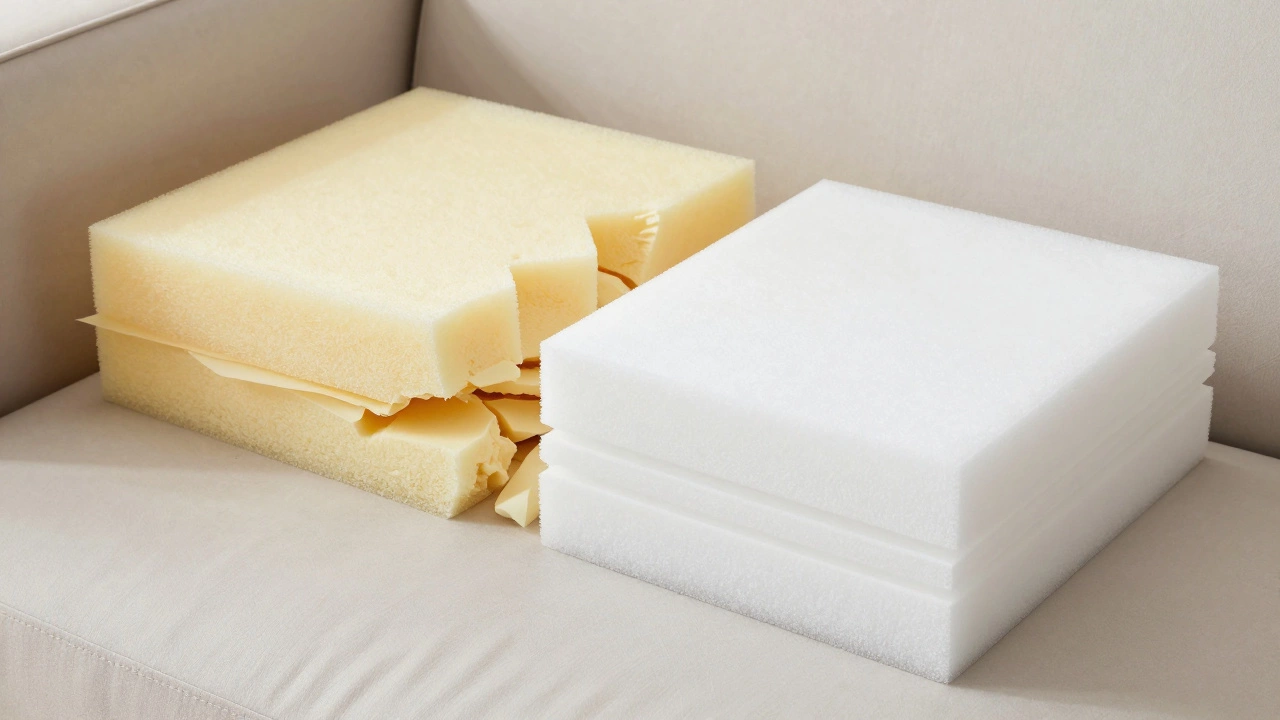
You might wonder why high-quality sofas go bad. It’s usually not poor craftsmanship; it’s physics. Foam compresses over time. The key metric here is foam density. Most budget sofas use low-density foam (1.8 lbs per cubic foot or less). This stuff feels soft initially but breaks down quickly, losing its resilience within two years. High-end furniture uses high-resilience foam (2.5 to 3.0+ lbs per cubic foot), which lasts a decade or more.
| Density Level | Weight (lbs/ft³) | Lifespan | Best For |
|---|---|---|---|
| Low Density | 1.6 - 1.8 | 1-2 Years | Budget rentals, occasional use |
| Medium Density | 1.9 - 2.4 | 3-5 Years | Standard household sofas |
| High Resilience | 2.5 - 3.0+ | 7-10+ Years | Daily use, premium comfort |
If your current cushions are squishy and thin, they were likely low-density. When you replace them, don’t just buy the same cheap stuff. Upgrade to medium or high-density polyurethane foam. You can also mix materials. Many pros recommend a layered approach: a firm base layer of high-density foam topped with a softer layer of memory foam or polyester fiberfill. This gives you support without that hard, board-like feel.
The Cost Breakdown: Refurbish vs. Replace
Let’s talk numbers, because that’s what matters most. In the UK market right now, a decent mid-range sofa costs between £800 and £1,500. A luxury piece easily hits £2,500+. Now, look at the cost of replacing cushions.
You can buy pre-made replacement cushions from retailers for £50 to £150 each. For a standard three-seater, that’s £150 to £450 total. If you’re handy, you can cut foam yourself. A block of high-density foam costs around £30 to £60 depending on size and thickness. Add £20 for batting and thread, and you’re looking at under £100 for the whole project. Even if you hire a professional upholsterer to re-foam and recover the seats, it typically runs £300 to £600-still significantly cheaper than a new sofa.
There’s also an environmental angle. Throwing away a large wooden frame and metal springs creates massive landfill waste. Extending the life of your furniture by five years through simple cushion replacement is one of the easiest sustainable choices you can make in home decor. Plus, you keep the style you already love. Trends change fast; that velvet green sofa you bought three years ago might be outdated tomorrow, but the comfort level is timeless.
DIY vs. Professional Help: What Should You Do?
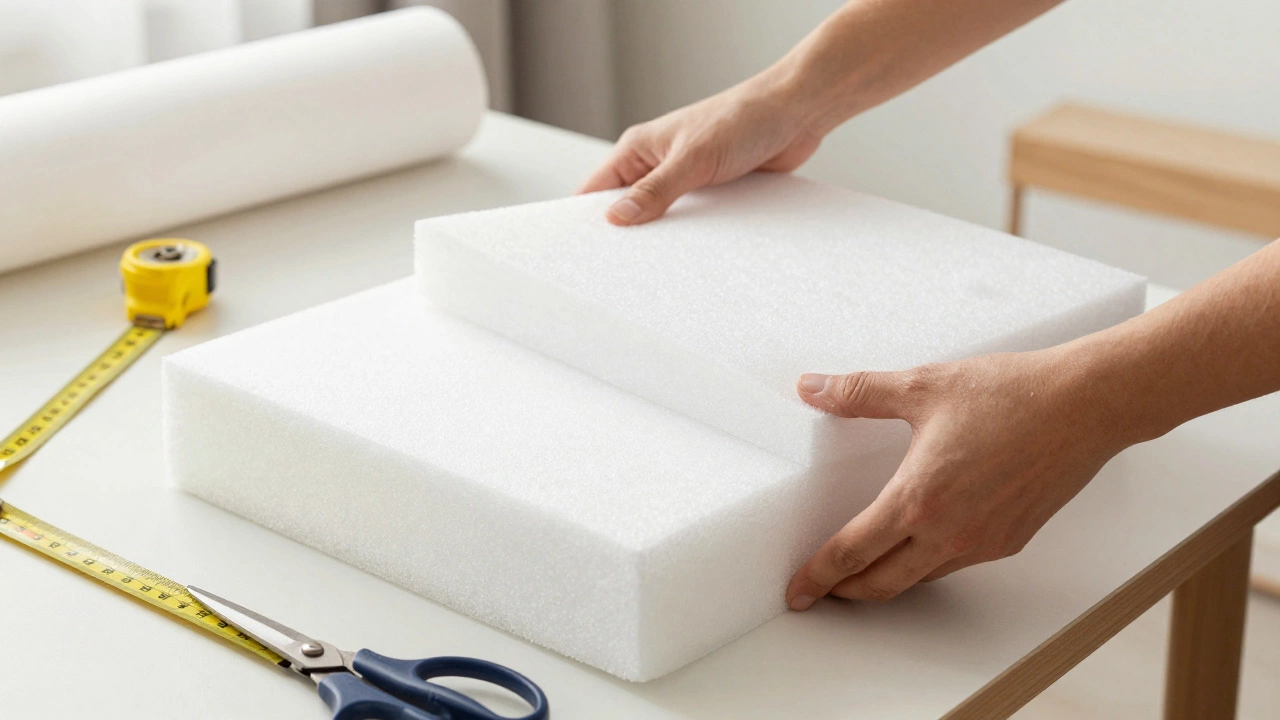
Do you have the skills to tackle this yourself? It depends on your sewing ability and access to tools. If your sofa has removable covers with zippers, you might just need to insert new foam inserts into existing envelopes. That’s easy. Just measure the old foam carefully, noting any tapering or curves, and order custom-cut pieces online.
If the foam is glued directly to the bottom of the cushion or wrapped tightly in non-removable fabric, it gets trickier. You’ll need to unstitch seams, remove old batting, and glue new foam in place. Hot glue works for small repairs, but spray adhesive is better for full replacements. Then comes the covering. If you don’t sew, this step is daunting. You can buy generic slipcovers, but they rarely fit perfectly. Custom covers cost extra but ensure a tailored look.
Hiring a pro makes sense if:
- Your sofa is expensive or antique.
- The fabric is complex (like tufted leather or intricate patterns).
- You lack sewing experience or proper tools.
- You want a warranty on the workmanship.
For average homeowners with basic sewing skills, DIY is totally doable. There are countless tutorials on YouTube showing how to wrap foam in Dacron batting (a fluffy polyester fiber) to create that smooth, rounded look before stitching the final cover. Take your time measuring. Measure twice, cut once. Mistakes here mean wasted money on foam that doesn’t fit.
When Replacement Isn’t Enough
Sometimes, even new cushions won’t fix the problem. Have you checked the suspension system? If the sinuous springs or eight-way hand-tied springs under the cushions are loose or broken, adding thick foam on top will just mask the issue temporarily. You’ll still feel the bumps and sags. In these cases, you need to repair the base first. Re-webbing a sofa costs around £100-£200 professionally, but it restores the structural integrity needed for new cushions to perform well.
Also consider ergonomics. If your back hurts after sitting, thicker cushions aren’t always the answer. Sometimes, firmer support is better. Don’t automatically go for the plushiest option. Test different densities if possible. Some shops offer sample swatches of foam so you can press and feel the difference before committing to a bulk purchase.
Making the Decision: A Quick Checklist
To decide if replacing your couch cushions is worth it, run through this mental checklist:
- Frame Check: Is the wood/metal base solid and free of cracks?
- Fabric Condition: Is the outer material clean, intact, and something you still like?
- Cost Comparison: Is the price of new cushions + labor less than 50% of a new sofa?
- Sentimental Value: Do you love the design enough to preserve it?
- Time Investment: Are you willing to spend a weekend on DIY or wait weeks for a pro quote?
If you answered yes to most of these, go ahead and replace those cushions. It’s a smart financial move and a satisfying home improvement project. If the frame is shot or the fabric is ruined, start shopping for a new sofa. Don’t throw good money after bad.
How long do replaced sofa cushions last?
It depends on the foam density. Low-density foam may last 1-2 years, while high-resilience foam (2.5+ lbs/cu ft) can last 7-10 years or more. Proper maintenance, like rotating cushions regularly, extends their life significantly.
Can I put new foam in old cushion covers?
Yes, if the covers are in good condition and have room for slightly thicker foam. However, if the old foam was very dense and the new foam is fluffier, the cover might become too tight. Always check the internal dimensions carefully.
What is the best type of foam for sofa cushions?
High-resilience polyurethane foam with a density of at least 2.0 lbs per cubic foot is ideal for daily use. For extra comfort, combine a firm base layer with a softer top layer of memory foam or fiberfill.
Is it cheaper to reupholster or replace cushions?
Replacing just the foam and inserting it into existing covers is much cheaper. Full reupholstery involves removing old fabric, repairing the base, adding new foam, and sewing new covers, which can cost £500-£1,500 depending on the sofa size and fabric choice.
Why do my sofa cushions slide forward?
This is often due to smooth fabric sliding against the sofa base. Adding non-slip pads, rubber grip dots, or velcro strips to the bottom of the cushions and the sofa frame can keep them securely in place.