Ever walked into a room and felt like there’s just too much wasted space? That awkward gap between the fridge and the wall. The space above your closet door. The narrow strip beside the staircase. These aren’t just empty spots-they’re hidden storage opportunities waiting to be used. Most people ignore them, but smart homeowners turn dead space into functional, clutter-free zones without buying new furniture or remodeling.
Under the Stairs: More Than Just a Dust Trap
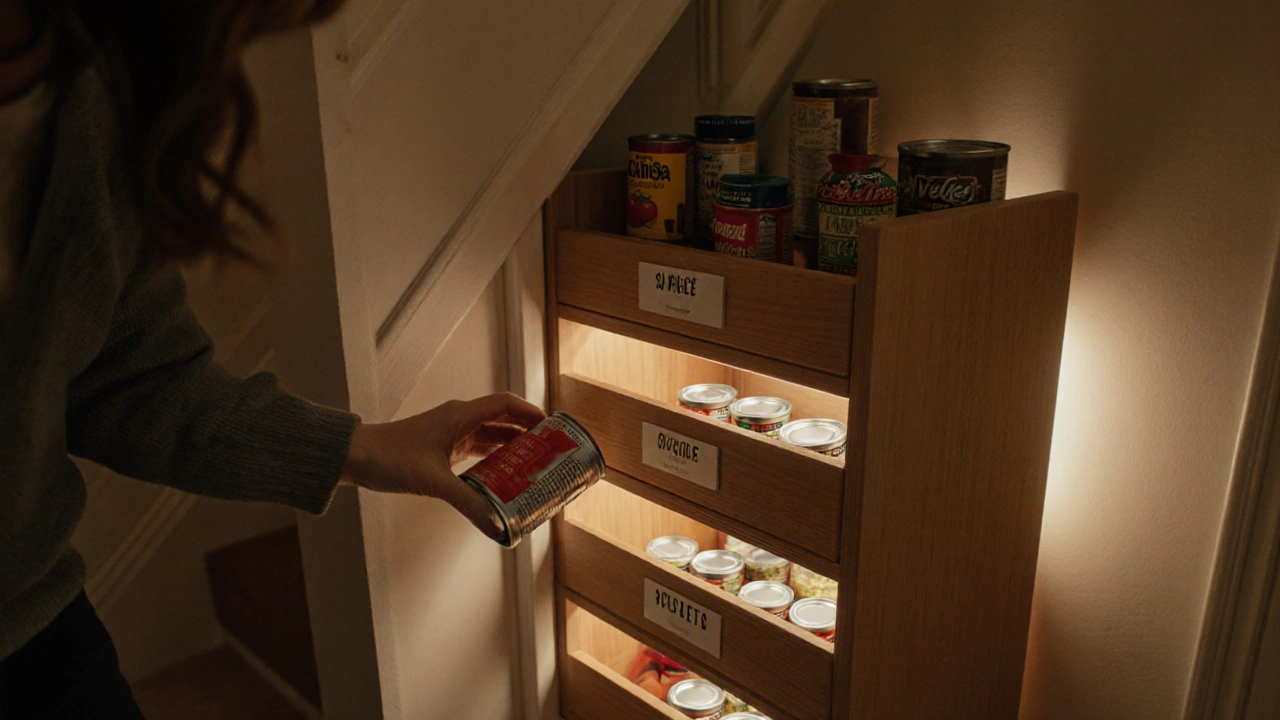
The area under your stairs is one of the most common dead spaces in a house-and one of the easiest to fix. In a typical UK home, that space is often left as a dark, unused corner. But with a few simple modifications, it becomes a perfect spot for storage. Install sliding drawers or pull-out baskets to store shoes, holiday decorations, or cleaning supplies. If you have a narrow staircase, consider building a shallow cabinet that fits the slope. One homeowner in Oxford turned theirs into a mini pantry with pull-out shelves for spices and canned goods. No one even notices it’s there until they need a can of tomatoes.
Pro tip: Use shallow drawers (no deeper than 12 inches) so you don’t lose headroom. Add LED strip lighting so you can see what’s inside without fumbling in the dark.
Above the Door: The Forgotten Ceiling Zone
Think about the space above your interior doors. It’s usually about 6 to 12 inches of vertical room that’s completely unused. That’s enough for narrow shelves or slim storage bins. In bedrooms, use this space for extra bedding, out-of-season clothes, or luggage. In bathrooms, store extra towels or toiletries. You can buy ready-made over-door storage units with hooks and baskets, or build your own with thin wooden boards and brackets.
One trick that works well in small homes: hang a fabric organizer with pockets from the top of the bathroom door. It holds hairdryers, razors, and makeup without taking up counter space. No drilling. No mess. Just smart use of vertical space.
Between the Walls: Slim Storage for Tight Spots
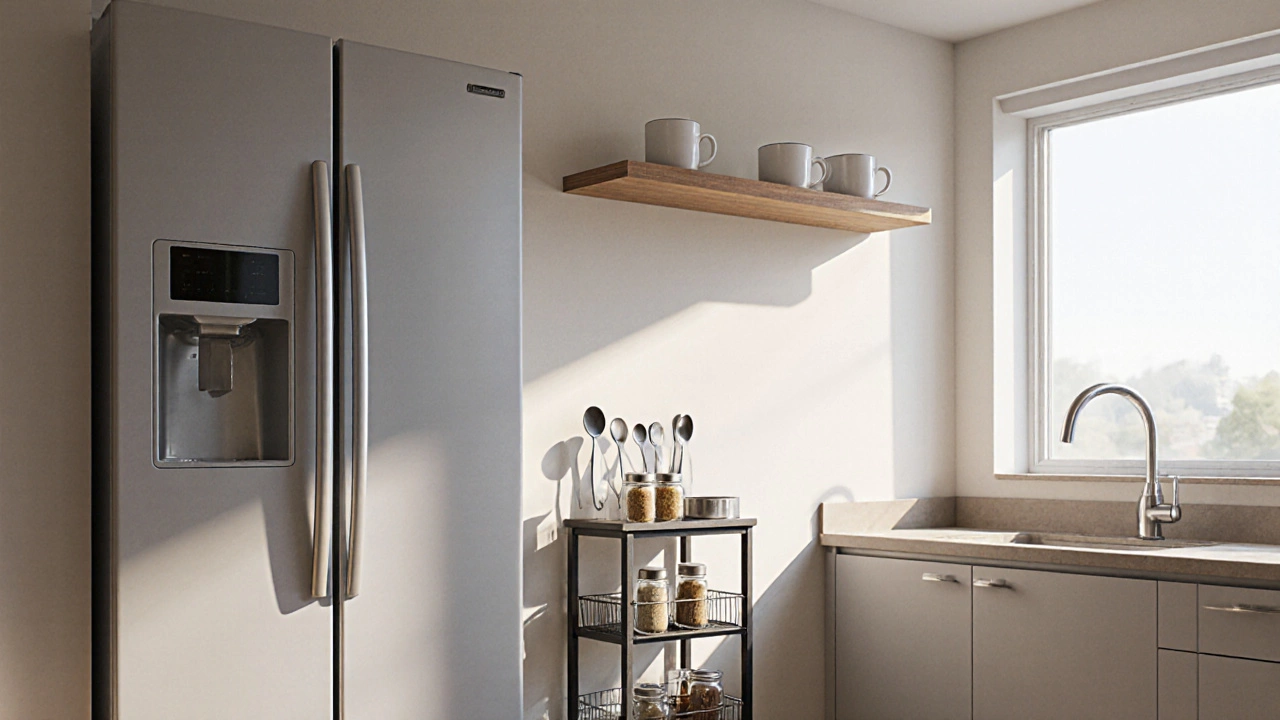
Do you have a gap between the wall and the fridge? Or a narrow strip beside the toilet? These are classic dead zones. The key is to match the storage to the space. A 4-inch gap? Use a slim rolling cart that slides in and out. A 6-inch space beside the toilet? Install a floating shelf with a basket underneath. You’d be surprised how much you can fit in these tiny areas.
In the kitchen, use magnetic strips on the side of the fridge to hold knives, spice jars, or measuring spoons. In the hallway, mount a narrow console table with drawers. It looks like decor, but it’s storing keys, mail, and gloves. The trick is choosing items that are narrow, shallow, and easy to access.
Behind the Door: Hidden Real Estate
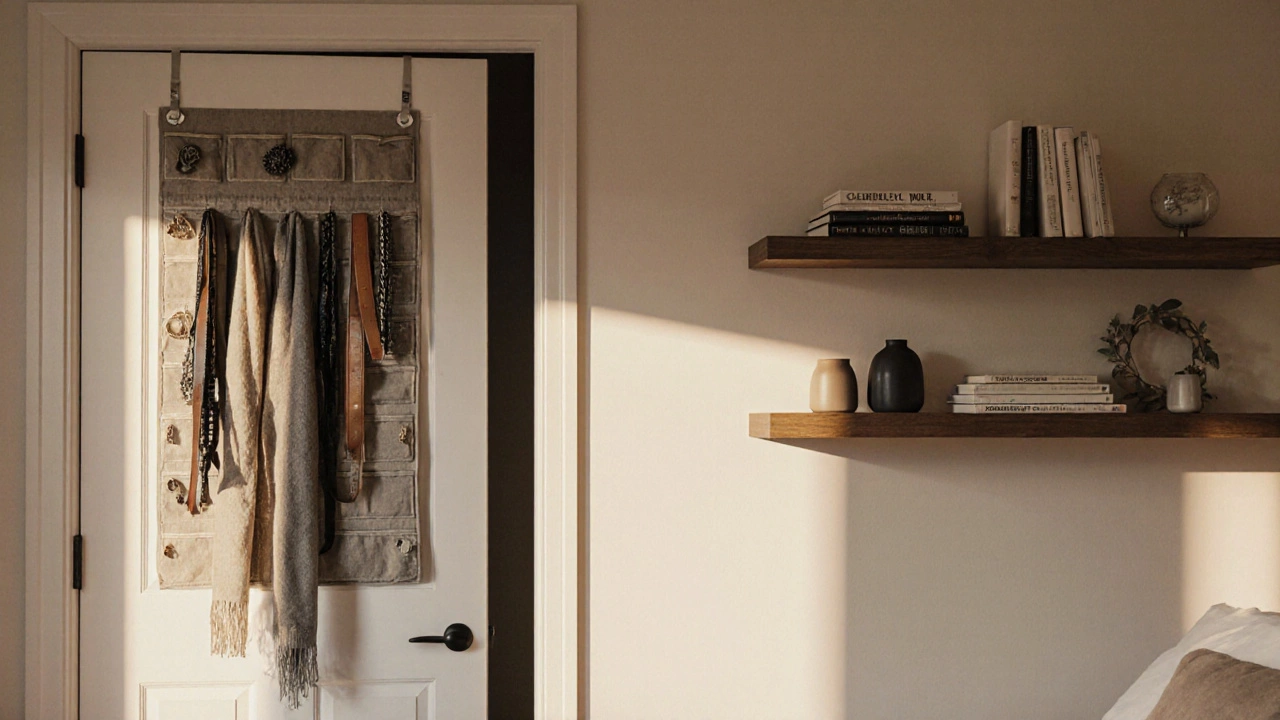
Doors are storage goldmines. Not just the closet door-every door. The back of the kitchen door? Hang a pegboard for utensils. The bathroom door? Add hooks for robes and towels. The bedroom door? Use an over-the-door organizer for scarves, belts, or jewelry.
One family in Oxford turned their laundry room door into a drying rack station. They installed a fold-down rack that pulls out when needed and tucks away when dry. It saved them from cluttering the hallway with clotheslines. You don’t need fancy tools-just a drill, some brackets, and the right kind of organizer.
Under the Bed: The Ultimate Hidden Drawer
Most people think under-bed storage is only for bins. But there’s more to it. If your bed has low clearance, use slim plastic drawers with wheels. If you have a platform bed, build custom drawers underneath with handles. For even more space, use vacuum-sealed bags for winter coats or bedding. You can fit three months’ worth of linens under a standard bed frame.
Pro tip: Choose drawers with low profiles (under 6 inches) so you don’t have to lift the mattress. And label everything. You won’t remember what’s in the third drawer from the left when it’s buried under dust.
Corner Shelves: Turn Waste into Worth
Every room has corners. And every corner is a storage opportunity. Instead of leaving them empty, install corner shelves or a corner cabinet. In the living room, use one for books and decor. In the kitchen, store pots and pans. In the bathroom, hold towels and toiletries.
Corner units don’t have to be bulky. Modern designs are sleek and wall-mounted. One homeowner in Oxford used a triangular shelf in the corner of their kitchen to store mugs. Now they’re visible, easy to grab, and the space looks intentional-not neglected.
Behind the Couch: The Lazy Person’s Storage
That gap between your sofa and the wall? It’s big enough for a narrow bookshelf or a tall floor lamp with hidden storage. Some people install a custom cabinet that fits snugly behind the couch. Others use rolling carts with wheels so they can pull it out when needed and tuck it back in.
One trick: Use a tall, narrow plant stand as a side table behind the sofa. It holds remote controls, books, and a lamp-without blocking the walkway. It’s not just storage. It’s decor that works.
Attic and Basement Edges: Don’t Ignore the Perimeter
Attics and basements are full of dead space along the walls. People fill the center with boxes and forget the edges. But the perimeter is often the safest, driest, and most accessible spot. Install shelving along the walls, leaving the center open for movement. Use clear bins with labels so you can see what’s inside without digging.
Tip: Keep heavy items like tools or winter gear on lower shelves. Store seasonal items like holiday lights or costumes on higher shelves. Use a step stool instead of climbing on boxes.
How to Start: A Simple 5-Step Plan
- Walk through your house and mark every spot that feels unused: gaps, corners, above doors, under stairs.
- Measure each space. Write down width, height, and depth.
- Decide what you need to store: clothes, tools, toys, holiday items?
- Choose storage that fits the shape: slim drawers, floating shelves, over-door racks, rolling carts.
- Install one thing this week. Don’t try to fix everything at once.
Start small. One corner. One door. One under-bed drawer. Once you see how much space you gain, you’ll want to do more.
What Not to Do
Don’t buy bulky storage units that block movement. Don’t stack things so high you can’t reach them. Don’t hide things you use every day in hard-to-reach spots. The goal isn’t to cram more stuff in-it’s to make your home feel calmer, cleaner, and more organized.
Also, avoid using plastic bins without labels. You’ll forget what’s inside and end up buying duplicates. And never block vents, electrical outlets, or fire exits. Safety comes before storage.
Final Thought: Storage Should Feel Invisible
The best storage solutions don’t look like storage. They look like part of the room. A built-in cabinet that matches your walls. A floating shelf that holds books like decor. A drawer hidden behind a mirror. When storage blends in, you don’t notice it. And that’s the point.
Dead space isn’t wasted space. It’s unclaimed potential. Turn it into something useful, and your home will feel bigger, quieter, and more peaceful-without spending a penny on renovations.
What is considered dead space in a house?
Dead space is any area in your home that’s unused or underused, like the gap between appliances, the space above doors, under stairs, behind furniture, or in corners. These spots are often overlooked because they’re awkwardly shaped or hard to reach, but they can be turned into practical storage with the right solutions.
Can I use dead space in a rented apartment?
Yes, absolutely. You don’t need to drill holes or build permanent structures. Use over-the-door organizers, rolling carts, under-bed drawers, and magnetic strips. These are all renter-friendly and can be removed without damage. Just avoid heavy shelves or anything that requires wall anchors unless your landlord approves.
How do I keep dead space storage from looking messy?
Use closed containers like drawers or cabinets instead of open bins. Label everything clearly. Keep items uniform in size and color-white or neutral bins blend in better. And only store things you actually need. If it’s clutter you don’t use, get rid of it. Storage should reduce clutter, not hide it.
What’s the cheapest way to use dead space?
The cheapest way is to use what you already have. Repurpose shoe boxes as drawer dividers. Use tension rods to create hanging shelves in cabinets. Hang a towel rack on the back of a door. Buy inexpensive plastic bins from discount stores. Many solutions cost less than £10 and take under an hour to install.
Should I hire someone to organize my dead space?
Only if you’re short on time or feel overwhelmed. Most dead space solutions are DIY-friendly and require basic tools like a tape measure, screwdriver, and level. You don’t need a professional to install a shelf or a rolling cart. Save money by doing it yourself, and you’ll learn exactly how your space works.