
Medicare Adjustable Bed Coverage Calculator
How This Works
Medicare covers 80% of approved costs for medically necessary adjustable beds after your deductible. Enter your bed price to see your potential out-of-pocket costs.
Your Coverage Estimate
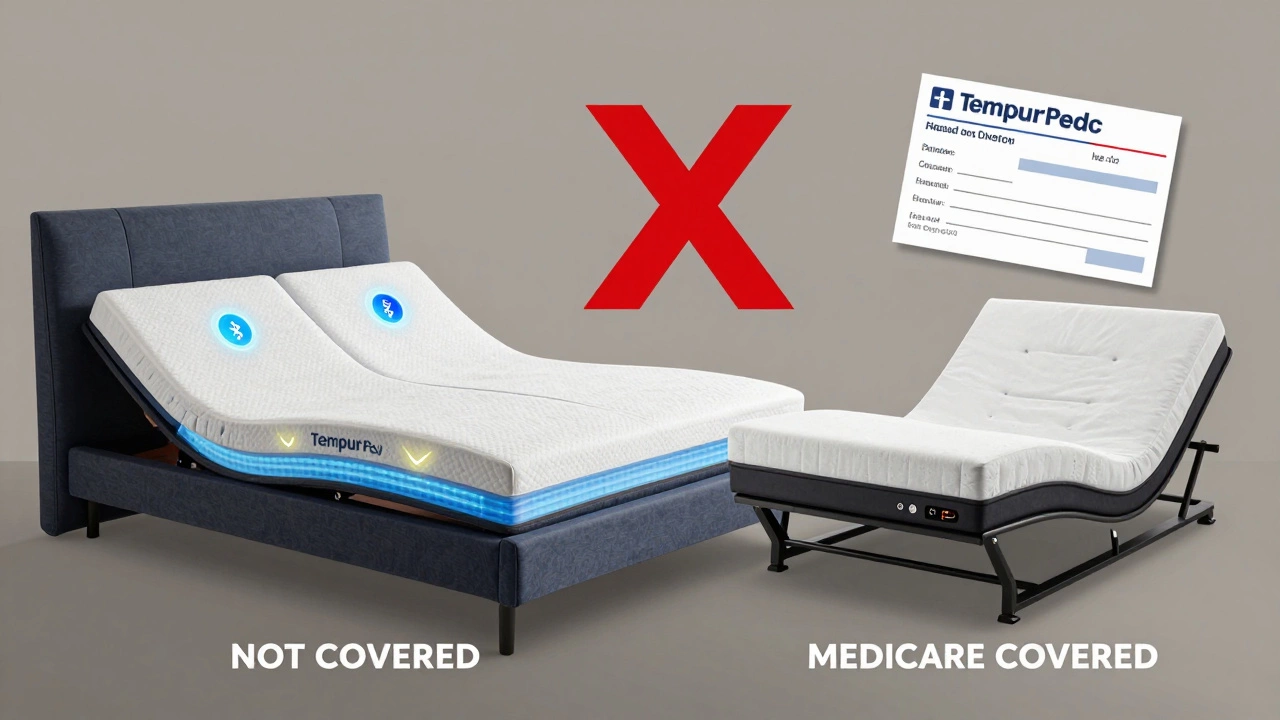
Medicare doesn’t cover a TempurPedic adjustable bed just because it’s comfortable, expensive, or marketed as "medical-grade." That’s the hard truth. But if you have a documented medical need-like severe sleep apnea, chronic back pain, or mobility issues that make getting in and out of bed a struggle-Medicare might pay for part of an adjustable bed. And yes, that could include a TempurPedic model, but only under very specific conditions.
What Medicare Actually Covers
Medicare Part B covers durable medical equipment (DME) that’s deemed medically necessary. An adjustable bed qualifies as DME if it’s prescribed by your doctor and meets Medicare’s criteria. That means the bed must help treat a condition, not just make sleeping nicer. A regular mattress won’t cut it. A standard hospital bed won’t either. It has to be adjustable in a way that directly improves your health.
For example: If you have COPD and need to sleep upright to breathe better, Medicare may cover an adjustable bed with head elevation. If you have advanced arthritis and can’t lift your legs without assistance, Medicare might cover one with leg elevation. If you’re recovering from hip surgery and can’t roll over safely, that’s another possible reason.
TempurPedic makes adjustable bases that pair with their memory foam mattresses. The brand itself doesn’t matter to Medicare. What matters is the function. So if your doctor writes a prescription for an adjustable bed with head and foot elevation, and TempurPedic’s model is the only one that fits your needs, Medicare will cover it-assuming the supplier is enrolled in Medicare.
How to Get Medicare to Pay
You can’t just walk into a mattress store and say, "I want a TempurPedic adjustable bed, and Medicare will pay." That won’t work. Here’s the real process:
- See your doctor for a face-to-face evaluation. Tell them you’re having trouble sleeping due to a medical condition-be specific. Mention pain, breathing issues, swelling, or mobility problems.
- Ask your doctor to document why an adjustable bed is medically necessary. They’ll need to write a detailed letter or note explaining how the bed improves your condition.
- Your doctor must prescribe the bed using a DME order form. They’ll specify features like head/foot elevation, zero-gravity positioning, or massage functions if needed.
- Find a Medicare-enrolled DME supplier. Not every mattress store is qualified. Look for suppliers who accept Medicare and specialize in medical equipment. You can search the Medicare website for approved providers in your area.
- The supplier will submit the claim to Medicare. You’ll pay 20% of the approved amount after meeting your Part B deductible. Medicare covers 80%.
Don’t skip steps. If you buy the bed yourself and then try to get reimbursed, Medicare will say no. You have to go through the approved process.
What’s Not Covered
Medicare won’t pay for:
- Adjustable beds bought for comfort, luxury, or convenience
- Bed frames without medical justification
- TempurPedic mattresses alone (even if they’re expensive)
- Smart features like Bluetooth, app control, or sleep tracking
- Extra accessories like pillows, mattress toppers, or remote controls
Just because a TempurPedic bed has a massage function doesn’t mean Medicare will cover it. That’s a wellness feature, not a medical one. Same goes for cooling gel layers or odor-resistant fabrics. Medicare only cares about movement and positioning that directly impacts your health.

What You’ll Pay
Medicare approves a set amount for each type of adjustable bed. In 2025, the average approved amount for a basic adjustable base is around $800-$1,200. If you choose a TempurPedic model that costs $2,500, Medicare will only cover 80% of $1,200-that’s $960. You pay the rest: $1,540 out of pocket.
Some people think they can upgrade to a fancier model and get Medicare to pay more. They can’t. Medicare pays based on the lowest-cost effective option. If a cheaper adjustable bed does the same job, Medicare will only cover that one.
That’s why it’s smart to ask your DME supplier: "What’s the lowest-cost adjustable bed that meets my doctor’s prescription?" Sometimes a basic model from a different brand will work just as well-and cost less.
Alternative Options
If Medicare denies your claim or you can’t afford the 20% coinsurance, here are other ways to get help:
- Medicaid: If you qualify for dual eligibility (Medicare + Medicaid), Medicaid may cover the remaining 20% and even some extra features.
- Veterans Benefits: If you’re a veteran, the VA may cover an adjustable bed if your condition is service-related.
- Charities: Organizations like the National Sleep Foundation or local disability groups sometimes offer grants for medical sleep equipment.
- Payment Plans: Many DME suppliers offer 0% interest financing for 12-24 months. Ask about it before you buy.
Don’t assume you’re stuck paying full price. Many people don’t know these options exist.
Real-World Example
Carol, 72, from Ohio, had severe spinal stenosis. She couldn’t sleep lying flat. Her doctor prescribed an adjustable bed with head elevation to reduce nerve pressure. She chose a TempurPedic base because it matched her existing TempurPedic mattress. Medicare approved the claim after reviewing her doctor’s note. She paid $320 out of pocket for a $1,600 bed. Without the prescription and proper supplier, she’d have paid $1,600 herself.
Her story isn’t unique. Thousands of seniors get partial coverage every year. But only if they follow the rules.
Common Mistakes to Avoid
- Buying the bed first, then asking for reimbursement. Medicare doesn’t do that.
- Using a non-Medicare supplier. If they don’t accept assignment, you’ll pay full price.
- Not being specific with your doctor. Saying "I want to sleep better" isn’t enough. Say "I can’t breathe when lying flat," or "I can’t lift my legs without help."
- Assuming brand matters. TempurPedic isn’t special to Medicare. Function is.
Bottom Line
Yes, Medicare can pay for a TempurPedic adjustable bed-but only if you have a real medical need, a doctor’s prescription, and you go through the right supplier. It’s not about the brand. It’s not about comfort. It’s about function. If your condition requires you to change your sleeping position to breathe, move, or reduce pain, then you might qualify. If you’re just looking for a better night’s sleep, Medicare won’t help.
Start with your doctor. Be clear. Be specific. Follow the steps. And don’t let marketing tricks confuse you. A $3,000 bed isn’t automatically better than a $1,000 one-if both do the same job medically.
Does Medicare cover TempurPedic mattresses?
No, Medicare does not cover TempurPedic mattresses alone. It only covers adjustable bed bases when they’re prescribed for a medical condition. The mattress itself is considered a personal comfort item, even if it’s memory foam or medical-grade.
Can I get a free adjustable bed from Medicare?
No, Medicare never covers 100% of the cost. You’ll always pay 20% of the approved amount after meeting your Part B deductible. Some supplemental insurance or Medicaid may cover that remaining portion.
Do I need a prescription for an adjustable bed?
Yes. Without a written prescription from your doctor stating the medical necessity, Medicare will deny coverage. The prescription must include your diagnosis and why the adjustable features are needed.
Can I rent an adjustable bed instead of buying?
Yes, some Medicare-approved suppliers offer rental options for adjustable beds. This is useful if you only need it temporarily, like after surgery. Medicare may cover rentals under the same rules as purchases.
What if Medicare denies my claim?
You can appeal. Request a written denial letter, then submit additional medical documentation from your doctor. Many denials are overturned when more detailed evidence is provided. You have 120 days to file an appeal.