Sofa Quality Checker
What type of wood is best for a sofa frame?
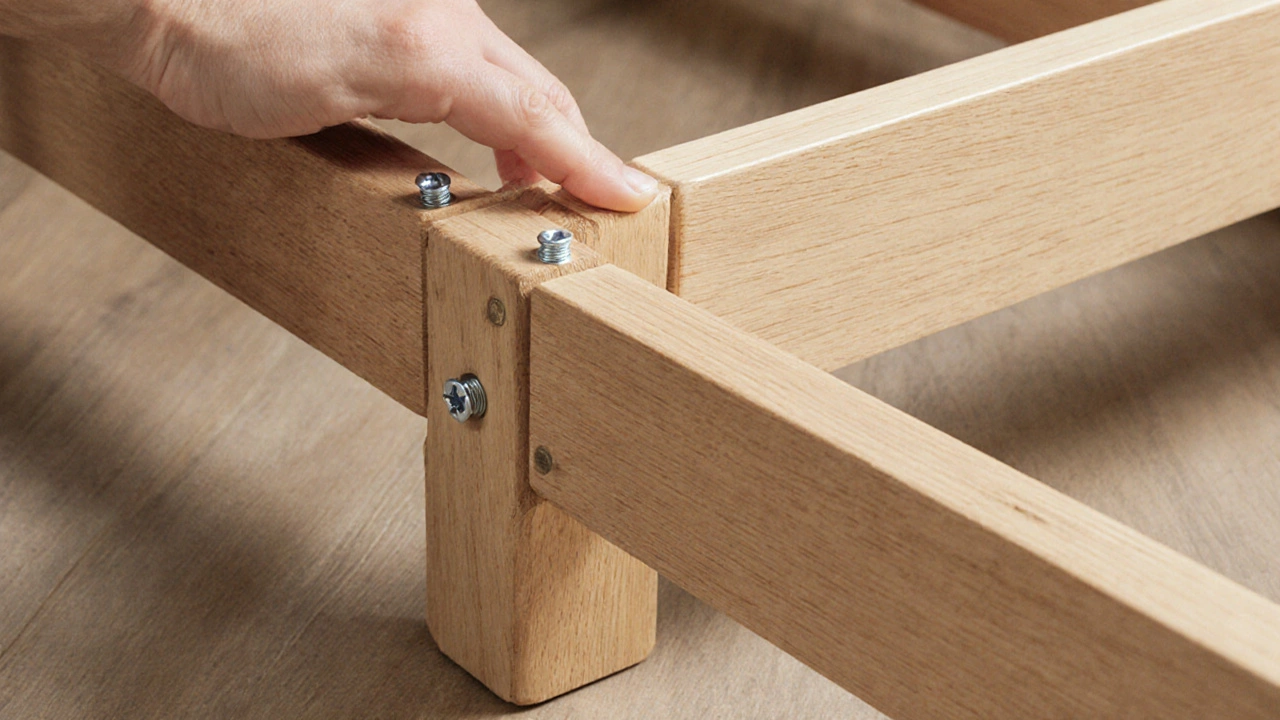
What type of joinery indicates a high-quality sofa?
What density foam is ideal for sofa cushions?
What fabric durability rating is recommended for a family sofa?
What warranty period is considered reliable for a high-quality sofa frame?
Buying a sofa is one of the biggest furniture investments you’ll make. It’s not just about style-it’s about comfort, longevity, and value. You’ve probably seen sofas priced from £300 to £3,000. What’s the real difference? A high-quality sofa doesn’t just look good-it lasts. And knowing how to spot the signs of quality means you won’t end up with a saggy, creaky mess after six months.
Check the Frame
The frame is the skeleton of the sofa. If it’s weak, nothing else matters. Look for solid hardwood like oak, beech, or maple. These woods don’t warp or crack easily. Avoid sofas with particleboard, plywood, or softwoods like pine-they’re cheap, prone to splitting, and won’t hold up over time.
Here’s how to test it: lift one corner of the sofa. If it feels light and flimsy, the frame is probably made of engineered wood. A solid hardwood frame should feel heavy and stable. Now, try to wiggle the arms and back. A well-built frame won’t move. If you hear creaking or feel any looseness, walk away. A quality frame is glued, screwed, and sometimes even dowelled. No staples or nails alone.
Look at the Joinery
How the frame pieces connect tells you everything. High-end sofas use double-dowel joints, reinforced with corner blocks and screws. These are the same techniques used in fine cabinetry. Cheaper sofas rely on staples or glue alone. You won’t see this from the outside, but ask to see the underside. Flip the sofa over-most stores will let you. If you see exposed staples holding the frame together, that’s a red flag.
Some brands even use metal brackets or mortise-and-tenon joints. These are signs of craftsmanship. You don’t need to be a carpenter to spot them. If the joints look neat, tight, and reinforced, you’re on the right track.
Test the Cushion Fill
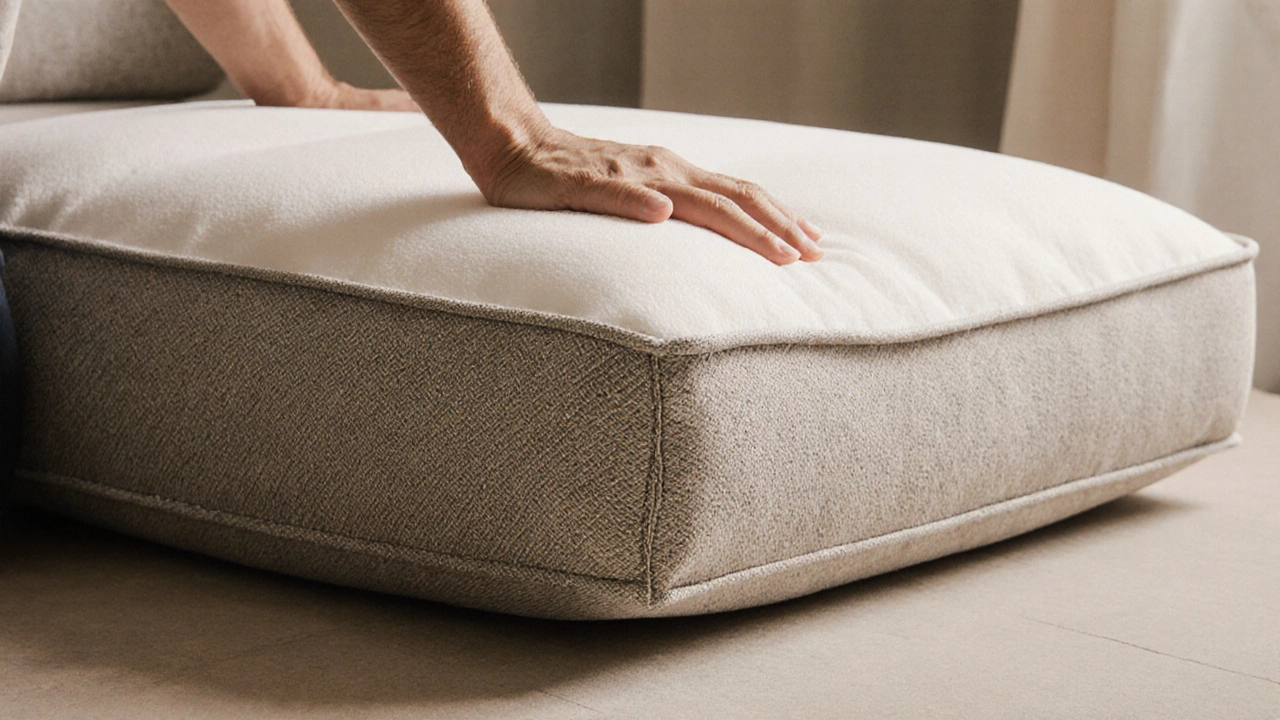
Cushions are where comfort lives. But not all foam is created equal. The best sofa cushions use high-density foam (at least 2.5 lbs per cubic foot) wrapped in down or feather. This combo gives you support without sinking too far. Low-density foam (under 1.8 lbs) flattens fast. You’ll notice it within months-your hips sink in, and you’re left with a flat, uncomfortable surface.
Press down firmly on the seat cushion. Does it spring back quickly? Or does it stay indented? A high-quality cushion will rebound almost instantly. If it takes more than a few seconds to recover, the foam is too soft. Also, lift the cushion. If it’s feather-filled, it should feel dense, not airy. A good down blend has at least 60% down clusters, not just feathers. Feathers alone will flatten and poke through.
Examine the Fabric
Upholstery fabric needs to handle daily wear. Look for a double rub count-this measures durability. In the UK, a minimum of 15,000 double rubs is considered heavy-duty. For a family sofa, aim for 30,000 or higher. You won’t find this number on the tag, so ask the salesperson. If they don’t know, it’s probably low-grade fabric.
Stain-resistant, tightly woven fabrics like performance microfiber, Crypton, or solution-dyed acrylics are top choices. They resist fading, spills, and pet claws. Avoid loose weaves or delicate fabrics like silk or linen unless you’re planning to use the sofa only for show. A quality sofa should survive kids, pets, and Sunday movie nights.
Inspect the Stitching
Stitching is the glue that holds everything together. Look for double-stitched seams, especially along the arms, back, and cushions. Single stitching will unravel. You should also see clean, even stitches-no loose threads, skipped stitches, or uneven lines.
Check the welt cord (the rope-like trim along the edges). On a quality sofa, it’s made from the same fabric as the main upholstery and is tightly sewn. If it’s a cheap plastic cord or loosely attached, it’s a sign of corner-cutting. The stitching should be consistent from front to back, top to bottom. No hidden seams or rushed work.

Ask About the Warranty
A warranty tells you what the manufacturer believes in. A high-quality sofa comes with at least a 5-year warranty on the frame and 2-3 years on cushions and fabric. Some premium brands offer 10-year frame warranties. If the warranty is only one year, that’s a warning sign. It means they don’t expect it to last.
Read the fine print. Some warranties exclude cushion compression or fabric fading. That’s normal. But if the warranty doesn’t cover the frame at all, walk away. A company that stands behind its product will give you clear, written terms. Don’t accept vague promises like “lifetime warranty”-that’s marketing, not protection.
Feel the Weight
Heavy doesn’t always mean better, but it’s usually a clue. A high-quality sofa made with hardwood, dense foam, and thick fabric will weigh at least 150 lbs. A flimsy one might weigh under 100 lbs. Lift the back or side-does it feel solid? Or does it feel like it could be blown over by a strong breeze?
Weight isn’t the only factor, but it’s a quick indicator. Combine it with the other checks. A heavy sofa with a particleboard frame is still a bad buy. But a heavy sofa with hardwood, tight stitching, and high-density foam? That’s the real deal.
What to Do If You’re Still Unsure
If you’re shopping online, look for customer reviews with photos. Real users show how the sofa holds up after a year. Search for phrases like “still looks new after 2 years” or “cushions flattened fast.” Look for patterns-not one bad review, but a trend.
Visit a local upholsterer or furniture repair shop. Ask them what they see most often. They’ll tell you which brands fall apart and which ones last. Local experts know what works in real homes-not just showrooms.
And remember: a sofa that costs twice as much might last twice as long. That’s not an expense-it’s an investment. A £1,200 sofa that lasts 15 years costs less per year than a £500 one that dies in five.