Bedroom Mirror Placement Checker
Select where your mirror is currently located in your bedroom to see how it affects your sleep and energy.
The psychological trap of the reflected self
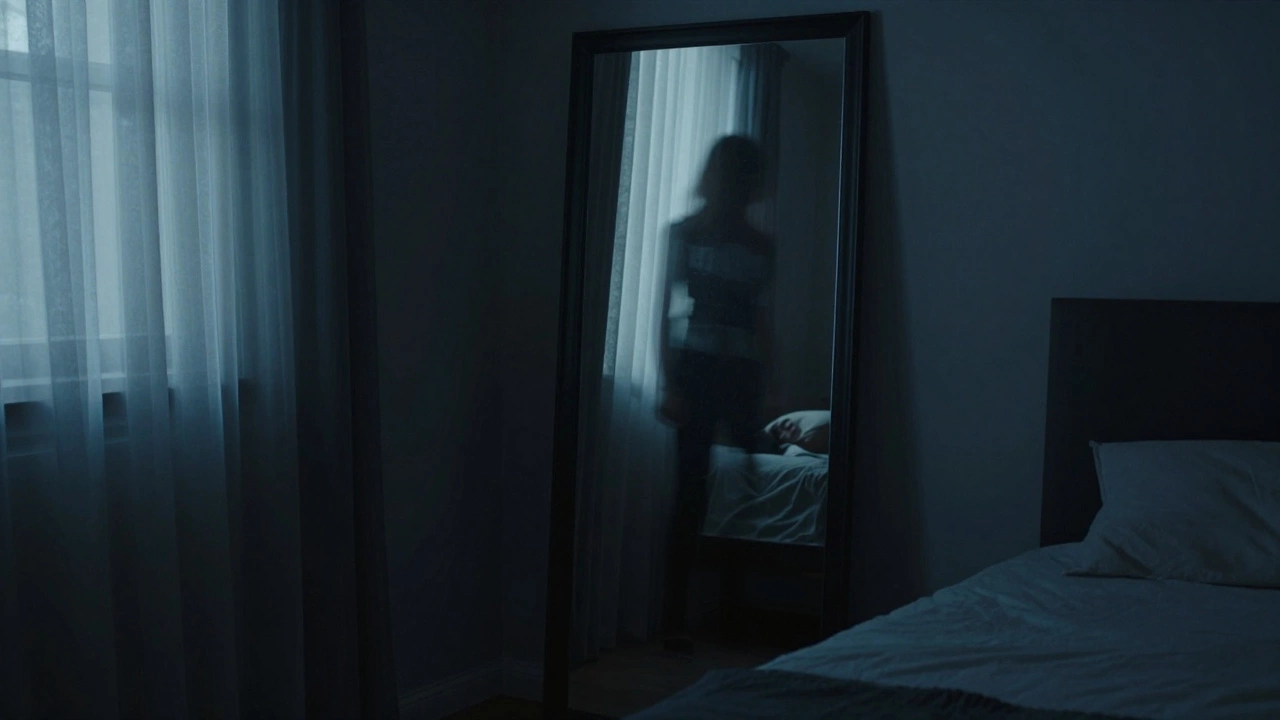
Have you ever noticed how you feel slightly more anxious in a room filled with mirrors? It's not just in your head. Our brains are hardwired to detect movement to keep us safe from predators. When you have a mirror facing your bed, every time you toss and turn or a curtain flutters, your brain registers a movement in the room. Because it's a reflection, your subconscious doesn't always immediately identify it as "me." Instead, it sees "another person" or a "shifting shape." This creates a state of hyper-vigilance. You aren't falling into a deep REM cycle if your brain is subconsciously monitoring the reflected space for intruders. In a study on environmental psychology, researchers found that visual clutter-including reflective surfaces-can increase cortisol levels, the hormone linked to stress. When you're trying to wind down after a long day at work, the last thing you need is a visual stimulus that keeps your brain on high alert.The Feng Shui perspective on energy flow
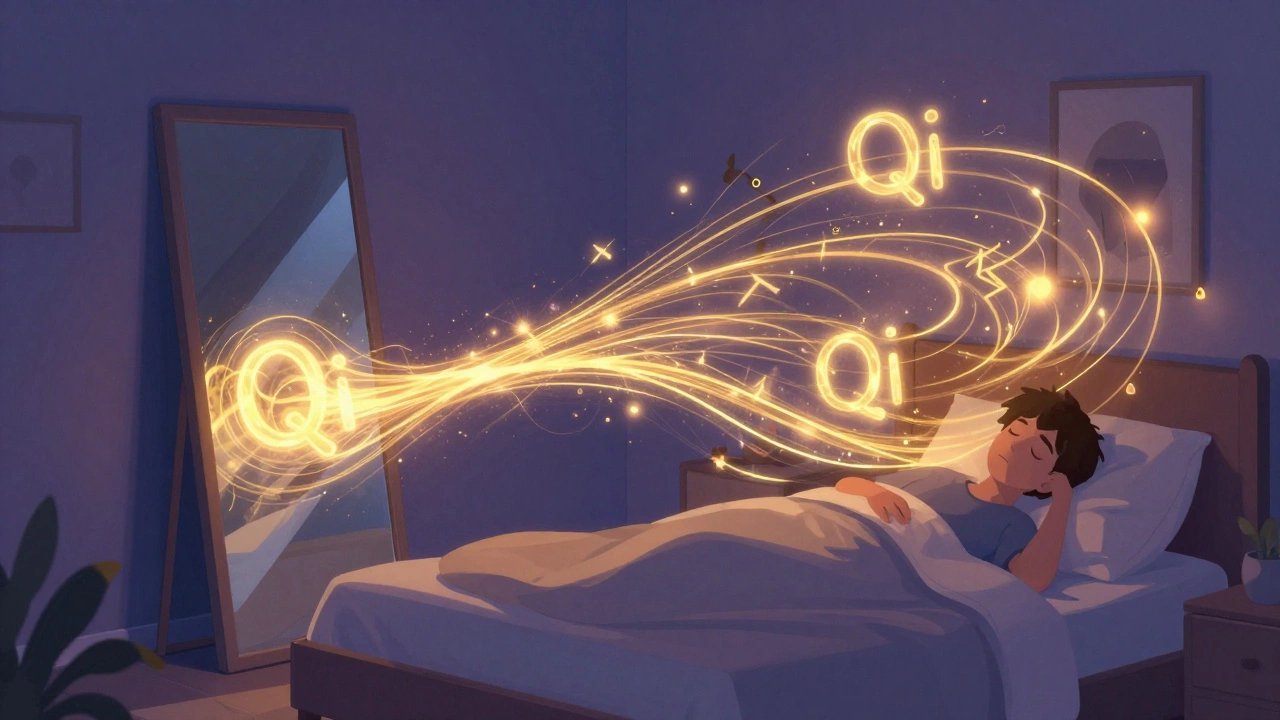
If you look into Feng Shui is an ancient Chinese practice of arranging the interior of a home to create a harmonious flow of energy, known as Qi, the bedroom is treated as a zone of stillness. According to these principles, mirrors are considered "active" elements because they bounce light and energy around the room. Placing a mirror directly opposite the bed is seen as a major mistake. It's believed that the mirror "pushes" the energy away from the sleeper, leading to restlessness. More interestingly, some practitioners suggest that mirrors can invite "third party" energy into a relationship. If you're sharing a bed with a partner and have a massive mirror reflecting the two of you, the symbolic interpretation is that it creates a duplication or an opening for outside interference. While you might not believe in energy currents, the goal of a bedroom should be intimacy and peace, not the chaotic bounce of light and motion.| Placement | Psychological Effect | Energy/Feng Shui View | Sleep Impact |
|---|---|---|---|
| Facing the Bed | Hyper-vigilance / Startle response | Disrupts Qi / Bounces energy | High risk of restlessness |
| Inside Wardrobe Doors | Neutral / Controlled | Hidden energy (Balanced) | Minimal to none |
| Side Wall (Perpendicular) | Moderate visual noise | Acceptable flow | Low risk |
| Facing the Door | Confusion upon entering | Pushes energy back out | No direct sleep impact |
The biological battle with blue light and glare
We often talk about phone screens ruining our sleep, but we forget about how Ambient Light is the light available in a room that comes from various sources, including windows, lamps, and reflections interacts with mirrors. If you have a mirror placed where it catches the moonlight or the glow from a streetlamp outside your window, it can project a beam of light directly onto your face or wall. This isn't just annoying; it's biologically disruptive. Your pineal gland produces melatonin when it's dark. Even a small, reflected sliver of light can signal to your brain that the sun is rising, potentially triggering a premature wake-up or preventing you from entering the deeper stages of sleep. If you've ever woken up at 4 AM feeling wide awake for no reason, check if a mirror was reflecting a nearby LED light or the moon right into your eyes.Practical alternatives for a functional room
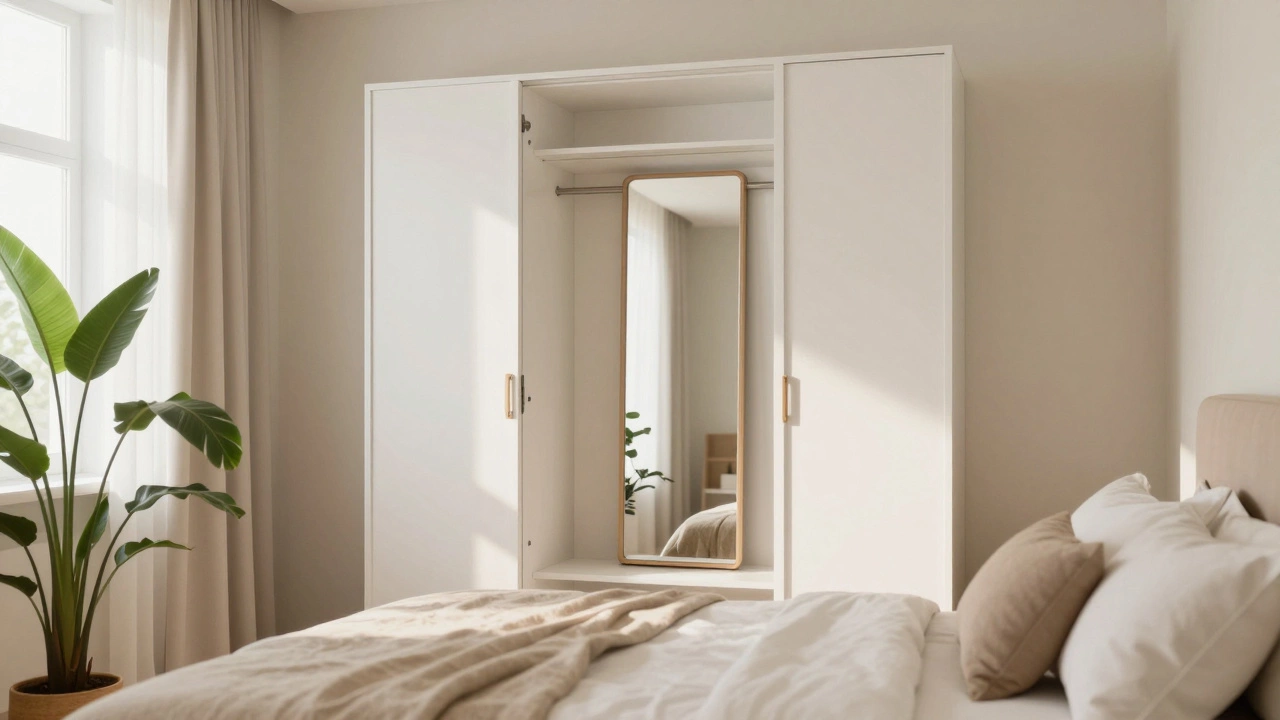
I get it-you need to see your outfit before you head out. You don't have to banish all glass from your room; you just need to be smarter about the geometry. Instead of a massive wall mirror that stares you down while you sleep, try these adjustments:- Inside the closet: Mount your mirror on the inside of a wardrobe door. You get the utility for dressing, but the mirror is "off" when you're resting.
- The side-wall shift: Move the mirror so it's perpendicular to the bed. You can still see yourself if you stand up, but you won't see a reflection of yourself while lying flat on your back.
- Use a folding mirror: A three-way mirror on a vanity table can be folded shut or angled away from the bed.
- Matte finishes: If you need a reflective surface for light, consider metallic finishes or satin paints that brighten the room without creating a perfect, jump-scaring reflection.
When mirrors actually help (the exception)
Is there ever a time when a mirror *should* be in the room? Yes, if your bedroom is a windowless box or feels like a cave. In very dark, cramped spaces, a mirror can alleviate the feeling of claustrophobia. The trick is to place it where it reflects a window or a piece of art, rather than reflecting the bed. By mirroring a source of nature (like a tree outside your window), you bring a sense of openness and freshness into the room without the psychological baggage of seeing yourself in the middle of the night.Managing the "startle reflex" in a shared space
In a shared bedroom, the mirror problem doubles. Now, it's not just your own movement you're tracking, but your partner's. If one of you is a restless sleeper, the mirror becomes a flickering cinema of tossing and turning. This can be particularly distracting for people with ADHD or anxiety, who may find their attention drawn to the reflection even while trying to fall asleep. By removing the visual noise, you create a "sensory vacuum" that allows the brain to finally shut down.Is it bad to have a mirror facing the bed?
From a psychological standpoint, yes. It can trigger a startle response when you see your own movement in the periphery of your vision, which keeps your brain in a state of low-level alertness. In Feng Shui, it's believed to disrupt the flow of energy (Qi) and can lead to restlessness or instability in a relationship.
Where is the best place for a mirror in the bedroom?
The ideal spot is inside a closet door or on a wall where it does not reflect the bed. If you need a full-length mirror, place it on a wall perpendicular to the bed so you aren't staring at your reflection while lying down.
Can mirrors cause insomnia?
While a mirror itself isn't a medical cause of insomnia, the reflections of light (like streetlights or electronics) and the psychological stress of visual movement can disrupt your sleep cycle and make it harder to fall or stay asleep.
Should I remove all mirrors from my room?
Not necessarily. You only need to remove or cover mirrors that directly face the bed or create unsettling reflections. Mirrors used for grooming and dressing are fine as long as they are positioned away from the sleeping area.
What can I use instead of a mirror to brighten a room?
Try using light-colored walls, sheer curtains to maximize natural light, or metallic accents that reflect light softly without creating a clear image. Adding more greenery near windows also helps the room feel more open and alive.