Decluttering Assessment Tool
Determine how much space you could free up by decluttering. This tool calculates your potential storage gains based on your current situation and provides personalized tips to help you get started.
How much clutter do you have?
Which areas do you want to focus on?
Your Decluttering Assessment
Space Available After Decluttering:
Quick Tip: The article mentions the one-in, one-out rule. Try this to prevent clutter from building up again!
You’ve got stuff. Too much of it. And no place to put it. Not a closet, not a shelf, not even a corner that doesn’t look like a landfill. You’re not alone. Millions of people live in tiny flats, rented rooms, or homes where storage was an afterthought. But here’s the truth: you don’t need more space. You just need smarter ways to use what you’ve got.
Under the Bed Is Your Secret Weapon
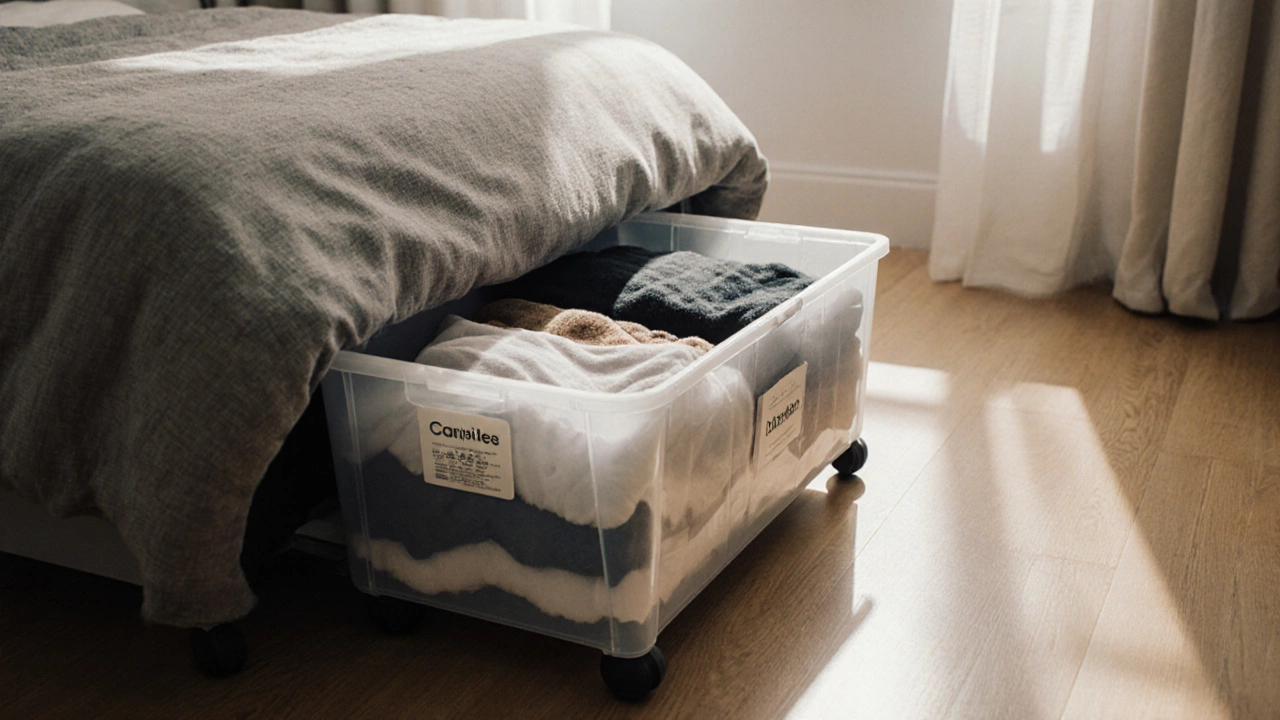
Most people forget about the space under their bed. It’s not just for dusty old shoes or forgotten suitcases. That’s 12 to 18 inches of pure storage real estate, and it’s free. Get low-profile plastic bins with wheels. They slide in and out smoothly. Label them. Put seasonal clothes, extra bedding, or even shoes in them. No one sees them. No one cares. But you’ll thank yourself every time you need a winter coat in April.
Some beds come with built-in drawers. If yours doesn’t, a simple under-bed storage kit from any hardware store costs under £20. You can fit four of them under a standard double bed. That’s the equivalent of a small closet, hidden in plain sight.
Walls Aren’t Just for Pictures
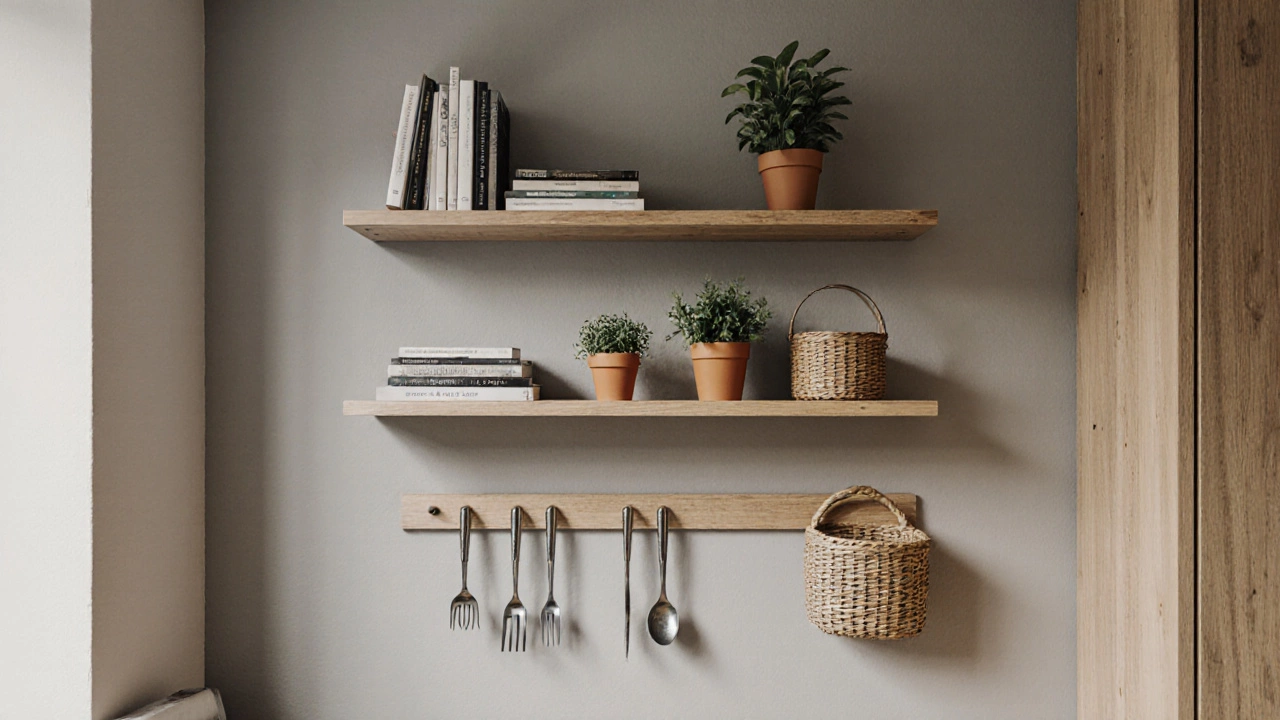
Walls are the most underused real estate in any home. Instead of hanging a single framed photo, install floating shelves. Not the flimsy kind. Look for ones that hold at least 20kg each. Use them for books, plants, or even small baskets. Stack three or four in a vertical line. Suddenly, you’ve got storage without taking up floor space.
Want more? Use magnetic strips. They’re not just for knives. Hang them in the kitchen for metal utensils, in the garage for tools, or even in the bathroom for hair clips and bobby pins. They’re cheap, easy to install, and keep things off the counter. A 30cm strip costs about £8 and holds 15+ items.
Behind the Door Is a Goldmine
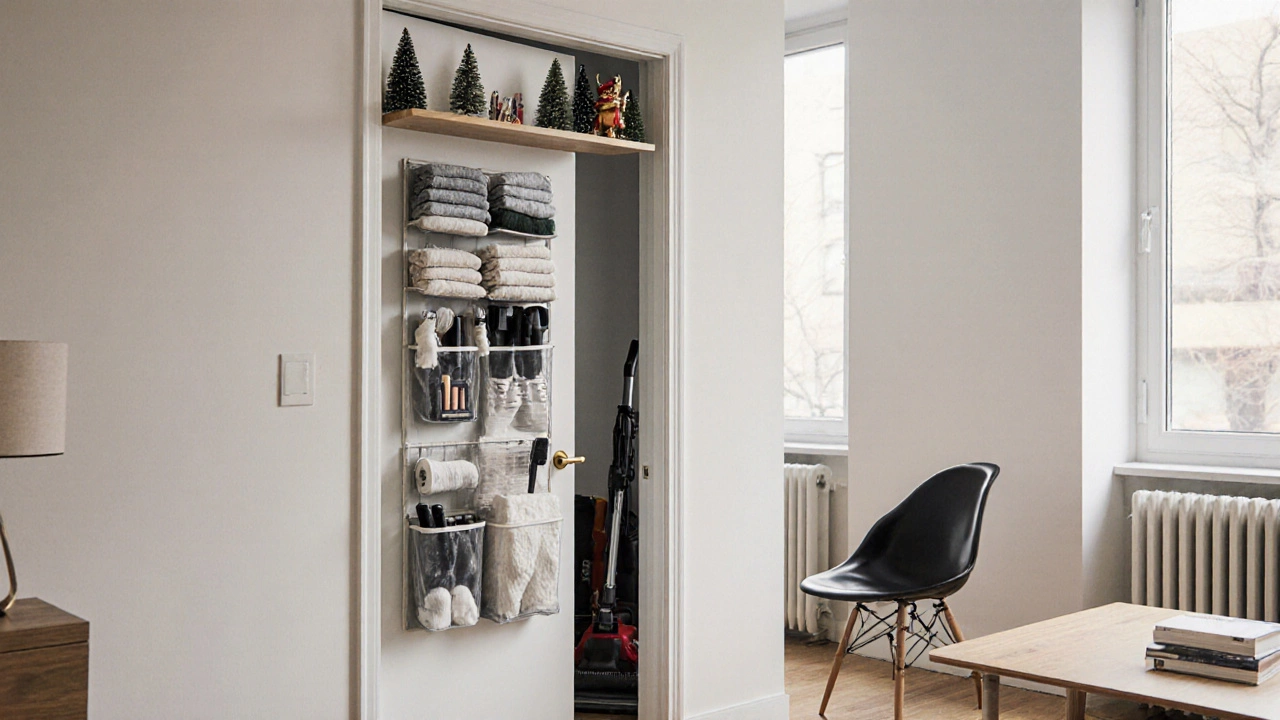
Doors don’t just open and close. They’re vertical surfaces waiting to be turned into storage. Over-the-door organizers aren’t just for closets. Get one with pockets and hang it on your bedroom door. Use it for socks, underwear, makeup, or phone chargers. Hang one behind the bathroom door for towels, toiletries, or cleaning supplies. No drilling needed. Just slip it over the top.
For heavier stuff, install a narrow shelf above the door frame. It’s high enough that no one bumps into it, but deep enough to hold boxes of seasonal items. In a studio flat, I’ve seen people store winter coats, holiday decorations, and even a small vacuum cleaner up there. Out of sight. Out of mind. But right there when you need it.
Furniture That Works Double Duty
Stop buying furniture that just sits there. Start choosing pieces that store. Ottomans with lids are the unsung heroes of small spaces. Sit on them. Open them. Pull out blankets, board games, or extra plates. A bench with hidden storage under the seat works great by the front door for shoes and bags.
Look for coffee tables with drawers. Or better yet, ones with lift-top lids. Slide open the top, and you’ve got a deep compartment for remotes, cables, or snacks. Some even have built-in charging ports. A good one costs £80-£150, but it replaces a side table, a storage box, and a charging station.
Even your TV stand can be smarter. Skip the open shelves. Get one with closed cabinets. Hide the mess. Tuck away cables, game consoles, and DVDs. A clutter-free surface looks bigger and calmer.
Think Vertical, Not Just Horizontal
When floor space is gone, go up. Tall bookcases that reach the ceiling are your best friend. Use them for bins, baskets, or boxes. Put the stuff you rarely use on the top shelf. Keep daily items at eye level. You’re not wasting space-you’re using every inch.
Stackable bins with handles make this easy. Buy them in matching sizes. Label them. Put them on shelves, in corners, or even inside cabinets. A 10-liter bin holds a month’s worth of socks or 12 tea towels. You’d be surprised how much fits in a vertical stack.
Don’t ignore the space above cabinets. In the kitchen, that’s where you keep rarely used appliances. A small rolling cart you can tuck under the counter works wonders. Slide it out when you need it. Push it back when you don’t. It’s like having extra storage that disappears.
Use What You Already Own-Differently
You don’t need to buy new stuff to solve this. Look around. What can you repurpose?
- A ladder? Lean it against the wall. Hang scarves, towels, or bags from the rungs.
- An old dresser with one drawer missing? Turn it sideways. Now it’s a narrow shelf unit. Add baskets to the open sides.
- Wine crates? Nail them to the wall. Use them for books, plants, or toys.
- A tension rod? Put one inside a cabinet to hang spray bottles or cleaning gloves. Put one across a shower corner to dry towels.
These aren’t fancy hacks. They’re simple, cheap, and proven. People in London flats, student rooms, and tiny apartments use them every day.
Stop Buying-Start Sorting
Here’s the real problem: you don’t have storage because you have too much stuff. No amount of clever shelving fixes that.
Do this: take everything out. Every single thing. Put it all on the floor. Now, sort into three piles: keep, donate, trash.
Ask yourself: Have I used this in the last year? Does it bring me joy? Does it fit in my life right now? If the answer is no, let it go. You’ll be amazed how much space opens up when you stop holding onto things you don’t need.
One woman in Oxford cleared out 11 bags of stuff from her one-bedroom flat. She didn’t buy a single storage box. Just sorted. And suddenly, her closet had room. Her drawers didn’t burst. Her floor was visible again.
Small Space, Big Freedom
Storage isn’t about having more cabinets. It’s about having less clutter. It’s about knowing where things are. It’s about waking up without stepping on shoes, or searching for your keys for 20 minutes.
Start with one spot. Under the bed. Behind the door. One shelf. Do that first. Then move to the next. You don’t need to fix everything today. Just make one corner better. Then another. Slowly, your space will breathe again.
And when you do, you’ll realize something: you never needed more storage. You just needed to stop letting stuff take over.
What’s the cheapest way to add storage to a room?
The cheapest way is to use what you already have. Over-the-door organizers cost under £10. Tension rods are £5. Repurposing old crates or boxes costs nothing. Sorting and decluttering costs nothing too-and it frees up space faster than any purchase.
Can I store things in the attic or basement if I don’t have closet space?
Yes, but only if it’s dry, clean, and accessible. Attics can get hot and damp. Basements can flood. If you use them, store items in sealed plastic bins-not cardboard. Label everything clearly. Only keep things you truly need to hold onto. Don’t turn it into a dumping ground.
How do I stop things from piling up again?
Adopt the one-in, one-out rule. Every time you bring something new in, let something go. It could be old clothes, unused gadgets, or duplicate kitchen tools. Also, give everything a home. If you don’t have a spot for it, don’t buy it. That simple habit stops clutter before it starts.
Are storage containers worth the money?
Only if they’re the right kind. Cheap plastic bins that crack or warp? No. Durable, stackable bins with lids and labels? Yes. Look for ones made of thick polypropylene. They last years. Brands like IKEA and The Container Store have good options under £15 each. But remember: containers don’t fix clutter. Sorting does.
What should I do if I live in a rental and can’t drill holes?
Use adhesive hooks, tension rods, and over-the-door organizers. They hold plenty if you don’t overload them. Magnetic strips stick to steel surfaces. Freestanding shelves lean against walls. You can create serious storage without damaging walls. Just check your lease first-most landlords allow removable solutions.