Open Shelving Calculator
Is Open Shelving Right for Your Kitchen?
This calculator helps you determine if open shelving will work for your kitchen based on your habits, kitchen size, and what you want to display.
Results
For years, kitchen cabinets were all about closing things away-tight doors, glossy finishes, and zero visible clutter. But today’s kitchens are shifting. The next big trend isn’t about hiding storage-it’s about making it work harder, look better, and feel more alive. If you’re thinking about updating your kitchen, the future isn’t in more cabinets. It’s in smarter ones.
Open Shelving Is No Longer a Fad-It’s the New Standard
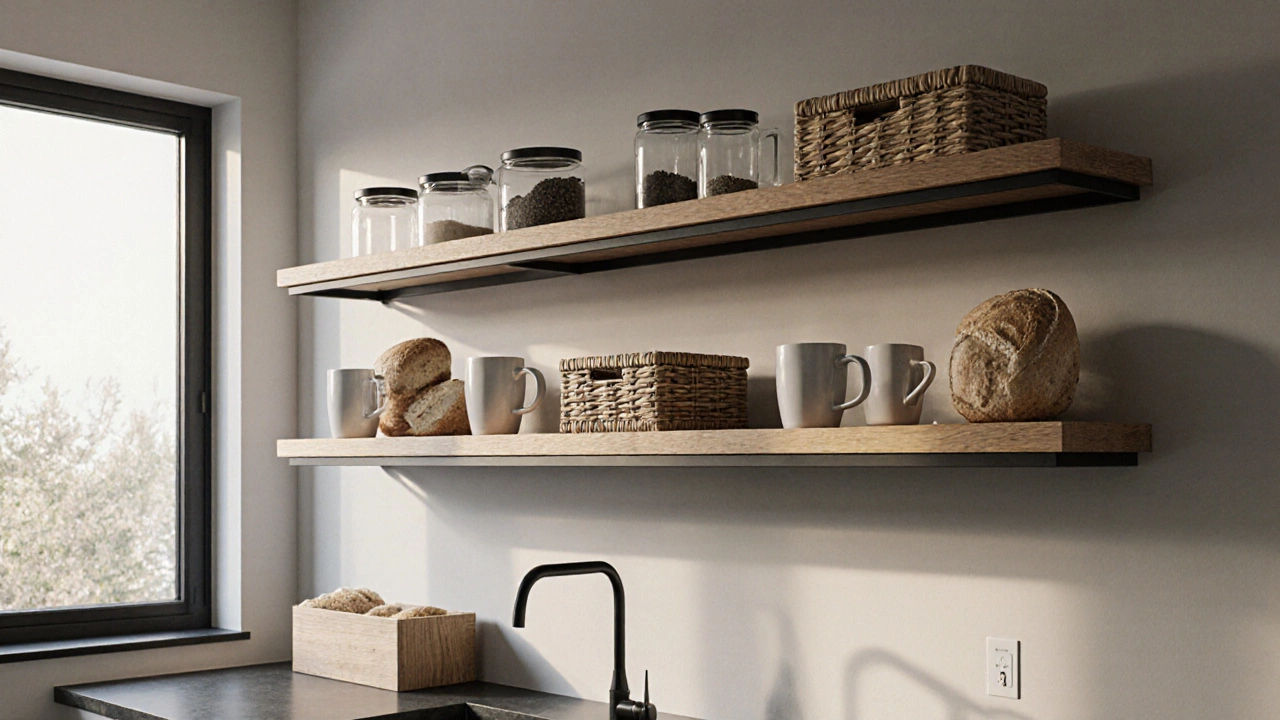
Open shelving isn’t new, but it’s finally settled into its role as the default for modern kitchens. In 2025, it’s not just about showing off pretty dishes. It’s about accessibility, rhythm, and intention. Homeowners are removing entire upper cabinet runs and replacing them with floating shelves made from solid oak, matte black steel, or even recycled concrete. These aren’t random displays. They’re curated zones: one shelf for daily mugs, another for spice jars in matching ceramic, a third for bread boxes and linen napkins.
Why does this work now? Because people are cooking more often, and they want tools within arm’s reach. A study from the Kitchen & Bath Industry Show in 2024 found that 68% of new kitchen designs in the UK now include at least one open shelf section. The trick? Keep it minimal. Too many items on display turns it into clutter, not character. Think less knick-knacks, more purposeful objects.
Hidden Cabinets Are Getting Smarter
If open shelving is about visibility, then hidden cabinets are about stealth. The next wave of cabinetry blends into walls so well, you’d think the kitchen has no storage at all. Flush-mounted doors with no handles, magnetic closures, and integrated lighting are becoming standard. These aren’t just for luxury homes-they’re showing up in mid-range builds too.
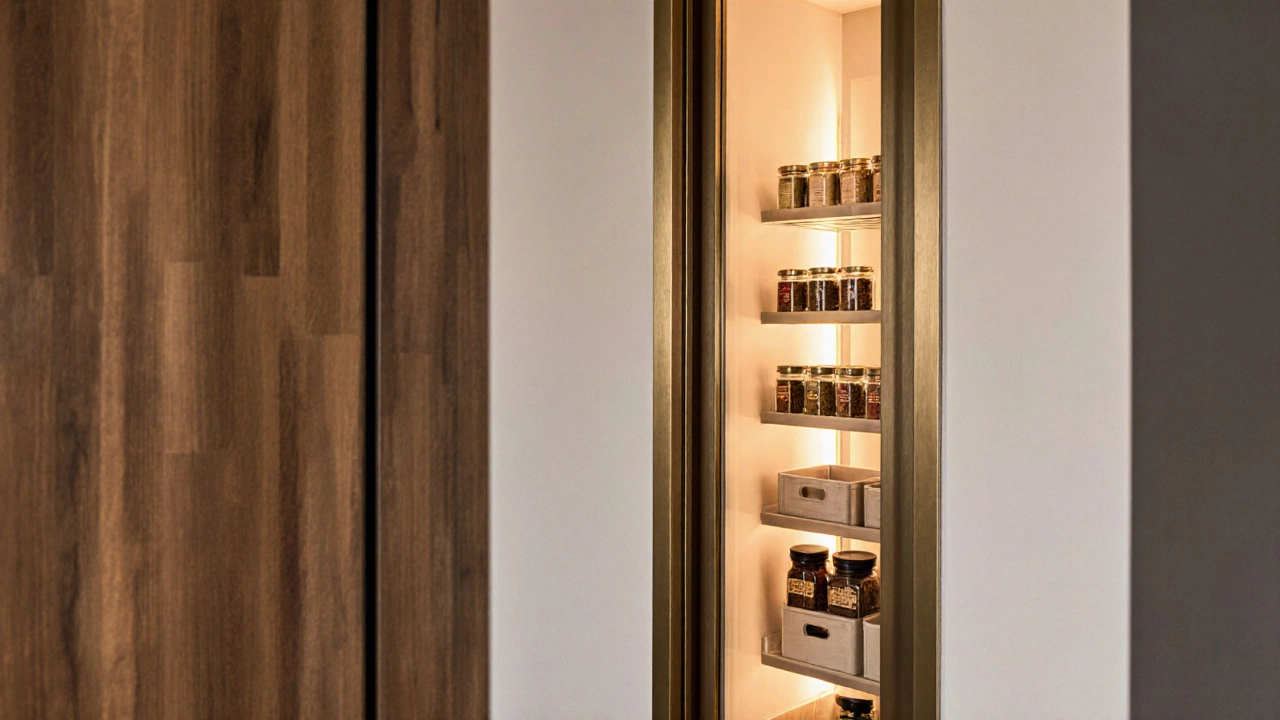
One popular design is the ‘invisible pantry.’ Instead of a bulky cabinet, you get a full-height wall panel that slides open to reveal pull-out trays, tiered spice racks, and adjustable bins. It looks like drywall until you touch it. Brands like Blum and Hettich now offer modular systems that retrofit into existing cabinetry. The result? A clean, uninterrupted line from floor to ceiling that makes small kitchens feel bigger and high-end kitchens feel like a spa.
Two-Tone Cabinets Are Out. Monochrome With Texture Is In.
Remember when kitchens had white uppers and dark lowers? That’s fading fast. In 2025, the move is toward single-color palettes with layered texture. Think matte charcoal cabinets with subtle grain, or soft white cabinets with a hand-rubbed finish that catches light differently across the surface. The goal isn’t contrast-it’s depth.
Paint manufacturers like Farrow & Ball and Benjamin Moore have released new kitchen-specific finishes: ‘velvet matte,’ ‘stone wash,’ and ‘soft grain.’ These aren’t just colors-they’re tactile experiences. A cabinet that looks smooth from afar but reveals a slight texture up close adds warmth without the upkeep of wood veneers. Even in minimalist kitchens, texture is the new detail.
Vertical Storage Is Taking Over
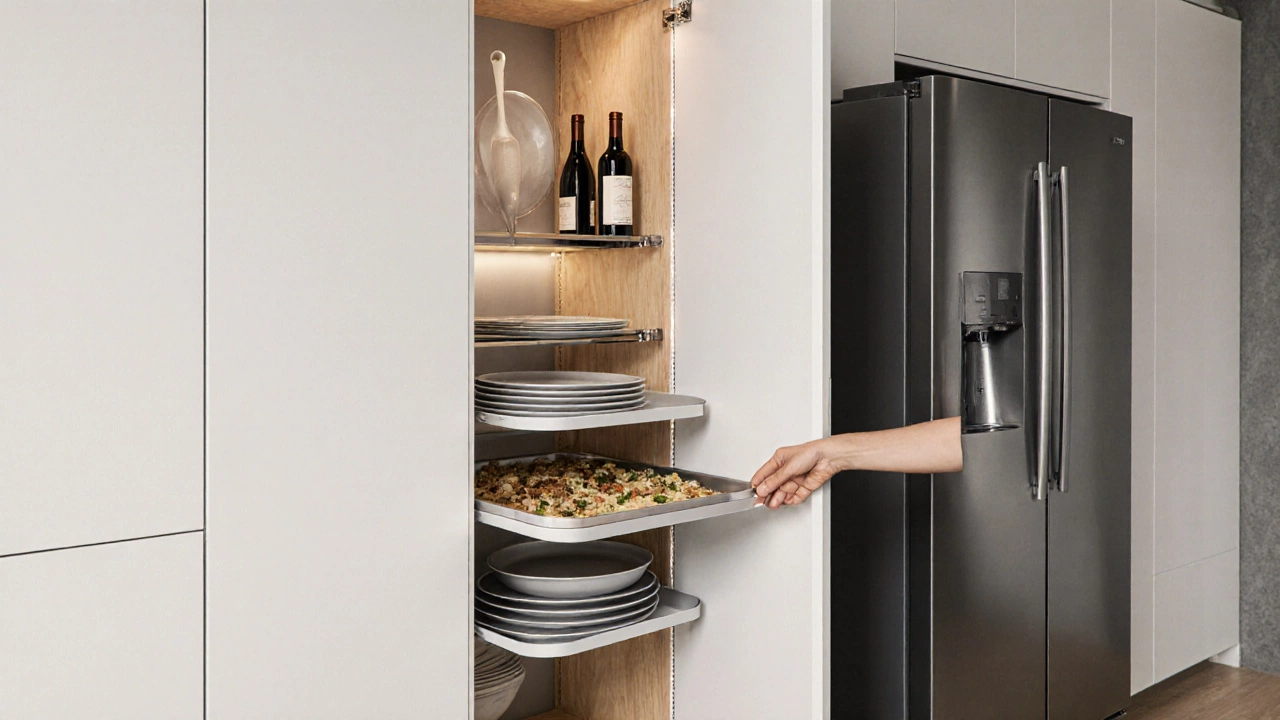
Most kitchens waste vertical space. The area between the top of your cabinets and the ceiling? Gone. The gap behind the fridge? Unused. The next trend fixes that. Tall, narrow pull-out units are being installed in dead zones. One popular solution is the ‘tower cabinet’-a 90-inch-tall, 12-inch-wide unit that fits beside the fridge or oven. Inside, it holds everything from baking sheets to wine bottles, organized on sliding trays.
Another innovation? Ceiling-height corner cabinets with rotating carousels. No more digging for pots in the back of a lazy Susan. These new carousels spin smoothly, hold up to 40 pounds, and are designed for heavy cookware. They’re especially popular in UK homes where space is tight and storage is precious.
Smart Cabinets Are Quietly Becoming Normal
You won’t see flashing screens or voice-controlled doors in most homes. But you will see cabinets with hidden sensors. A drawer that lights up when opened. A cabinet that reminds you when your coffee beans are running low. A door that auto-closes with a gentle magnetic pull.
These aren’t gimmicks. They’re quiet upgrades built into standard cabinetry. Companies like IKEA and Häfele now offer add-on smart modules that retrofit into existing cabinets. A $150 sensor kit can turn a regular drawer into one that tracks usage, syncs with your phone, and even suggests recipes based on what’s inside. The trend isn’t about tech for tech’s sake-it’s about reducing friction in daily routines.
Materials Are Getting Bolder-and More Sustainable
Wood is still popular, but it’s not the only option. In 2025, you’ll see cabinets made from reclaimed timber, bamboo composite, and even recycled ocean plastic. One UK manufacturer, EcoCabinet, now uses waste from local fisheries to create a durable, water-resistant panel that looks like brushed walnut. It’s certified by the Forest Stewardship Council and costs 15% less than traditional solid wood.
Metals are also making a comeback. Brushed brass, aged copper, and powder-coated aluminum are being used for cabinet frames, trim, and handles. They’re not flashy. They’re meant to patina over time, adding character instead of needing constant polishing.
What This All Means for Your Kitchen
The next trend in kitchen cabinets isn’t about one single look. It’s about balance. Open shelves for the things you use every day. Hidden cabinets for the stuff you don’t. Smart features that work without asking. Materials that last and respect the planet. And a design that feels calm, not crowded.
If you’re planning a renovation, don’t just copy Instagram trends. Ask yourself: What do I reach for five times a day? What do I hate digging for? What makes me feel calm when I walk into the kitchen? The answers will guide you better than any Pinterest board.
Start with one change. Swap out two upper cabinets for open shelves. Add a pull-out tray behind the fridge. Install a single smart drawer. You don’t need a full remodel to feel the shift. The future of kitchen storage isn’t loud. It’s quiet, thoughtful, and made for real life.
Are open shelves practical for everyday kitchens?
Yes, if you keep them organized. Open shelves work best when they hold only frequently used items-dishes you use daily, spices you reach for, or pretty mugs you enjoy seeing. Avoid clutter by limiting each shelf to 3-5 types of items. Wipe them weekly, and they stay clean without extra effort.
Do hidden cabinets cost more than regular ones?
Not necessarily. Flush-door cabinets with magnetic closures cost about the same as traditional framed doors. The real cost comes from custom sizing or integrated lighting. But many standard cabinet lines now offer hidden-door options at no extra charge. It’s worth asking your supplier-many don’t even advertise them.
Can I add smart features to my existing cabinets?
Absolutely. You don’t need to replace your cabinets to go smart. Companies like IKEA and Hafele sell retrofit kits that attach to existing drawers. These include motion sensors, LED lighting, and app-connected tracking. Installation takes under an hour and costs between £80 and £200. It’s the easiest way to upgrade without a full renovation.
What’s the best material for high-traffic kitchens?
For durability and low maintenance, go with thermofoil or high-pressure laminate over solid wood. These materials resist moisture, scratches, and stains better than painted wood. If you want natural texture, choose bamboo composite-it’s harder than oak and won’t warp in steamy environments. Avoid high-gloss finishes; they show fingerprints and water marks too easily.
How do I make small cabinets feel less cramped?
Use vertical space. Install tall pull-out units beside the fridge or oven. Add under-cabinet lighting to brighten dark corners. Choose handles that match your cabinet color-they disappear visually and make the space feel more open. Light-colored interiors (white or pale gray) also help. Avoid dark interiors-they make cabinets feel smaller.
If you’re considering a kitchen update, focus on function first. Trends come and go, but a kitchen that works for your habits lasts decades. The next big thing in cabinets isn’t a style-it’s a mindset: less hiding, more helping.