
Bedding vs. Linens Classifier
Click on any item below to see how it is classified in English usage.
Legend
You walk into a store or browse an online shop, and you see terms like "bedding," "linens," "sheets," and "duvet covers." They all seem to point to the same thing: stuff for your bed. But are they? If you have ever paused at the checkout counter wondering if buying a set of sheets counts as buying bedding, you are not alone. The meaning of bedding in English is often misunderstood because it acts as both a specific category and a broad umbrella term depending on who you ask.
At its core, bedding refers to the collective items used to cover and dress a bed. It is distinct from furniture (the frame and mattress) and distinct from personal sleepwear. Think of bedding as the interface between your body and the sleeping surface. This guide breaks down exactly what falls under this label, why the distinction matters for shopping, and how to use the word correctly in conversation.
The Core Definition of Bedding
In standard English usage, Bedding is defined as the linen and other materials laid on a bed for covering and warmth. This definition comes from major dictionaries like Merriam-Webster and Oxford. Notice the key elements: it involves materials (textiles), it is placed on the bed, and its purpose is covering and warmth.
This definition excludes the structural parts of the bed. Your box spring, your wooden headboard, and even the bare mattress itself are not considered bedding. However, once you place a fitted sheet over that mattress, you have started creating bedding. The boundary is drawn at the first layer of fabric you touch when you get into bed.
Why does this matter? Because retailers often group products differently than linguists do. In a department store, "Bedding" might be a section containing comforters, pillows, and throws. Meanwhile, "Linens" might refer specifically to cotton sheets and pillowcases. While these categories overlap heavily, understanding the strict definition helps you search more effectively. If you need a blanket, searching for "bedding" works. If you need a mattress protector, searching for "bedding" might yield mixed results because some people classify protectors as accessories rather than core bedding.
Components That Count as Bedding
To truly grasp the concept, you need to know what items belong in the basket. Bedding is not a single object; it is a system of layers. Each layer serves a different function, but together they form the complete bedding setup.
- Sheets: These are the base layer. A fitted sheet goes directly on the mattress, while a flat sheet sits between you and the heavier covers. Sheets are universally accepted as bedding.
- Duvet Covers and Comforters: These provide the primary warmth. A duvet insert is often sold separately from its cover, but both are essential parts of the bedding ensemble. Comforters are similar but usually come with built-in filling.
- Pillowcases and Pillow Protectors: Since pillows are part of the sleep setup, their covers are definitely bedding. Even the inner protector counts because it touches the pillow, which touches your face.
- Blankets and Throws: Lightweight blankets used for extra warmth or decoration fall squarely under the bedding umbrella. Throw blankets draped over the foot of the bed are decorative bedding.
- Mattress Toppers: This is a gray area. Some experts consider memory foam toppers as part of the mattress structure, while others include them in bedding because they are removable and change the feel of the sleep surface. For most casual conversations, including them in bedding is acceptable.
Notice what is missing from this list. Mattresses themselves are not bedding. Bed frames are not bedding. Sleep masks are not bedding. Nightstands are not bedding. Keeping this mental checklist helps avoid confusion when describing your purchases or organizing your closet.
Bedding vs. Linens vs. Bedroom Textiles
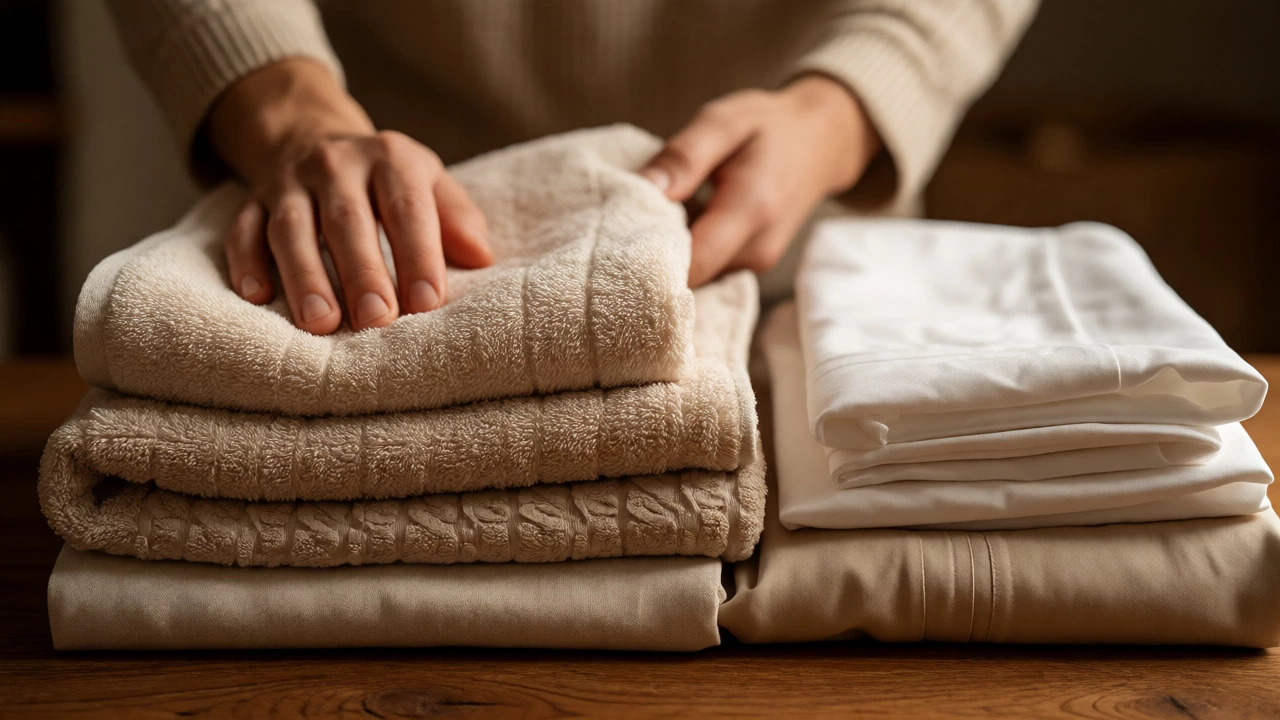
Language is messy, and synonyms abound. You will often hear people use "linens" and "bedding" interchangeably. Technically, there is a difference. Linens traditionally referred to items made from flax fibers, i.e., actual linen fabric. Over time, the term evolved to mean household textile items generally, especially those used in bedrooms and bathrooms. So, bath towels are linens, but they are not bedding.
Here is where it gets tricky for shoppers. If you buy a set of high-thread-count Egyptian cotton sheets, you are buying bedding. You are also buying linens. But if you buy a fluffy bathrobe, you are buying linens, but not bedding. The intersection is the bedroom. Everything in the bedroom that is soft and fabric-based is often loosely called bedding, but strictly speaking, only items on the bed qualify.
| Term | Scope | Includes Bath Items? | Includes Structural Bed Parts? |
|---|---|---|---|
| Bedding | Items on the bed | No | No |
| Linens | Household fabrics | Yes | No |
| Bedroom Textiles | All fabrics in bedroom | No | Maybe (curtains/rugs) |
| Bedsheet Set | Specific subset | No | No |
Understanding these nuances saves you time. If you want to refresh your room's look, you might talk about changing your "bedding." If you are doing laundry, you might separate your "whites" from your "colors," referring to your linens. If you are decorating, you might discuss "textiles," which includes curtains and rugs alongside your bed covers.
Etymology and Historical Context
Where did the word come from? The term "bedding" has Old English roots. It derives from the verb "beddan," which means to put to bed. Historically, bedding was far more valuable than the bed frame itself. In medieval times, mattresses were stuffed with straw, feathers, or wool, and the outer coverings were precious heirlooms passed down through generations.
The modern distinction between furniture and bedding became sharper during the Industrial Revolution. As mass production made textiles cheaper and more accessible, the variety of available bedding exploded. We moved from simple wool blankets to complex multi-layer systems involving synthetic fills, breathable percale weaves, and temperature-regulating technologies. Today, the meaning has expanded slightly to include aesthetic components. A decorative quilt is functional bedding, but it is also art. This dual nature-functional necessity versus decorative choice-is central to the modern understanding of the word.
How to Use "Bedding" in Sentences
Using the word correctly in conversation shows precision. Here are common scenarios and how to phrase them naturally.
If you are shopping for new sheets, you would say, "I need to buy new bedding." This implies you might need sheets, a duvet cover, or pillowcases. It is a safe, general statement.
If you are cleaning, you might say, "The washing machine is full of bedding." This clearly indicates large items like sheets and duvet covers, distinguishing them from clothes or towels.
If you are complimenting someone's room, you could say, "Your bedding matches your curtains perfectly." This highlights the visual aspect of the textiles on the bed.
Avoid saying, "I am going to buy a new bed." Unless you mean the frame and mattress, this is ambiguous. Instead, specify: "I am updating my bedding." This tells the listener you are keeping the old bed but changing the covers.

Common Misconceptions About Bedding
One big misconception is that expensive equals better bedding. Price reflects material quality, brand name, and thread count, but it does not define the meaning. A cheap polyester blanket is still bedding. A $500 silk duvet cover is also bedding. The definition is about function and location, not value.
Another error is excluding pillows. Many people think pillows are accessories, like lamps. But since you rest your head on them every night, and they are covered by cases, they are integral to the bedding system. When stores sell "bedding bundles," they almost always include pillowcases. Sometimes they include the pillows themselves. Check the description carefully, but assume pillows are part of the bedding equation.
Finally, some confuse seasonal changes with semantic changes. Winter bedding (heavy comforters) and summer bedding (light quilts) are both bedding. The weight changes, but the category remains the same. Do not invent new terms like "winter stuff" or "summer covers." Stick to "bedding" and add adjectives like "lightweight" or "thermal" to describe the type.
Practical Tips for Managing Your Bedding
Now that you know what bedding is, here is how to manage it effectively.
- Rotate Sets: Experts recommend having at least three sets of sheets. One on the bed, one in the wash, one in storage. This ensures you always have clean bedding without last-minute panic.
- Wash Regularly: Bedding accumulates dead skin cells, sweat, and allergens. Washing sheets weekly and duvet covers monthly keeps your bedding hygienic. Always check care labels; hot water kills dust mites but may shrink natural fibers.
- Store Properly: When swapping seasons, store off-season bedding in breathable cotton bags. Plastic bins can trap moisture and cause mildew, ruining the very items you are trying to preserve.
- Layer Wisely: Build your bedding in layers. Start with a mattress protector (optional but recommended), then fitted sheet, flat sheet, duvet/comforter, and finally a throw. This allows you to adjust warmth easily without changing the entire setup.
By treating bedding as a system rather than random objects, you create a more comfortable sleep environment. You also make laundry day less chaotic because you know exactly which items go together.
Frequently Asked Questions
Is a mattress considered bedding?
No, a mattress is generally considered part of the bed furniture or infrastructure. Bedding refers to the removable textile items placed on top of the mattress, such as sheets, blankets, and duvets. While a mattress topper is sometimes grouped with bedding due to its removability, the core mattress unit is distinct.
What is the difference between bedding and linens?
Bedding specifically refers to items used on the bed for sleeping and warmth. Linens is a broader term that includes all household textile items, such as tablecloths, napkins, and bath towels. All bedding is technically linens, but not all linens are bedding.
Are pillows included in bedding definitions?
Pillows are typically considered part of the bedding ensemble, especially their cases. While the pillow fill itself is sometimes categorized separately as a 'sleep accessory,' the overall system of pillows and their covers is widely understood as bedding. Retailers often sell pillowcases as part of bedding sets.
Can I use 'bedding' to describe decorative items?
Yes, absolutely. Decorative throws, shams, and ornamental quilts are all forms of bedding. Their primary function may be aesthetic rather than thermal, but because they are placed on the bed, they fall under the definition of bedding.
How often should I replace my bedding?
There is no strict rule, but many experts suggest replacing sheets every two to three years depending on wear and tear. Duvet covers and comforters can last longer, up to five years or more, if cared for properly. Signs it is time to replace bedding include thinning fabric, persistent stains, or loss of softness.