Bedding Fit Calculator
Select your mattress type or enter custom dimensions to see how well standard or XL bedding will fit. This tool helps decode the ambiguity of "XL" labels.
Mattress Specifications
Bedding Selection
Visual Simulation
You’ve just bought a new mattress. It’s luxurious, it’s supportive, and you’re ready for the best sleep of your life. Then comes the frustration: your old XL bedding doesn’t fit. The corners pop off, the duvet looks like a sad tent, or worse, the flat sheet is so short it barely covers your feet. Why does "XL" mean different things depending on who you ask? And more importantly, how do you buy the right set without guessing?
The term "Extra Long" (or XL) isn’t a universal standard. It’s a regional and contextual label that shifts based on where you live and what type of bed you own. In the UK, an XL might refer to a specific width adjustment. In the US, it almost always refers to length. Confused yet? You’re not alone. This guide breaks down exactly what XL means in bedding, why it matters for your comfort, and how to measure your bed to ensure your next purchase actually fits.
The Two Faces of XL: Length vs. Width
Before you click "add to cart," you need to understand that "XL" is ambiguous. It generally points to one of two dimensions: length or width. Which one it applies to depends entirely on the market and the product category.
In North America, Twin XL is a mattress size measuring 38 inches wide by 80 inches long. It is essentially a standard Twin mattress stretched by five inches. This extra length is crucial for taller individuals or college dorm rooms where space is tight but height clearance is needed. When Americans say they need "XL sheets," they are almost exclusively talking about this length extension.
In the United Kingdom and Europe, the story changes. Here, "XL" often refers to width adjustments for double beds or specific king-size variations. For example, an "Oversized Double" might be marketed as an XL Double, offering slightly more width than a standard 4'6" double. However, true length extensions are less common in standard retail unless you are buying from specialist retailers catering to tall sleepers. If you are shopping in London, Oxford, or Manchester, check the centimeter measurements carefully. An "XL" tag here might mean 150cm width instead of 135cm, rather than a longer length.
Why Standard Sheets Fail Tall Sleepers
If you are over six feet tall, standard bedding likely feels inadequate. You might wake up with cold ankles because your flat sheet has slipped off, or your fitted sheet keeps popping off the corner because the pocket depth isn't enough to handle the mattress thickness plus the tension required to stretch it over the extra length.
This isn't just annoying; it affects sleep quality. Constantly adjusting tangled sheets disrupts REM cycles. Furthermore, using a standard-sized duvet on an Extra Long mattress leaves gaps at the foot of the bed. These gaps let in drafts, which can lower your body temperature and cause micro-arousals during the night. Properly sized XL bedding ensures thermal regulation stays consistent across your entire body.
Decoding Mattress Dimensions: The Global Context
To buy the right bedding, you must know your mattress dimensions. Bed sizes vary significantly by region. What counts as "King" in New York is smaller than "King" in Los Angeles, and both differ vastly from UK King sizes.
| Size Name | US Dimensions (inches) | UK/EU Approx. Dimensions (cm) | Typical "XL" Meaning |
|---|---|---|---|
| Twin / Single | 38 x 75 | 90 x 190 | Length +5 inches (Twin XL) |
| Full / Double | 54 x 75 | 135 x 190 | Rarely used; usually implies wider |
| Queen | 60 x 80 | 150 x 200 | N/A (Standard Queen is already long) |
| King / Super King | 76 x 80 | 180 x 200 (Super King) | Width variation in EU markets |
| California King | 72 x 84 | N/A | Longer but narrower than Std King |
Notice the discrepancy. In the US, if you have a California King, you need bedding specifically labeled for that size. A standard King duvet will be too wide and too short. In the UK, if you have a 200cm long mattress, most standard "Double" or "King" duvets are 200cm long, so they fit perfectly. But if you have a custom 210cm or 220cm mattress, you need bespoke sizing, often labeled as "Extra Long" by specialist makers.
Fitted Sheet Pockets: The Hidden Variable
Even if the length is correct, the depth matters. Modern mattresses are thicker than they were twenty years ago. Memory foam hybrids and pillow-top designs can reach depths of 14 to 16 inches. Standard fitted sheets often have pockets only 10 to 12 inches deep.
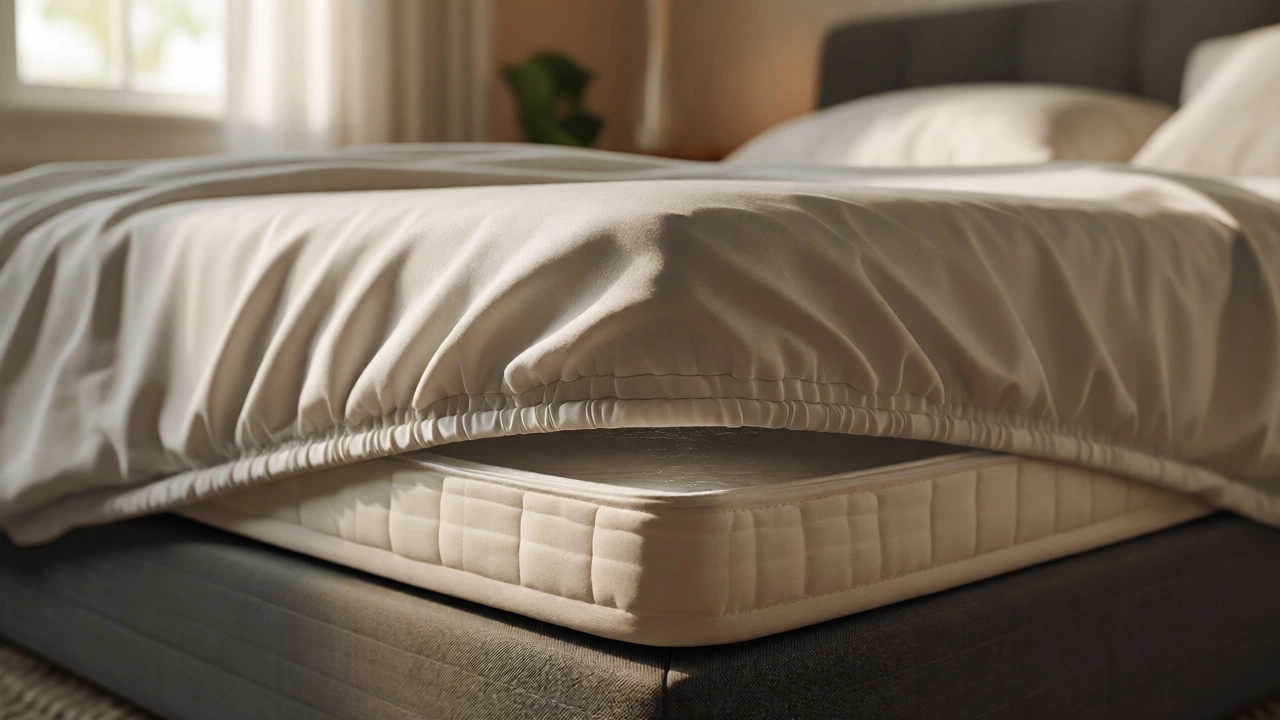
When you try to force a shallow-pocket sheet onto a thick, extra-long mattress, the elastic stretches beyond its limit. This causes the sheet to snap back off the corners repeatedly. Look for "deep pocket" labels. For an XL mattress, you want a sheet with a pocket depth of at least 15 inches to ensure a secure fit without excessive tension.
Duvet Covers: More Than Just Size
Duvet covers add another layer of complexity. Unlike fitted sheets, duvet covers don't need to hug the mattress tightly. They hang over the sides. However, the internal insert size must match the cover.
A common mistake is buying an "XL" duvet cover assuming it fits any large bed. If you have a Twin XL mattress (38x80), you need a Twin XL duvet insert (usually 68x88 inches). If you use a standard Full/Double duvet (80x86) on a Twin XL bed, it will look bulky and uneven. Conversely, using a Twin XL insert on a Queen bed leaves a gap at the foot.
For couples sharing an XL-sized bed (like two Twin XLs pushed together, common in adjustable bases), you have two choices:
- Split King Setup: Use two separate Twin XL duvet covers. This allows each person to adjust their side independently. Great for partners with different temperature preferences.
- Unified King Cover: Use a single King-sized duvet cover. Since two Twin XLs equal a King width (38+38=76 inches), a King cover fits perfectly. However, ensure the King cover is 80 inches long, not 84, to match the Twin XL length.
How to Measure Your Bed Correctly
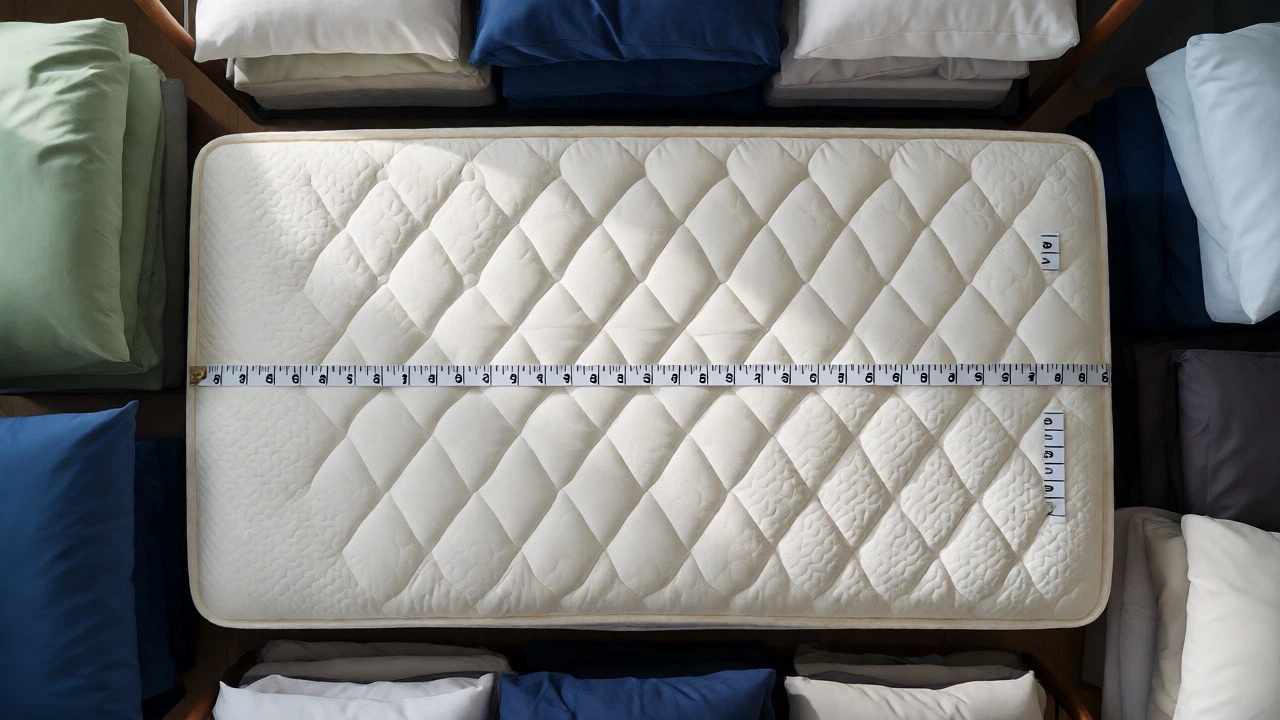
Don't rely on the name on the box. Manufacturers change standards. Grab a tape measure. Here is the foolproof method:
- Measure Length: From the top edge of the mattress headboard side to the bottom edge. Do not include the frame or headboard.
- Measure Width: Across the widest part of the mattress surface.
- Measure Depth: From the top surface of the mattress to the bottom of the side panel. Measure at multiple points if the mattress is uneven.
- Add Allowance: For fitted sheets, add 2-3 inches to the depth measurement to account for tucking and elastic stretch. For duvets, match the exact insert dimensions.
Write these numbers down. Keep them on your phone notes. When shopping online, compare these specific numbers against the product description's "dimensions" section, not just the title. Titles lie; specifications rarely do.
Material Matters: Stretch and Shrinkage
The fabric composition impacts how well your XL bedding fits over time. Cotton sateen has little stretch. If you buy a tight-fitting XL cotton sheet, it might feel perfect initially but could shrink slightly after the first wash, becoming too small. Pre-washed or "sanforized" cotton minimizes this risk.
Bamboo viscose and Tencel lyocell have natural elasticity. They drape better and accommodate slight sizing discrepancies more gracefully. If you are between sizes-for example, your mattress is 79 inches long but you can only find 75-inch or 80-inch sheets-choose the larger size and opt for a stretchy material. It will tuck neatly without popping off.
Shopping Tips for Online Retailers
Buying bedding online removes the ability to touch the fabric or test the fit. To avoid returns:
- Check the Return Policy: Ensure you can return opened packages if the fit is wrong.
- Read Customer Reviews: Search for keywords like "too short," "tight," or "shrank." Real users often flag sizing issues that specs miss.
- Contact Support: If the listing says "XL," email customer service. Ask: "Does XL refer to length or width? What are the exact dimensions in inches/cm?"
- Buy Samples: Some high-end brands offer swatch kits. While they don't show fit, they reveal texture and weight, helping you decide if the premium price is worth it for your XL setup.
Conclusion: Fit Is Comfort
Understanding what XL means in bedding saves you money and frustration. It transforms your bedroom from a place of tangled sheets to a sanctuary of rest. Whether you are in Oxford dealing with European sizing nuances or in the States navigating Twin XL dorm requirements, the rule remains simple: measure twice, buy once. Ignore the marketing buzzwords. Focus on the numbers. Your sleep depends on it.
Is Twin XL the same as a Full mattress?
No. A Twin XL is 38 inches wide and 80 inches long. A Full (Double) is 54 inches wide and 75 inches long. The Twin XL is narrower but longer. They are not interchangeable.
Can I use standard sheets on an XL mattress?
You can, but they won't fit well. Standard sheets will be too short in length and may slip off the corners due to insufficient elastic stretch. For optimal comfort, use sheets designed for XL dimensions.
What does XL mean for duvet covers in the UK?
In the UK, XL often refers to width rather than length. An "XL Double" might be 150cm wide instead of the standard 135cm. Always check the centimeter dimensions, as length extensions are less common in mainstream UK retail.
Do two Twin XL beds make a King?
Yes, in terms of width. Two Twin XL mattresses (38 inches each) placed side-by-side create a total width of 76 inches, which matches a Standard King. However, the length remains 80 inches, matching the King length. So, yes, they functionally replace a King bed.
How deep should fitted sheet pockets be for an XL bed?
Look for "deep pocket" sheets with a depth of at least 15 inches (approx. 38 cm). Many modern XL mattresses are thicker than older models, and standard 10-12 inch pockets will fail to stay tucked.