Shelf Strength & Material Selector
Project Specifications
Material Options
Analysis Result:
You've got a stack of heavy cookbooks, a massive collection of vinyl records, or maybe a set of industrial tools that need a home. You start looking at wood, and suddenly you're faced with a wall of options at the hardware store. Picking the wrong board doesn't just look bad; it leads to the dreaded "shelf sag," where your expensive new storage starts to look like a smile over time. If you want a shelf that stays flat under pressure, you need to look past the price tag and understand how different wood fibers actually handle weight.
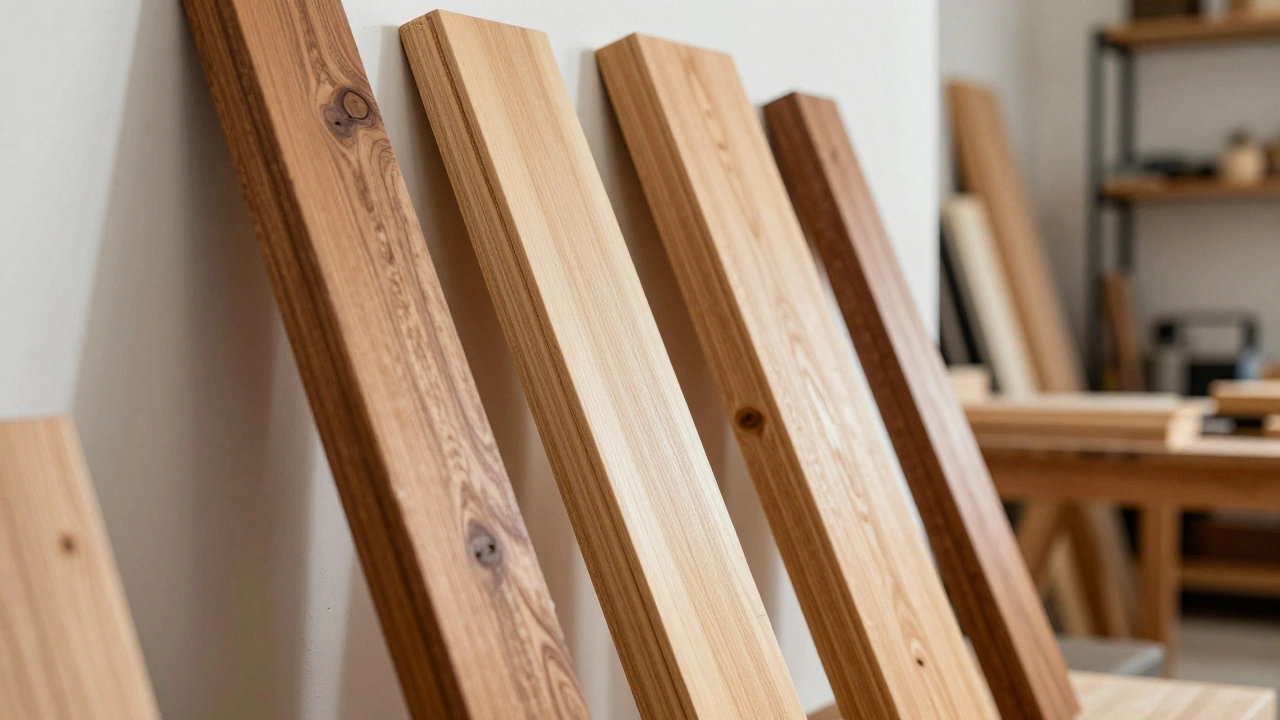
Quick Guide to the Best Woods
- Maximum Strength: Hickory or White Oak.
- Best Value: Douglas Fir or Pine (for light to medium loads).
- Aesthetic & Durable: Walnut or Maple.
- Budget Heavy-Duty: High-grade Plywood (Baltic Birch).
The Science of Sagging: Understanding Janka Hardness
Before picking a plank, you need to know about the Janka Hardness Test is a scale that measures the resistance of a piece of wood to denting and wear by calculating the force needed to embed a steel ball into the wood. While hardness doesn't always equal structural strength, it's a great indicator of how the wood will hold up to scratches and heavy objects being slid across the surface.
For shelving, though, we care more about stiffness (the modulus of elasticity). This is what prevents the board from bending. A wood might be hard (like Ipe) but if it's not thick enough or the grain is unstable, it can still fail. When we talk about the strongest wood for shelving, we are looking for a balance of high density and a high modulus of elasticity.
The Heavyweights: Top Hardwood Options
If you are building a library or a pantry for canned goods, Hardwood is dense wood from angiosperm trees, characterized by slower growth and tighter grain patterns your best bet. These aren't just "harder"; they have more structural integrity per inch.
Hickory is practically the gold standard for raw strength. It's one of the densest woods native to North America, which is why it's used for tool handles and hiking sticks. If you use Hickory, you can span longer distances between brackets without noticing a dip. However, it's notoriously difficult to work with because it's so tough.
White Oak is another powerhouse. Unlike Red Oak, White Oak has a cellular structure called tyloses that makes it water-resistant. This makes it the perfect choice for garage shelving or laundry room storage where humidity might be an issue. It's incredibly stiff and resists warping far better than cheaper alternatives.
Hard Maple offers a smooth, tight grain that's incredibly resistant to impact. It's the wood used for basketball courts for a reason. In a shelving context, Maple is great because it doesn't "bleed" sap and takes paint or stain very evenly, making it a favorite for high-end built-ins.
| Wood Type | Hardness (Janka) | Durability | Best Use Case |
|---|---|---|---|
| Hickory | ~1,820 lbf | Extreme | Heavy machinery, tool walls |
| White Oak | ~1,360 lbf | Very High | Pantry, Garage, Library |
| Hard Maple | ~1,450 lbf | High | Kitchen, Craft rooms |
| Douglas Fir | ~660 lbf | Moderate | Closets, Light decor |
| Pine | ~380-690 lbf | Low | Temporary storage, DIY prototypes |
The Practical Choice: Plywood and Engineered Wood
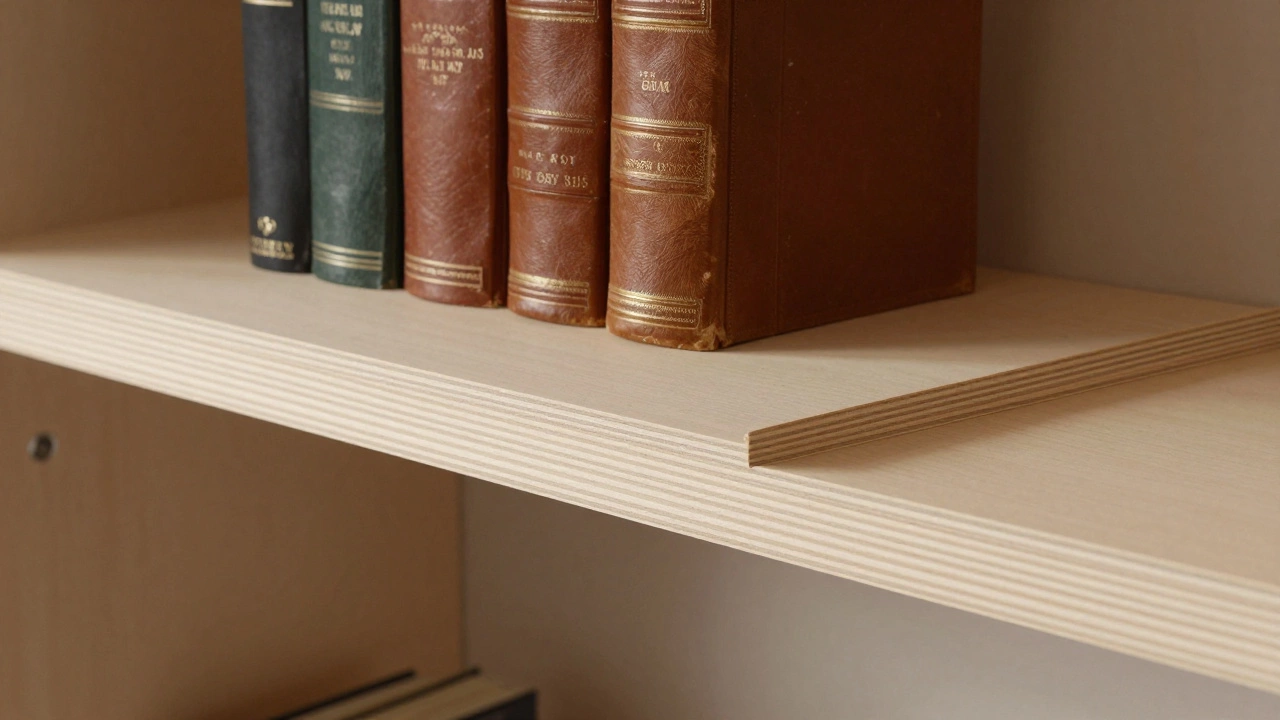
You don't always need a solid slab of Hickory. In many cases, Baltic Birch Plywood is a high-grade plywood made from cross-laminated layers of birch veneer, offering superior stability over solid wood the smarter choice. Because the layers are glued in alternating directions, plywood is less likely to warp or shrink as the seasons change.
If you use standard construction plywood, you'll see big gaps in the inner layers (voids). Baltic Birch minimizes these, meaning the shelf won't have a "soft spot" that collapses under a heavy weight. For the ultimate strength boost, you can edge-band the plywood with a strip of solid hardwood. This creates a "structural beam" effect on the front edge, significantly reducing sag.
Softwoods: When Are They Enough?
Most people start with Pine or Douglas Fir because they are cheap and available at every big-box store. But here is the truth: these are Softwoods, meaning they have a much lower density. If you're putting up a few light picture frames or some folded t-shirts, Pine is fine. But the moment you add a set of heavy encyclopedias, those boards will begin to bow.
If you must use softwood for cost reasons, the trick is to increase the thickness. A 2-inch thick Pine board is significantly stronger than a 1-inch Pine board. However, it will never match the weight-to-thickness ratio of Oak or Maple.
Avoiding the "Sag": Practical Tips for Installation
Even the strongest wood will fail if the installation is lazy. The distance between your supports is the most critical variable. There is a rule of thumb called the Sagulator logic: the longer the span, the exponentially more likely the wood is to bend.
- The 30-Inch Rule: For most hardwoods, try to keep your brackets no more than 30 inches apart. If you're using softwood, drop that to 16 or 24 inches.
- Cleats are King: Don't just rely on brackets. Run a "cleat" (a thin strip of wood) along the back wall and sides. This supports the entire perimeter of the shelf, not just two or three points.
- Grain Orientation: Ensure the grain runs lengthwise. If you use a piece of wood where the grain runs diagonally, you've essentially created a hinge point where the shelf will snap.
Which Wood Should You Choose?
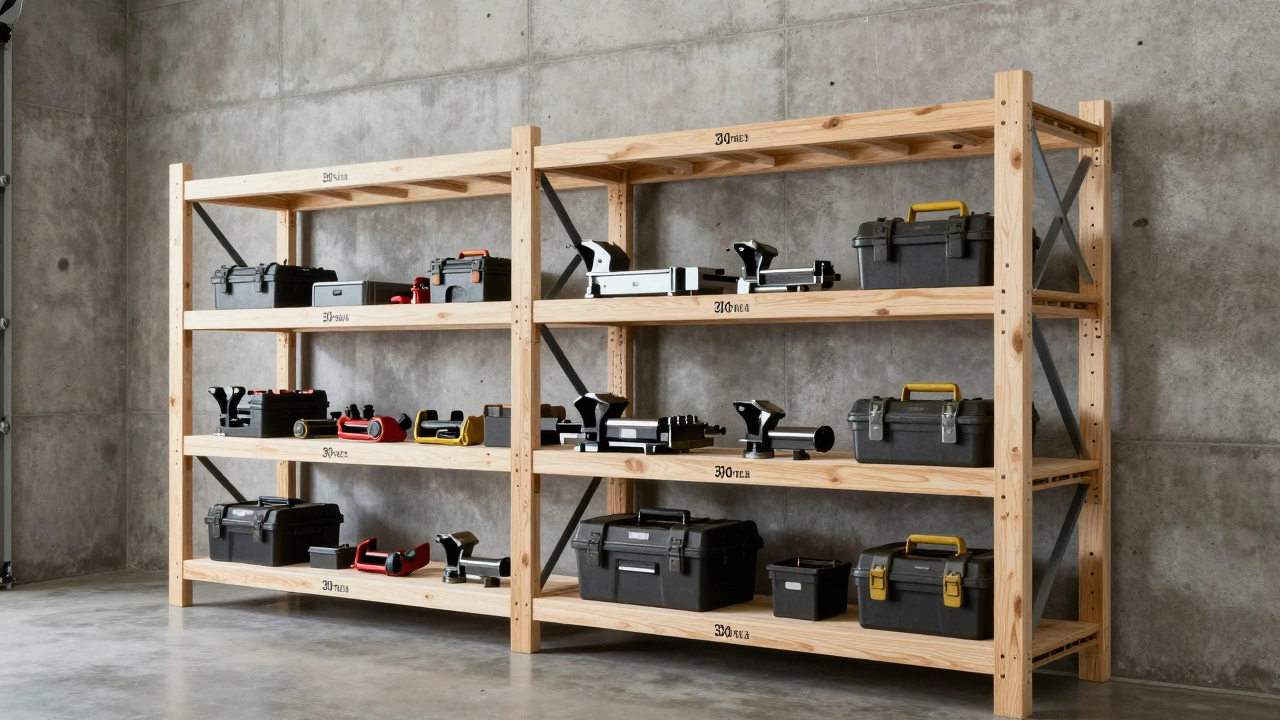
Deciding on the material depends on what you're actually storing. If you're building a heavy-duty workshop shelf for a 50lb drill press and a vise, go for White Oak or thick Baltic Birch. The cost is higher, but replacing a snapped shelf is more expensive in the long run than buying the right wood the first time.
For a home office or a living room where aesthetics matter as much as strength, Walnut is a great middle-ground. It's not quite as strong as Hickory, but it's significantly more durable than Pine and looks professional. If you're on a tight budget, stick to Douglas Fir but double up on your support brackets.
Will MDF work for heavy shelving?
Short answer: No. Medium-Density Fibreboard (MDF) is made of sawdust and glue. It has very poor structural strength and is prone to "creep," which is a slow, permanent sag that happens even under moderate weight over time. Avoid it for anything other than light decorative items.
Is Oak better than Maple for shelves?
It depends on the environment. Maple is slightly harder and smoother, making it better for kitchens or workshops. Oak, specifically White Oak, is more rot-resistant and handles moisture better, making it superior for garages or basements.
How do I stop my wooden shelves from bowing?
The best way to stop bowing is to add a "stiffener." This is a vertical strip of wood glued and screwed to the front or back edge of the shelf. This effectively increases the depth of the beam, making it much harder to bend.
Does the thickness of the wood matter more than the type?
Thickness is a huge factor, but it's not everything. A 1-inch piece of Hickory can often support more weight than a 1.5-inch piece of cheap Pine. However, increasing thickness is the fastest way to increase the load capacity of any wood type.
What is the cheapest strong wood option?
Douglas Fir is generally the best balance of cost and strength among softwoods. If you can find a local lumber yard with "select" grade fir, it's a great way to get sturdy shelves without paying hardwood prices.