
Dementia Care Funding Eligibility Calculator
Enter Asset Information
Result
When someone with dementia has no money, the system doesn’t break-it bends. And sometimes, it cracks under the weight of expectation. You might think family steps in, or the government steps up. But reality is messier. In the UK, where I live in Oxford, thousands of dementia patients face this exact situation every year. No savings. No family to help. No safety net that’s easy to find. What happens then?
Who pays for care when there’s no money?
The NHS and local councils are legally required to step in. Under the Care Act 2014, if someone can’t pay for their care because they have less than £23,250 in assets (including property, if they’re not living in it), the council must fund their care. This includes residential care, home care, and even meals and mobility aids. But getting that help isn’t automatic. It requires an assessment. And that assessment? It’s often delayed, confusing, or dismissed because the person can’t explain their needs.
Many dementia patients don’t recognize they need help. Their families might be overwhelmed, or absent. Some are estranged. Others live alone with no one to call. Without someone to push for an assessment, the system doesn’t move. And time? It’s the enemy of dementia.
What does funded care actually look like?
When funding kicks in, the council places the person in a care home that accepts local authority rates. These homes aren’t luxury. They’re clean, safe, and staffed-but often understaffed. The ratio might be one carer for every eight residents. Meals are nutritionally balanced but bland. Activities? Limited. The person might not get the personalized attention they once had. A warm cushion, a familiar blanket, a photo on the wall-these small things matter. But they’re not guaranteed.
Some people end up in nursing homes with dementia-specific units. These are better. Trained staff know how to respond to agitation, wandering, or confusion. But even here, funding caps mean they can’t offer one-on-one time all day. The care is functional, not comforting. And comfort? That’s what dementia patients need most.
Why do some people fall through the cracks?
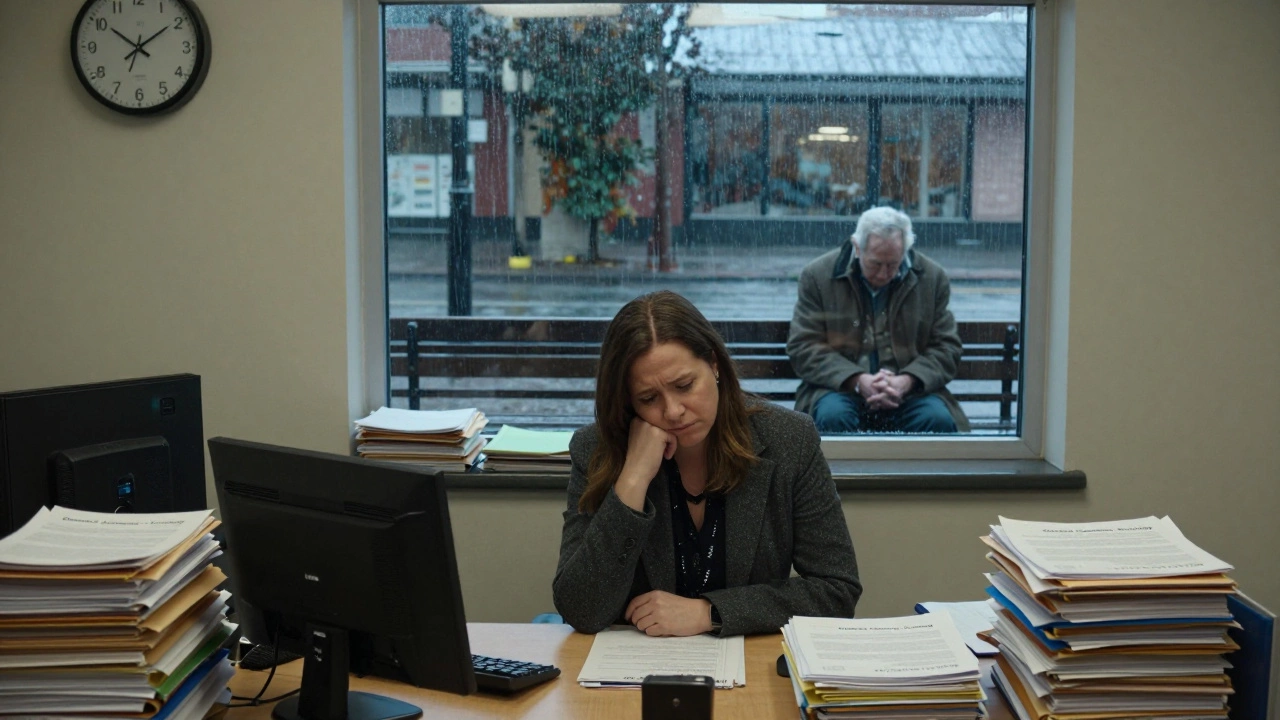
There’s a gap between policy and practice. Councils have budgets. They’re stretched thin. In 2024, over 40% of local authorities in England reported they couldn’t meet the full demand for dementia care. Waiting lists for assessments can take months. Meanwhile, the person’s condition worsens. They stop eating. They stop speaking. They become more confused. And the longer it takes to get help, the harder it is to reverse the decline.
Another issue: property. If the person owns a home, it’s counted as an asset-even if they’re not living in it. That means they might have to sell their house to pay for care. But if they have no family, no one to manage the sale. No one to move their things. No one to say, “This was Mum’s house.” So it sits empty. And the council, overwhelmed, doesn’t always push for a quick sale. The person ends up in care, but their home still belongs to them-and the system doesn’t know what to do next.
What role do charities play?
Charities like the Alzheimer’s Society and Dementia UK help. They offer advice lines, advocacy, and sometimes emergency grants. But they can’t replace state care. A grant might cover a week of home care or a special cushion for a bed. It doesn’t pay for years of support. Volunteers might visit once a week. They bring tea, a book, a song. But they can’t replace a nurse, a physiotherapist, or someone who knows the person’s history.
There’s a quiet crisis in dementia care: the loss of identity. When money runs out, so does choice. The person can’t pick their meals, their room, their schedule. They can’t choose the colour of their curtains or the texture of their cushion. These aren’t luxuries. They’re anchors to who they were. And when those go, so does a piece of their soul.

What can be done?
There are three real solutions, not just ideas.
- Advocate early. If you know someone with dementia, start the care assessment process as soon as they show signs of needing help. Don’t wait for a crisis. Contact your local council’s social services department. Ask for a needs assessment. Bring medical records. Be persistent.
- Use free resources. The NHS has a free tool called Find Local Services on its website. It connects you to councils, charities, and care providers. You don’t need money to use it.
- Protect their dignity. Even if funding is limited, small things help: a familiar pillow, a photo of their grandchildren, a blanket they used to sleep with. These aren’t expensive-but they’re priceless.
One woman in Oxford, diagnosed with early-onset dementia at 58, had no family. She lived alone. Her savings were gone after medical bills. The council took three months to assess her. In that time, she stopped eating. She stopped recognizing her own reflection. When they finally placed her in care, her room had no personal items. No cushion she liked. No window view she remembered. A volunteer brought her a lavender-scented cushion from a charity shop. She held it for two hours. She didn’t speak. But she smiled.
Is there hope?
Yes. But not because the system is perfect. Because people still care. Because volunteers show up. Because a single cushion, placed just right, can mean more than a million pounds in funding. The truth is, dementia doesn’t care about bank balances. It only cares about connection. And connection doesn’t cost money-it costs attention.
If you know someone with dementia and no money, don’t wait. Call your council. Find a charity. Sit with them. Hold their hand. Let them feel safe. That’s the real care. And it’s always available.