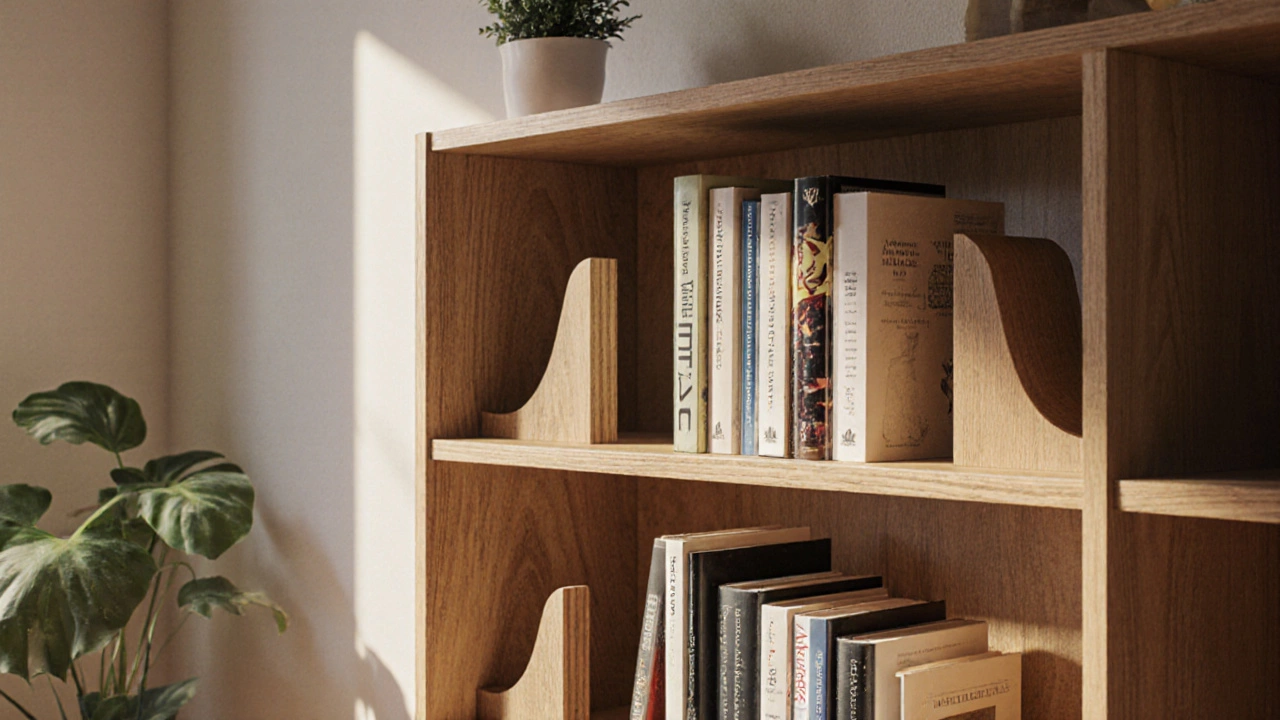
When you’re building shelves, the board you choose makes all the difference. A shelf that sags after a few months isn’t just ugly-it’s dangerous. You don’t want your books, dishes, or collectibles crashing down because you picked the wrong material. So what board is best for shelving? It’s not one-size-fits-all. The answer depends on how much weight you need to hold, where the shelf will go, and what you’re willing to spend.
Particle Board: The Budget Option with Limits
Particle board is the cheapest shelf material you’ll find at big-box stores. It’s made from wood chips, sawdust, and glue pressed into sheets. You’ll see it in ready-to-assemble furniture like IKEA bookshelves. It’s fine for light loads-think magazines, small plants, or decorative items.
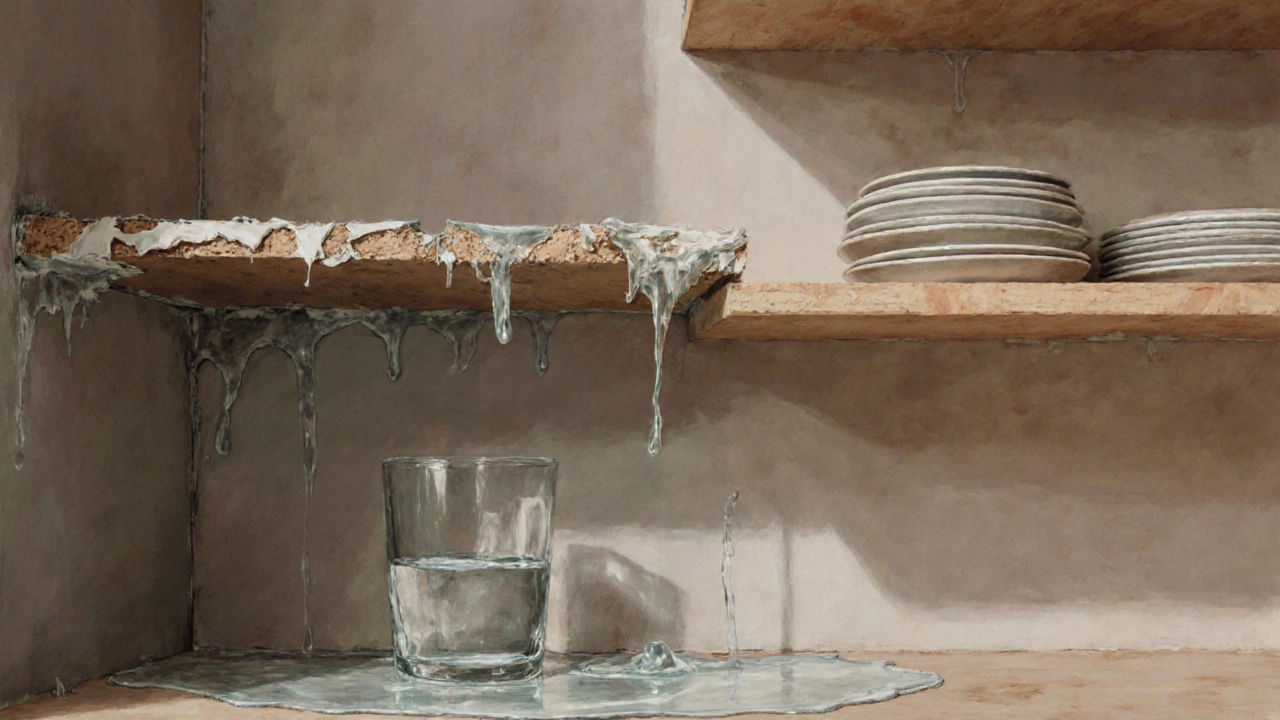
But particle board has serious weaknesses. It doesn’t hold screws well. After a few tightenings, the holes strip out and the shelf becomes loose. It also swells if it gets wet. A spilled glass of water left uncleaned can turn a corner of your shelf into a mushy mess. And it sags under moderate weight. A 3-foot shelf loaded with 20 hardcover books? Expect a visible bow in less than a year.
Use particle board only if you’re on a tight budget and the shelf will hold light, dry items. Don’t use it in kitchens, bathrooms, or garages.
MDF: Smooth, But Not Strong
Medium-density fiberboard (MDF) is denser than particle board and has a smoother surface. That’s why it’s popular for painted shelves-you get a flawless finish without sanding. It’s also more uniform, so it’s easier to cut cleanly.
But MDF isn’t stronger than particle board. In fact, it’s heavier and just as prone to sagging under load. A 4-foot MDF shelf holding 30 pounds of kitchenware will droop noticeably. It also absorbs water even faster than particle board. If you’ve ever seen a water-damaged MDF cabinet, you know it turns into a crumbly brick.
Where MDF shines is in appearance. If you’re painting your shelves and want a clean, modern look, MDF is a solid choice. Just make sure you reinforce the edges with wood strips and keep it away from moisture. It’s not for heavy storage, and it’s not for damp rooms.
Plywood: The Sweet Spot for Most Homes
Plywood is made from thin layers of wood glued together with the grain running in opposite directions. This cross-lamination gives it strength and resistance to warping. For shelving, 3/4-inch plywood is the standard. It’s sturdy, affordable, and holds screws well.
Real plywood has solid wood veneer on both faces. Avoid "interior-grade" or "utility-grade" plywood if you can. Look for AB-grade or BC-grade plywood-these have fewer knots and smoother surfaces. You can sand and stain it, or paint it. It won’t sag under 50 pounds per foot. That’s enough for most books, kitchenware, or storage bins.
It’s also moisture-resistant compared to MDF and particle board. A plywood shelf in a laundry room or basement won’t fall apart if humidity rises. It’s the most balanced choice: strong enough for everyday use, durable enough to last a decade, and priced reasonably. If you’re building custom shelves and want something that lasts, plywood is your best bet.
Hardwood: For Heavy-Duty and High-End Shelves
If you’re building shelves for a library, a garage workshop, or a display case for heavy pottery, hardwood is the way to go. Oak, maple, birch, and walnut are all excellent choices. Hardwood shelves can hold 100 pounds or more per foot without bending.
The downside? Cost. Hardwood boards cost 3 to 5 times more than plywood. You’ll also need better tools to cut and finish them. But if you’re looking for something that lasts generations, hardwood delivers. A solid oak shelf from the 1980s is still holding books today. It doesn’t sag. It doesn’t chip. It gets better with age.
Hardwood is also beautiful. The natural grain adds warmth and character. If you’re building custom cabinetry or want a premium look, hardwood is worth the investment. Just make sure you use at least 1-inch thick boards for spans longer than 3 feet.
Steel and Metal Shelving: Industrial Strength
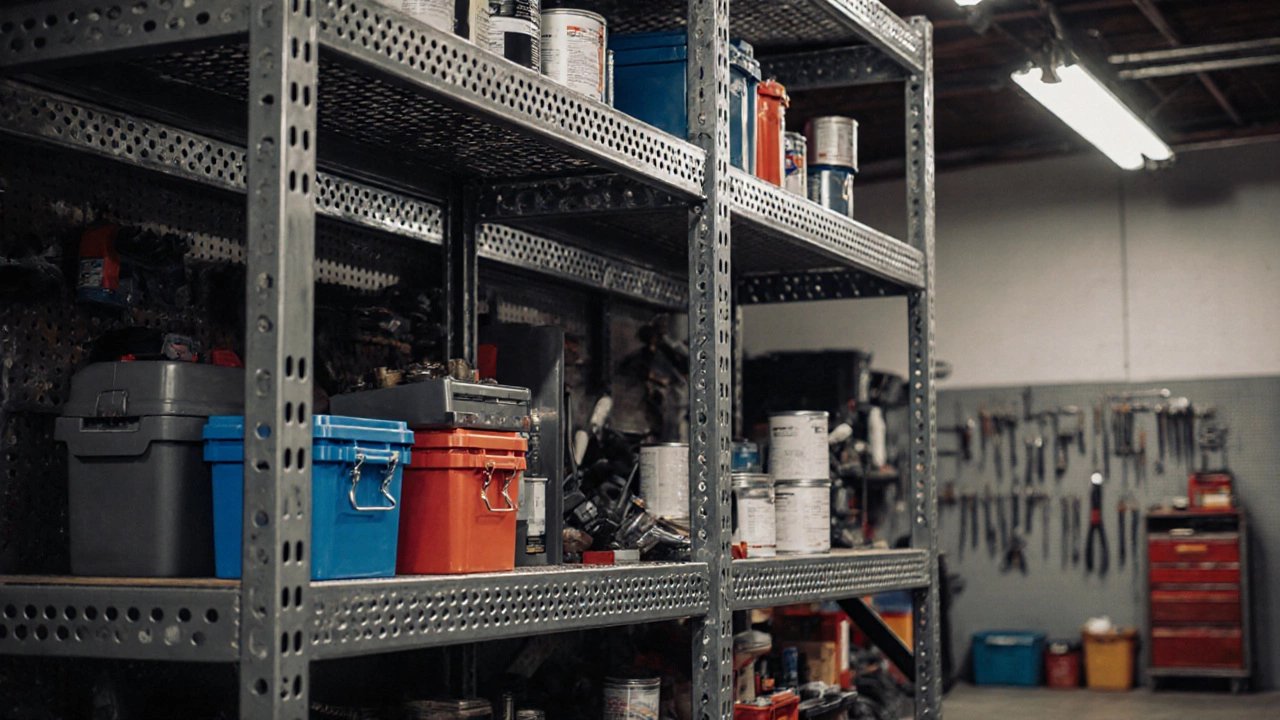
Not all shelves are made of wood. Steel shelving units-like the kind you see in warehouses or garages-are incredibly strong. They’re designed for heavy tools, boxes, or equipment. These systems use metal frames with perforated steel shelves that can hold hundreds of pounds.
They’re not pretty for living rooms, but they’re perfect for basements, workshops, or storage closets. They don’t warp, rot, or sag. And they’re easy to reconfigure. If you need adjustable, load-bearing shelves and don’t care about aesthetics, steel is unbeatable.
Some companies now make metal shelving with wood-look finishes. These blend into home decor better while keeping the strength of steel. If you want durability without the bulk of wood, this is a modern alternative.
Comparison: Which Board Should You Pick?
| Material | Max Load per Foot | Moisture Resistance | Cost (per 4x8 sheet) | Best For |
|---|---|---|---|---|
| Particle Board | 15-20 lbs | Poor | $15-$25 | Light decor, temporary use |
| MDF | 20-30 lbs | Very Poor | $30-$45 | Painted shelves, dry areas |
| Plywood | 40-60 lbs | Good | $40-$70 | Most home shelves, kitchens, bedrooms |
| Hardwood | 80-120+ lbs | Excellent | $100-$250 | Heavy books, display, custom cabinetry |
| Steel | 200-500+ lbs | Excellent | $50-$200 (system) | Workshops, garages, storage rooms |
Pro Tips for Building Strong Shelves
- Always use shelf supports every 16 to 24 inches. Even the strongest board will sag if it’s too long.
- For plywood shelves longer than 3 feet, add a 1x2 wood strip along the front edge. It adds rigidity and hides the raw edge.
- Use wood screws, not nails. Screws hold better and won’t pop out over time.
- Don’t just screw into drywall. Anchor into wall studs. A shelf full of books can weigh over 100 pounds. Drywall anchors won’t hold that.
- Seal the edges of MDF and particle board with wood glue or edge banding. It stops moisture from creeping in.
What About Engineered Wood or Laminate?
Laminate-covered boards-like those sold as "wood-look" panels-are just particle board or MDF with a plastic film on top. They look nice but offer no extra strength. The laminate can peel, and the core material is still weak. Avoid them for anything you plan to use for more than a year.
Engineered wood shelves are sometimes marketed as "premium," but they’re usually just plywood with a thin veneer. If it’s 3/4-inch thick and has real wood layers, it’s fine. If it’s 1/2-inch or thinner, skip it.
Final Answer: What Board Is Best for Shelving?
For most people, 3/4-inch plywood is the best choice. It’s strong enough for books, dishes, and storage bins. It resists moisture better than MDF or particle board. It’s affordable, easy to work with, and looks good stained or painted.
Only choose hardwood if you’re building a high-end bookshelf or need to hold heavy items. Go with steel if you’re storing tools or boxes in a garage. Avoid particle board and MDF for anything important-unless you’re okay with replacing shelves every couple of years.
Your shelves should last. Don’t cut corners on the board. The right material means no more sagging, no more broken brackets, and no more embarrassment when your favorite vase tumbles to the floor.
Can I use MDF for kitchen shelves?
MDF is not recommended for kitchen shelves unless you’re certain they’ll stay completely dry. Kitchens have steam, spills, and humidity. MDF absorbs moisture quickly and swells into a ruined mess. Plywood or hardwood are far better choices for kitchen storage.
Is plywood strong enough for a bookshelf?
Yes, 3/4-inch plywood is strong enough for most bookshelves. A standard 3-foot shelf made of plywood can hold 50 pounds or more without sagging. For heavy collections, use supports every 16 inches and reinforce the front edge with a wood strip.
What thickness should shelving boards be?
For home shelving, 3/4-inch is the minimum recommended thickness. Thinner boards (like 1/2-inch) will sag under moderate weight. For heavy loads or long spans (over 4 feet), use 1-inch thick boards or add support brackets underneath.
Can I paint particle board shelves?
You can paint particle board, but it won’t last. The surface is porous and prone to chipping. Even with primer, paint will peel over time, especially if the shelf gets bumped or exposed to moisture. If you want painted shelves, use MDF or plywood instead.
Are metal shelves better than wood?
Metal shelves are stronger and more durable than wood, especially for heavy items like tools or boxes. But they’re not ideal for living spaces-they look industrial. Use metal in garages, basements, or utility rooms. For bedrooms or living rooms, wood looks better and feels warmer.
Next Steps: How to Choose
- If you’re on a budget and need temporary shelves: go with plywood, not particle board.
- If you’re painting and want a smooth finish: choose MDF, but only for dry, light-use areas.
- If you’re building something to last 10+ years: go with plywood or hardwood.
- If you’re storing heavy tools or boxes: choose steel shelving.
Don’t guess. Measure your load. Check the space. Think long-term. The right board doesn’t just hold things up-it holds your time, your money, and your peace of mind.