Sleep Light Exposure Calculator
This calculator estimates how much light enters your bedroom at night and its potential impact on your sleep quality. Based on research from the University of Colorado and American Academy of Sleep Medicine.
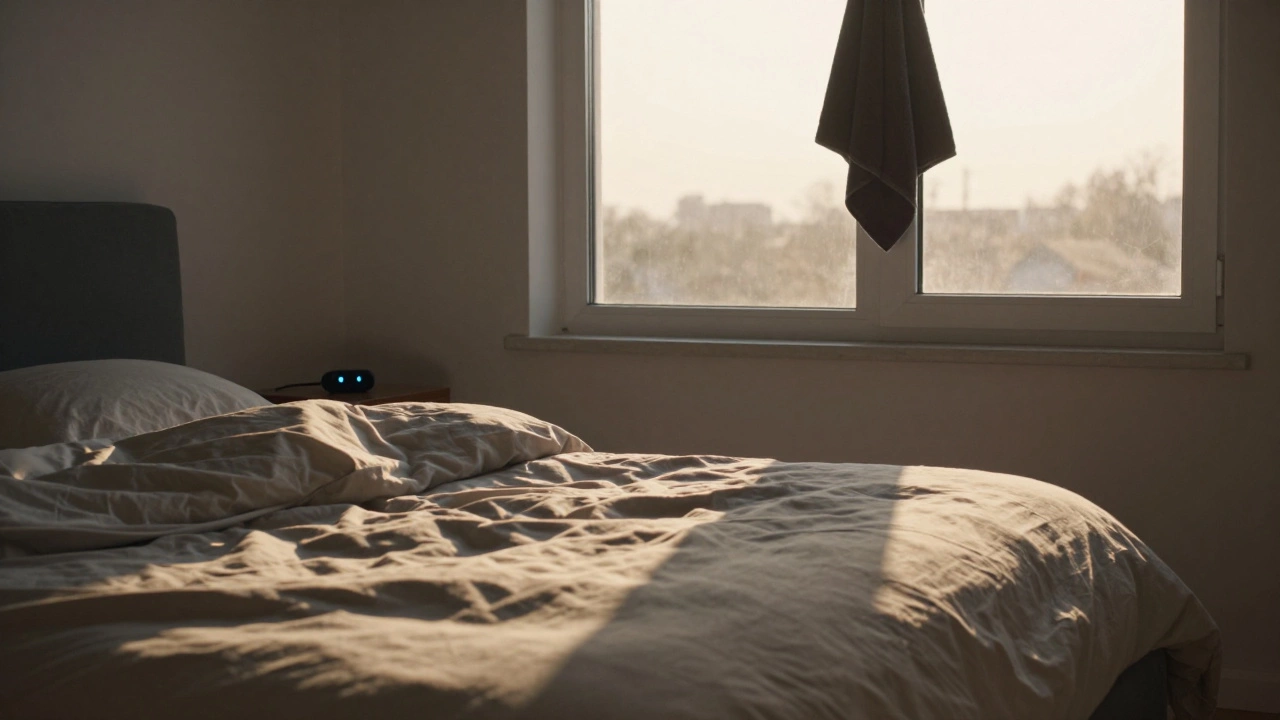
Ever lay in bed at 4 a.m. staring at the ceiling because the sun’s already creeping in through the window? You’re not alone. More people are skipping curtains these days-for minimalist looks, to save money, or just because they forget to buy them. But is sleeping with no curtains actually okay? The answer isn’t just about style. It’s about your brain, your sleep cycles, and your long-term health.
Your Body Doesn’t Know It’s Nighttime
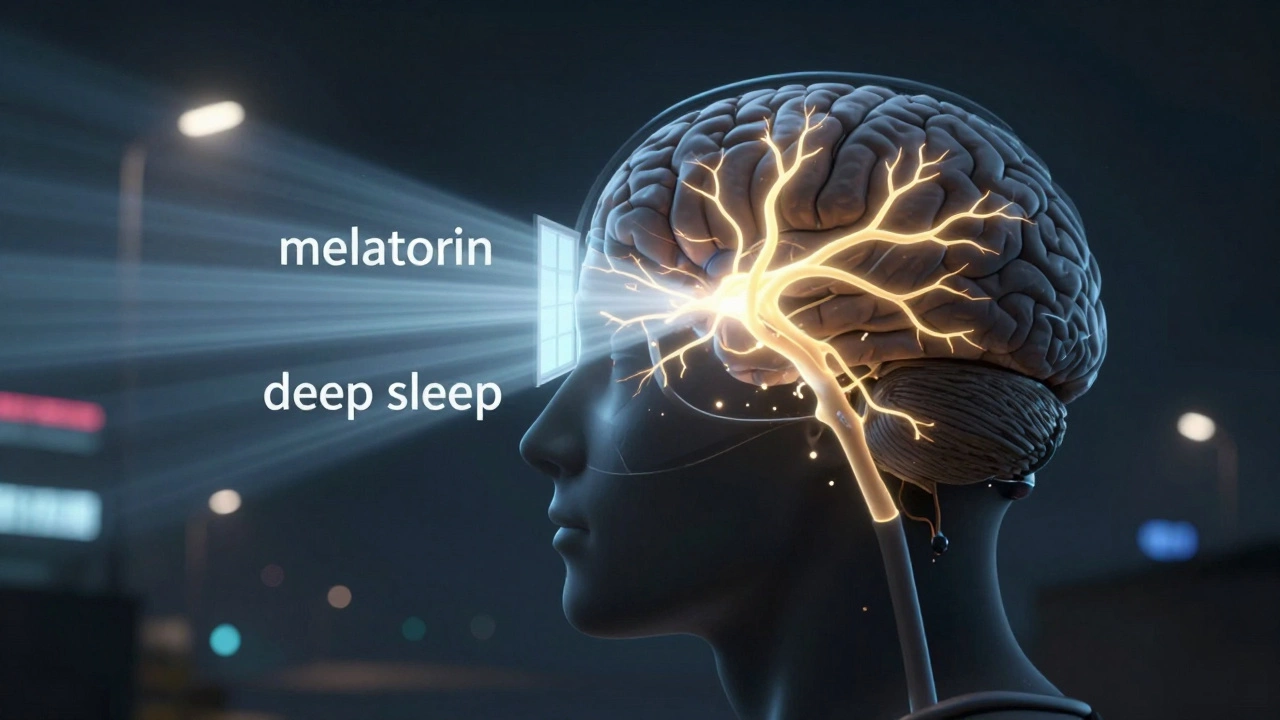
Your circadian rhythm runs on light. Even a little bit of daylight leaking into your room-through a crack in the blinds, a streetlamp outside, or just the glow of a full moon-can trick your brain into thinking it’s still morning. A 2021 study from the University of Colorado found that people exposed to even 5 lux of light during sleep (about the brightness of a dim nightlight) had lower melatonin levels and took longer to fall asleep. Without curtains, you’re often getting 20 to 50 lux at dawn, depending on your location and window size. That’s enough to disrupt your natural sleep-wake cycle.It’s not just about waking up early. Your deep sleep stages-where your body repairs tissues and your brain consolidates memories-get shorter when light interrupts your night. Over time, this can lead to chronic sleep deprivation, even if you think you’re getting seven hours. You might feel fine, but your heart rate variability, cortisol levels, and immune response tell a different story.
Streetlights, Neighbors, and the 24/7 World
If you live in the city, you’re probably dealing with more than just sunlight. Streetlights, neon signs, car headlights, and even your neighbor’s porch light can turn your bedroom into a glow stick. A 2023 analysis by the American Academy of Sleep Medicine showed that urban residents without window coverings had 37% more nighttime light exposure than those with blackout curtains. That’s not just annoying-it’s measurable in blood tests.Even in quiet neighborhoods, porch lights stay on all night. Smart home devices with LED indicators, security cameras, and charging cables with glowing lights add up. Your eyes don’t shut off when you close them. Light still gets in. And your brain still reacts.
What About People Who Say They Sleep Fine Without Curtains?
Some folks swear they sleep perfectly with no curtains. And they might. But here’s the catch: they’re probably not measuring their sleep quality. They’re just not waking up feeling groggy. That doesn’t mean their sleep was restorative. Many people with chronic poor sleep don’t realize it’s not normal. They think everyone wakes up at 5 a.m. feeling tired.Try this: for one week, wear a sleep tracker like a Fitbit or Oura Ring. Then, cover your windows with a dark towel or a blanket at night. See if your deep sleep time increases by even 15 minutes. Most people see a jump. It’s not magic-it’s biology.
Alternatives to Full Curtains
You don’t need heavy, floor-to-ceiling drapes to block light. There are simpler, cheaper options that work just as well:- Blackout window film-stick-on, removable, and blocks 99% of light. Costs under $20 for a standard window.
- Roller shades with blackout lining-slim, modern, and easy to install with adhesive strips.
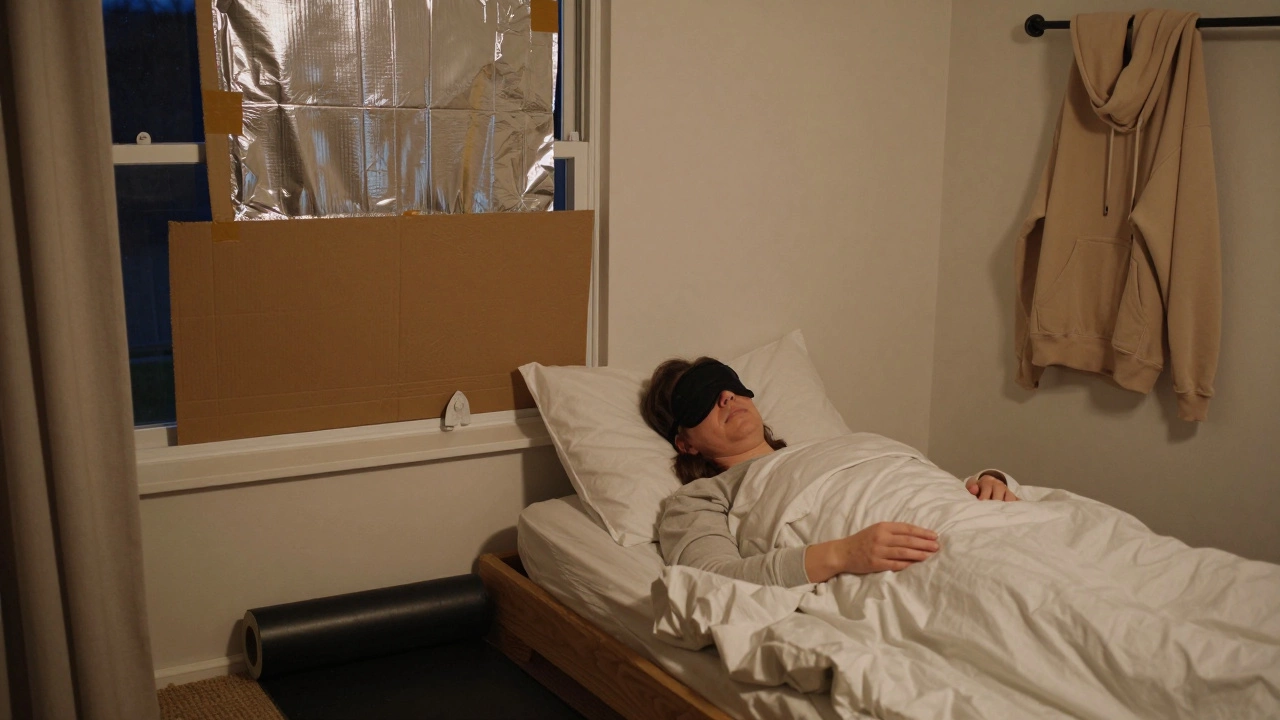
- Cardboard and aluminum foil-yes, really. Tape a piece of cardboard to the inside of the window frame and cover it with foil. It’s ugly, but it works if you’re on a budget.
- Wear a sleep mask-not ideal for everyone, but if you travel often or can’t install anything, it’s the next best thing.
Don’t let the idea of curtains scare you. You don’t need to match your sofa. You don’t need tassels or linings. You just need to keep the light out.
When Light Might Actually Help
There are exceptions. If you work night shifts and sleep during the day, curtains are non-negotiable. But if you’re an early riser who wakes naturally with the sun and feels energized-no grogginess, no need for caffeine before 10 a.m.-then maybe you’re one of the rare people who thrive on natural light cues. Some people have a genetic variant that makes them less sensitive to light at night. But that’s true for less than 5% of the population.If you think you’re one of them, test it. Try sleeping with curtains for two weeks. If you feel worse, then fine-keep them out. But most people who say they’re fine end up surprised by how much better they sleep with darkness.
What Happens If You Keep Doing It?
Sleeping with no curtains isn’t dangerous in the short term. But long-term exposure to nighttime light is linked to higher risks of:- Depression and anxiety
- Weight gain and metabolic issues
- High blood pressure
- Increased risk of breast and prostate cancer (based on studies from Harvard and the National Institutes of Health)
It’s not that light causes these things directly. It’s that it messes with your hormones, your immune system, and your internal clock. Over years, that adds up.
Think of it like eating junk food once in a while. It’s fine. But if it’s every night? You start to feel the cost.
Simple Fix: Start Tonight
You don’t need to buy anything. Right now, grab a dark T-shirt, a towel, or even a hoodie. Tape it over the window with painter’s tape. Don’t overthink it. Sleep with it for one night. See how you feel in the morning.If you wake up feeling more rested, even a little, you’ve already won. You don’t need perfect curtains. You just need to start blocking the light.
And if you’re still not sure? Ask yourself: Would I leave my phone on the nightstand with the screen on all night? Probably not. So why leave your window wide open to the same kind of disruption?
Is it bad to sleep with no curtains?
It’s not dangerous, but it can hurt your sleep quality. Light-even small amounts-lowers melatonin, disrupts deep sleep, and can lead to long-term health issues like poor mood, weight gain, and higher stress. Most people feel better after blocking light at night.
Do I need blackout curtains?
Not necessarily. Blackout curtains are great, but they’re not the only option. You can use blackout film, roller shades, or even a dark towel taped to the window. The goal isn’t style-it’s darkness. Pick the easiest, cheapest method that works for you.
Can I use a sleep mask instead of curtains?
Yes, a sleep mask can work well, especially if you travel or can’t install anything. But it’s not ideal for everyone. Some people find them uncomfortable, itchy, or they press on their eyes. Curtains or film block light before it even reaches your face, which is more effective and consistent.
Why do I wake up so early with no curtains?
Your body responds to natural light cues. Even before sunrise, ambient light starts rising-especially in urban areas. Without curtains, that light hits your eyes and signals your brain to wake up. You’re not lazy-you’re just responding to biology. Curtains help delay that signal until you’re ready.
Will curtains make my room too hot or cold?
Actually, curtains help regulate temperature. In summer, they block heat from sunlight. In winter, they add insulation. Heavy curtains can reduce heat loss by up to 25%. So they don’t just help you sleep-they can also lower your energy bill.
What if I like the morning light?
If you naturally wake up early and feel energized without grogginess, you might be one of the few people who thrive on morning light. But if you feel tired during the day, rely on caffeine, or have trouble falling asleep, the light is probably working against you. Try blocking it for a week and see how you feel.