Mirror Quality Score Calculator
Mirror Quality Assessment Tool
This tool helps you evaluate how accurately your mirror shows your true appearance. Based on factors explained in the article, it calculates a score from 0-100.
Your Mirror Quality Score
31-70 = Fair (noticeable distortion)
71-100 = Excellent (accurate reflection)
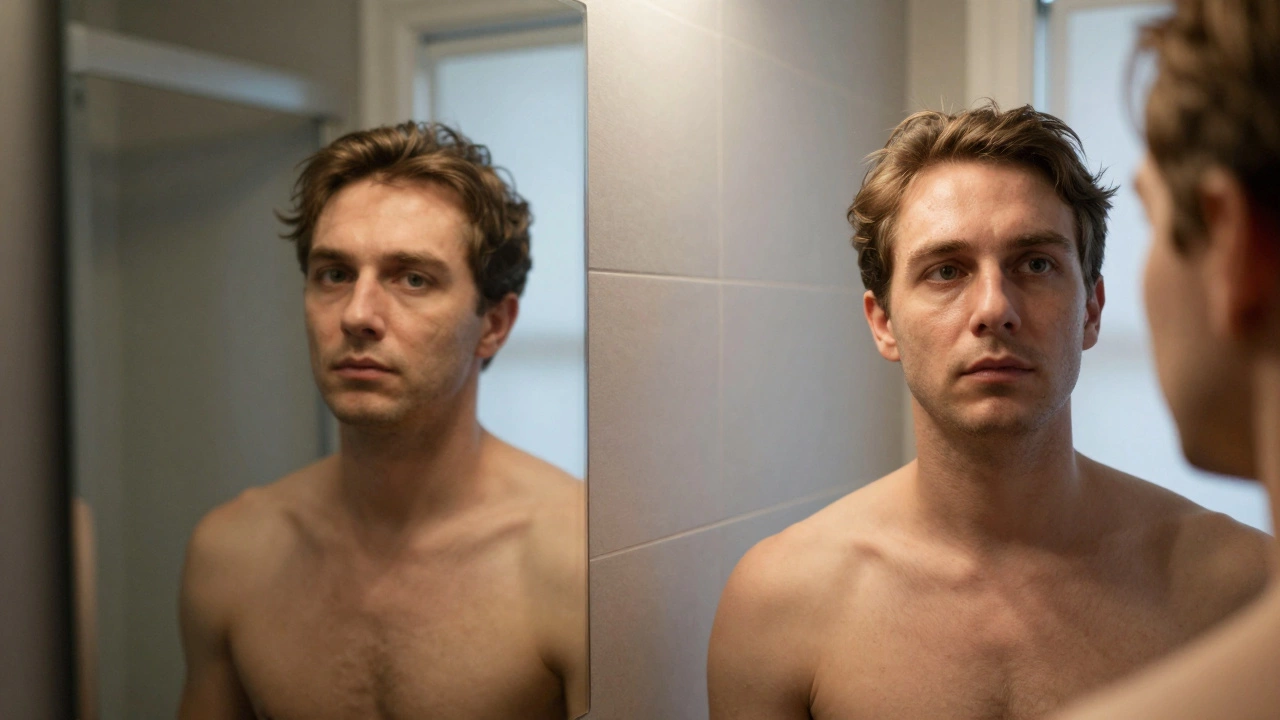
You’ve probably noticed it: you walk into one bathroom and you look fresh, glowing, even a little better than usual. Then you step into another room, glance in the mirror, and suddenly you’re not sure who that person is. Dark circles? Uneven skin? A double chin that wasn’t there five minutes ago? It’s not your imagination. And it’s not you changing-it’s the mirror.
Mirrors aren’t all created equal
Not every mirror reflects reality the same way. A cheap, mass-produced mirror from a discount store isn’t the same as the one in a high-end boutique or a professional makeup studio. The glass thickness, the quality of the silver backing, and even the flatness of the surface all affect what you see.High-quality mirrors use float glass, which is polished to be perfectly flat. Low-end mirrors often use cheaper, rolled glass that’s slightly warped. That tiny curve, invisible to the naked eye, stretches or compresses your reflection. It might make your nose look longer, your jawline softer, or your shoulders narrower. It’s not you-it’s the glass.
Think of it like a phone camera with a cheap lens. You wouldn’t expect a $20 phone to take a professional portrait. The same goes for mirrors. A $15 mirror from a big-box store isn’t designed to show you accurately-it’s designed to look nice on a wall and sell quickly.
Lighting changes everything
Lighting is the biggest reason you look worse in some mirrors. Mirrors don’t create light-they only reflect it. And the quality of that light makes a massive difference.Take a typical bathroom mirror with overhead lighting. That harsh white light comes from above, casting shadows under your eyes, your nose, and your chin. Those shadows make dark circles look deeper, pores look larger, and wrinkles more pronounced. It’s the same reason you look tired in photos taken at noon.
Now compare that to a vanity mirror with LED strips on both sides. That even, diffused light wraps around your face, minimizing shadows and revealing your skin’s true texture. That’s why you look better in makeup studios, salons, or high-end dressing rooms. They don’t just have good mirrors-they have good lighting.
Research from the University of California, Berkeley found that people consistently rated their appearance as worse under cool white overhead lighting compared to warm, side-lit lighting. The difference wasn’t subtle-it was measurable. Your brain interprets harsh shadows as signs of aging or fatigue, even if they’re just caused by bad fixture placement.
Mirror size and distance matter
Ever notice how you look different in a full-length mirror versus a small one above the sink? It’s not just perspective-it’s how much of your face and body the mirror shows you.A small mirror forces you to get close to see your face clearly. When you’re that close, your eyes focus on tiny details: a pimple, a stray hair, a wrinkle. Your brain zooms in on flaws because your field of view is limited. It’s like looking at a photo and cropping it to just one part of your face-you’re not seeing the whole picture.
A larger mirror lets you step back. You see your whole face, your posture, your expression. You’re not fixating on one spot. That’s why people often feel more confident in full-length mirrors-they see themselves as a whole, not just a collection of imperfections.
Also, distance changes proportions. Stand too close to a mirror and your nose looks bigger. Step back, and everything balances out. It’s basic optics. The same thing happens with phone cameras-wide-angle lenses distort features up close. Mirrors don’t have lenses, but your proximity to them does the same thing.
Color temperature and tint
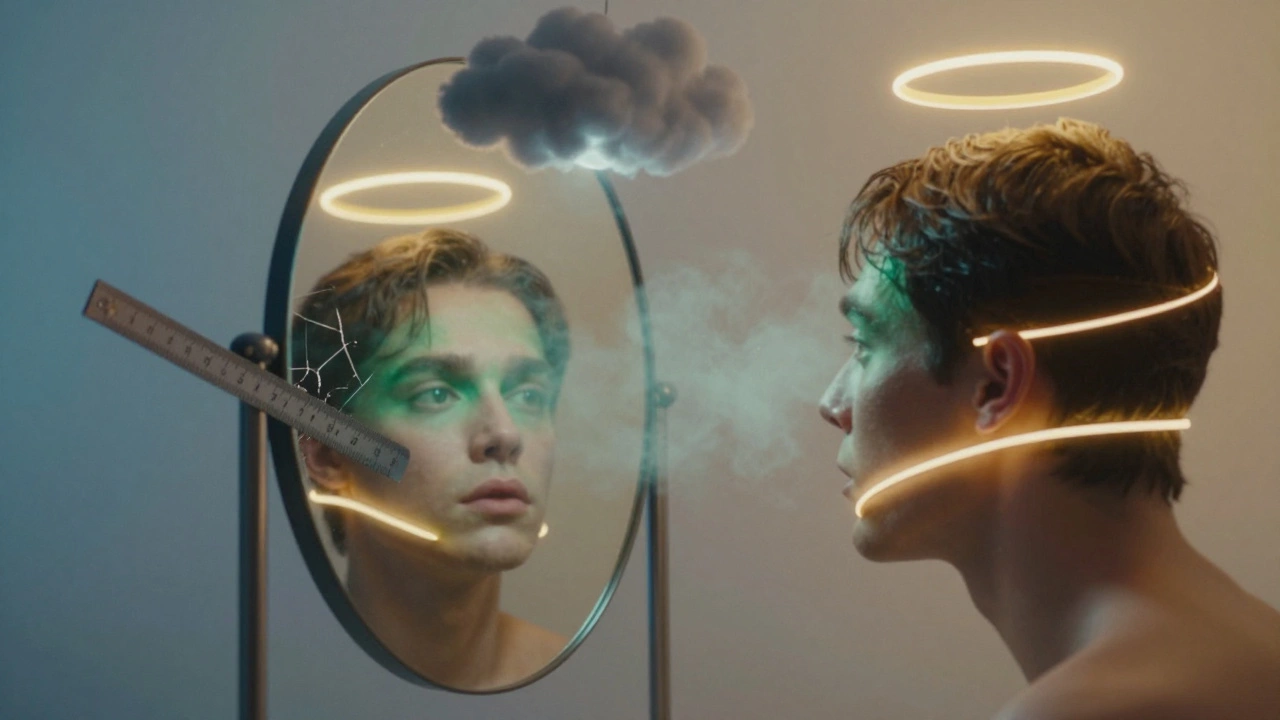
Not all mirrors show true colors. Some have a slight green, blue, or yellow tint built into the glass or backing. This isn’t always obvious until you compare it to another mirror or natural daylight.A mirror with a green tint can make your skin look sallow or sickly. A blue tint might make you look pale or washed out. A warm, yellowish tint can make you look healthier-until you step outside and realize your face looks completely different in sunlight.
Professional makeup artists use mirrors with a color rendering index (CRI) of 90 or higher. That means they show colors as they truly appear under natural light. Most home mirrors have a CRI of 70-80. That 10-20 point gap changes how your skin tone, lipstick, and even eye color look. You might think you’re wearing a flattering shade of blush, but under daylight, it looks like clown makeup.
Angle and placement
Where the mirror is mounted changes your reflection more than you think. A mirror hung too high forces you to look up, which can make your chin appear heavier. A mirror hung too low makes you look down, which can flatten your features or make your forehead look bigger.The ideal height? The center of the mirror should be at eye level when you’re standing normally. That’s why mirrors in dressing rooms are often mounted lower than bathroom mirrors-they’re designed for people standing in front of them, not just washing their hands.
Also, mirrors angled slightly outward (like in a salon) give you a more natural view. A flat, perfectly vertical mirror forces you to stare straight ahead, which isn’t how you normally see yourself in the world. We rarely look straight-on at our own faces in real life-we glance in windows, catch reflections in phones, see ourselves in photos from different angles.
Why your brain plays tricks
Your brain is wired to notice changes. When you see yourself in a mirror you’re used to, your brain files away that image as “normal.” When you step into a different room and see a distorted version, your brain flags it as wrong-even if it’s more accurate.Studies in psychology show people develop a “self-image” based on the mirror they use most. That’s why you might feel uncomfortable in a new bathroom-you’re seeing a version of yourself that doesn’t match your mental picture. It’s not that you look worse. It’s that you’re seeing the truth for the first time.
And then there’s the “mere exposure effect.” The more you see a certain version of yourself, the more you like it-even if it’s distorted. Your favorite mirror might be the one that flatters you the most, not the one that’s most accurate.
How to find a mirror that shows you truthfully
If you want to see yourself as you really are, here’s what to look for:- Choose a mirror with a CRI of 90+-this ensures accurate color representation.
- Look for LED lighting on both sides-not overhead. Side lighting reduces shadows.
- Buy a large mirror-at least 18 inches wide for facial reflection. Bigger is better.
- Check for flatness-place a straight edge (like a ruler) against the mirror. If there’s a gap, it’s warped.
- Test it in natural light-stand in front of it with sunlight behind you. Does your skin look the same as it does outside?
Brands like Bulbrite, Robern, and IKEA’s FÖRNUFTIG line offer mirrors with good CRI and side lighting. You don’t need to spend hundreds-just avoid the $20 mirrors with no brand name and no specs.
What to do if you can’t change your mirror
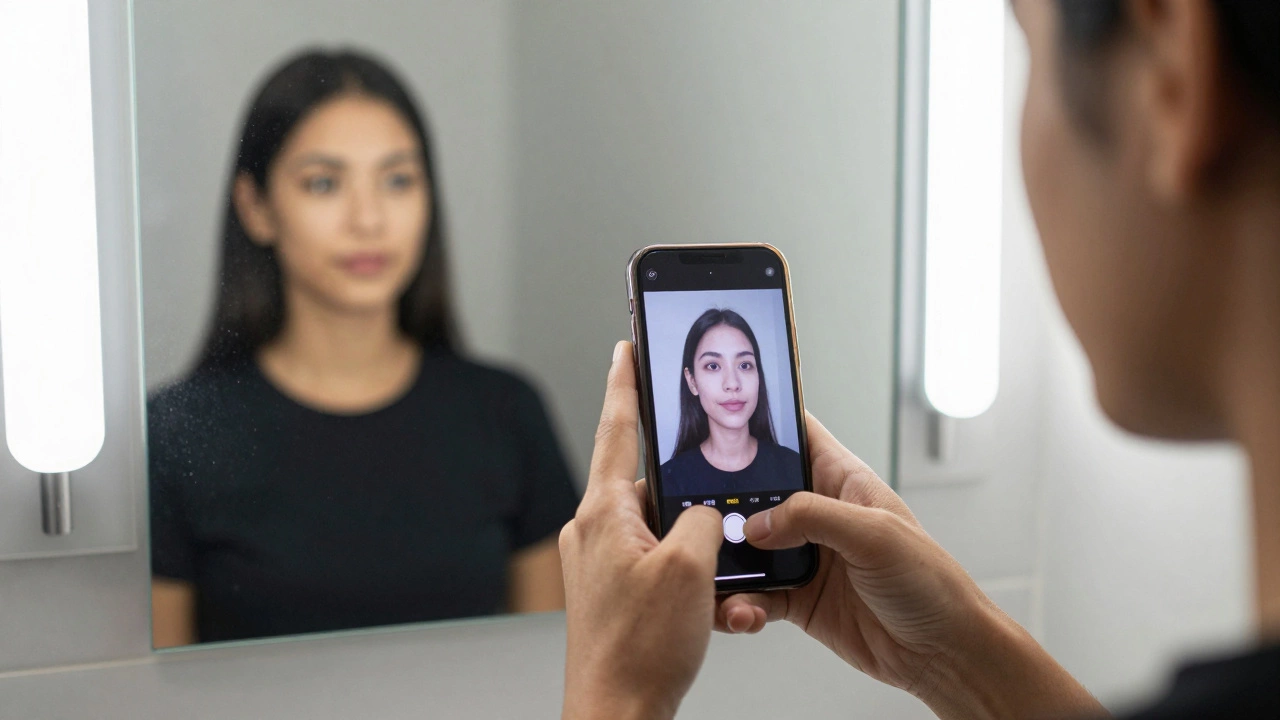
If you’re stuck with a bad mirror-like in a rental or a public bathroom-here’s a trick: use your phone. Take a photo in natural light, then look at it. Your phone’s camera, especially in daylight, is often more accurate than your bathroom mirror.Also, avoid checking your reflection under harsh lighting. Wait until you’re near a window, or turn on a warm lamp before you look. Give yourself a moment to adjust. You’ll notice your skin tone and features look more balanced.
Remember: no mirror shows your full story. Your expression, your posture, your mood-all of it affects how you look. A mirror just reflects light. It doesn’t define you.
Why do I look worse in the bathroom mirror than in the one at my friend’s house?
It’s usually lighting and mirror quality. Your bathroom likely has overhead lighting that casts harsh shadows, while your friend’s mirror probably has side lighting and better glass. The mirror itself might be warped or have a tint that makes your skin look dull. It’s not you-it’s the setup.
Do mirrors make you look heavier or thinner?
Yes, depending on the curve of the glass. Slightly convex mirrors (curved outward) make you look thinner. Slightly concave mirrors (curved inward) can make you look wider or taller. Most cheap mirrors have tiny imperfections that distort proportions without you noticing. That’s why you might feel thinner in one mirror and heavier in another.
Is there a mirror that shows how others see me?
The closest thing is a mirror with natural daylight and side lighting, with a CRI above 90. Others see you in natural light, not under your bathroom’s fluorescent bulb. A photo taken in daylight, without filters, is the most accurate representation of how you look to other people.
Why do I look better in some photos than in mirrors?
Photos capture a moment, and you’re often looking at them later, not reacting in real time. Mirrors show live, shifting images, and your brain is hyper-focused on flaws. Photos also benefit from lighting setups that flatter you-something most home mirrors don’t have. Plus, you’re not staring at yourself while the photo is taken, so you look more relaxed.
Can I fix a bad mirror instead of replacing it?
You can’t fix warped glass, but you can improve the lighting. Add LED strip lights on both sides of the mirror. Use warm white bulbs (2700K-3000K). Place a small lamp behind you to fill in shadows. These changes won’t fix the glass, but they’ll make the reflection far more forgiving.