18-Inch Storage Zone Planner
Select a room in your home to see specific recommendations for applying the 18-inch visibility and reach zone rule.
Quick Audit Checklist
You walk into your closet. It’s packed. You can’t see the back wall. You pull a shirt out, and three others fall on top of it. Sound familiar? Most of us have been there. We buy bins, shelves, and organizers, but the clutter stays. Why? Because we focus on *containers* instead of *capacity*. Enter the 18 inch storage rule. It sounds simple, almost too simple to work. But it might be the only trick you need to finally stop fighting with your stuff.
This isn't just about measuring tape. It's about psychology. It's about giving your eyes-and your brain-a break. When everything is visible and reachable within an 18-inch zone, you stop losing things. You stop buying duplicates. You start actually using what you own. Let’s break down exactly how this works, where it applies, and why it changes the game for keeping a tidy home.
The Core Concept: Visibility Over Volume
At its heart, the 18 inch storage rule states that any item you use regularly should be stored within an 18-inch reach or view from where you use it. If you can’t see it or grab it without moving another object, it’s not truly "stored"-it’s hidden. And if it’s hidden, you’ll forget it exists until you need it urgently.
Think about your kitchen counter. How many times have you bought a second coffee mug because you couldn’t find the first one buried under mail? That’s the failure of deep storage. The rule forces you to flatten your storage. Instead of stacking plates five high in a cupboard, you spread them out so each one is accessible. Instead of piling books on a shelf, you arrange them so the spines face out and are easy to scan.
This concept relies on two main principles:
- Line of Sight: You should be able to see the item without moving anything else.
- Reach Zone: Your arm should extend no more than 18 inches to retrieve the item comfortably.
When you apply this, you naturally reduce the amount of stuff you keep. If an item doesn’t fit into an 18-inch accessible slot, you have to ask: Do I really need it right now? This question alone clears out half the junk in most homes.
Why 18 Inches? The Science of Comfort
Why not 12 inches? Why not 24? The number 18 comes from ergonomic studies on human movement. The average adult’s comfortable reaching zone-the area where you can grab something without leaning, stretching, or shifting your weight-is roughly 18 inches forward and sideways.
If you go beyond that, you create friction. Friction leads to laziness. If grabbing your toothbrush requires digging through a drawer, you’re less likely to floss. If finding your keys means climbing a ladder to reach a high shelf, you’ll leave them on the table again tomorrow. The 18-inch limit keeps actions low-effort. Low-effort actions become habits. Habits keep spaces clean.
It also matches the standard depth of many common furniture pieces. A typical nightstand is about 16-18 inches deep. A standard kitchen cabinet is often 12-24 inches deep. By aligning your storage strategy with these physical realities, you work with your home’s design rather than against it.
Applying the Rule in Key Rooms
The theory is solid, but how does it look in practice? Let’s walk through the rooms where clutter hits hardest.
The Kitchen: The High-Traffic Zone
Kitchens are chaos magnets. Pots, pans, spices, snacks-they all compete for space. Here’s how to apply the rule:
- Spices: Don’t stack them back-to-front in a deep cabinet. Use a single-tier rack or a lazy Susan so every jar is within 18 inches of your hand when you’re cooking.
- Pans: Avoid nesting every pan inside every other pan. Use dividers or hang them on a rail. You want to grab a skillet without unstacking three others.
- Dry Goods: Clear containers on open shelves beat opaque boxes in deep cupboards. If you can see the pasta at a glance, you don’t need to dig.
If you have deep cabinets, install pull-out drawers. This brings the back of the cabinet into your 18-inch zone. Without pull-outs, the back 10 inches of a 24-inch cabinet is basically a black hole.
The Closet: The Clothing Trap
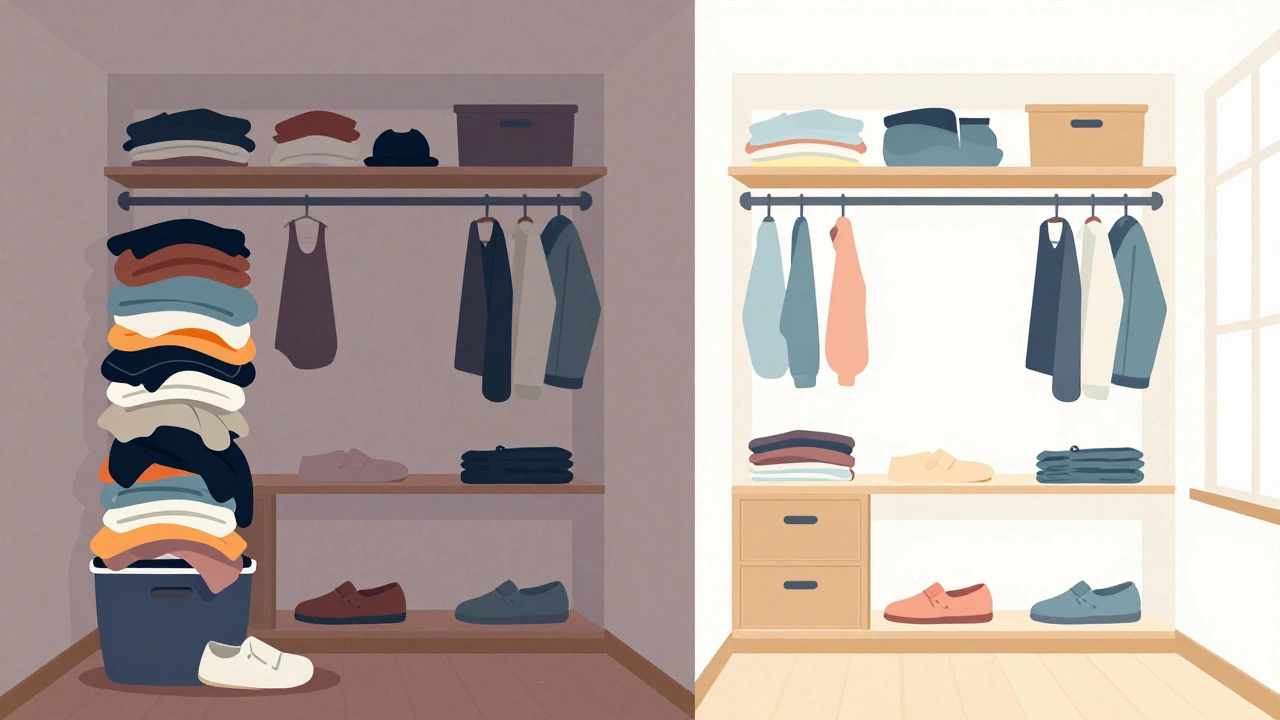
Closets are where the 18-inch rule shines brightest. Most people hang clothes too close together or pile sweaters in chaotic heaps. Try this:
- Hanging Space: Leave at least 2-3 inches between hangers. This ensures you can see each garment. If you can’t distinguish one shirt from another, you won’t wear it.
- Folding Zones: Fold shirts and pants so they stand upright (file folding) in drawers. Each piece should be visible without pulling out its neighbor. This creates a grid where every item is within easy reach.
- Shoe Racks: Use clear boxes or open shelves. Stacking shoes vertically hides the ones at the bottom. Keep daily wearers in the prime 18-inch eye-level zone.
If your closet floor is covered in piles, you’ve broken the rule. Everything needs a designated spot that’s immediately accessible.
The Bathroom: Small Space, Big Impact
Bathrooms are small, which makes the 18-inch rule even more critical. Counter space is premium real estate.
- Toiletries: Keep daily essentials (toothbrush, soap, deodorant) on the counter or in a shallow tray. Weekly items (shampoo, conditioner) can go in the shower caddy, but still within arm’s reach.
- Meds: Store frequently used medications in a small basket near the sink, not buried in a medicine cabinet behind rare vitamins.
If you have to open multiple doors to find your hair tie, your system is failing. Simplify. Reduce. Make it visible.

Tools That Help You Stick to the Rule
You don’t need expensive furniture to follow the 18 inch storage rule. You need smart organizers. Here are the best tools for the job:
| Tool | Best For | Why It Works |
|---|---|---|
| Lazy Susans | Corners, Deep Cabinets | Brings back items to the front with a spin |
| Clear Bins | Drawers, Shelves | Maintains line of sight while grouping items |
| Pull-Out Drawers | Deep Cupboards | Extends your reach zone to the back of the cabinet |
| Vertical Dividers | Pans, Files, Magazines | Prevents stacking; keeps items upright and visible |
| Under-Bed Sliders | Seasonal Items | Keeps non-daily items accessible but out of the way |
Avoid deep, opaque bins unless you label them clearly. Even then, labels require reading, which adds friction. Visual access is faster than cognitive processing. If you can see it, you know it’s there.
Common Mistakes to Avoid
Even with good intentions, people mess up the 18 inch storage rule. Here’s what to watch out for:
- Overfilling Containers: If a bin is stuffed tight, you can’t see inside. Fill bins only halfway to maintain visibility.
- Igoring Vertical Space: Don’t just look left and right. Use wall space for hooks and racks to bring items into your reach zone.
- Keeping Too Much Stuff: The rule exposes hoarding tendencies. If you have 50 mugs, you can’t make them all accessible within 18 inches. Donate the extras.
- Using Deep Shelving Without Adjustments: Standard bookshelves are often 10-12 inches deep, but if you push books to the back, they disappear. Use book stops or pull-out trays.
The biggest mistake? Thinking this is a one-time fix. The 18 inch storage rule is a maintenance habit. Every time you bring something new home, ask: Where does this go in my 18-inch zone? If there’s no spot, don’t bring it in.

Does It Work for Everyone?
Not necessarily. If you live in a tiny apartment with limited square footage, strict adherence might feel impossible. In those cases, prioritize the 18-inch rule for *daily* items only. Seasonal gear, extra linens, and hobby supplies can go in deeper storage, as long as they’re labeled and rotated seasonally.
For families with young kids, the rule is a lifesaver. Kids can’t reach high shelves or dig through deep drawers. Putting toys and clothes within their 18-inch reach encourages independence and tidiness. They learn to put things back because they can see where they belong.
Seniors also benefit greatly. Reduced mobility makes reaching difficult. Keeping essentials within a short, easy reach prevents strain and accidents.
Getting Started: Your Action Plan
Don’t try to do your whole house at once. Pick one drawer. One shelf. One counter. Apply the 18-inch test:
- Empty it out. Take everything off the shelf or out of the drawer.
- Clean the space. Wipe it down. Reset the canvas.
- Sort items by frequency. Daily users stay here. Monthly users move elsewhere.
- Arrange for visibility. Stand items up. Use dividers. Remove stacks.
- Test the reach. Can you grab any item without moving another? If yes, you’ve won.
Once you finish one spot, you’ll see the difference. It feels lighter. Cleaner. Easier. Then move to the next spot. Momentum builds quickly.
Is the 18 inch storage rule the same as minimalism?
Not exactly. Minimalism is about owning fewer things overall. The 18 inch storage rule is about organizing what you have so it’s usable. You can follow the rule with a lot of stuff, but you’ll likely find yourself wanting less over time because visibility reduces impulse buying and duplicate purchases.
How do I handle bulky items like winter coats?
Bulky seasonal items don’t need to be in your daily 18-inch zone. Store them in overhead closets or under-bed storage. Just ensure they’re in a single, labeled container so you know exactly where they are when the season changes. Rotate them out annually.
Can I use this rule in a small bathroom?
Yes, it’s especially important in small bathrooms. Use vertical space with over-the-door hooks or wall-mounted shelves to bring items into your reach zone. Keep only daily essentials on the counter or in shallow drawers. Move weekly items to a nearby linen closet if needed.
What if my cabinets are deeper than 18 inches?
Install pull-out drawers or sliding baskets. These mechanisms bring the back of the cabinet to the front, effectively extending your 18-inch reach zone. Without them, the back of deep cabinets becomes dead space where items get lost.
Does this rule work for digital files?
The principle applies! Keep frequently used files in your desktop or a top-level folder (your 18-inch zone). Archive older projects into dated folders deeper in your drive. If you have to click through five subfolders to find a current document, your digital storage is cluttered.