Western Bathroom Layout Planner
You walk into a hotel room in London or New York, and something feels different. The space isn't just functional; it’s designed with specific proportions, fixtures, and habits in mind. This is what people often refer to as a Western bathroom. But what does that actually mean? Is it just about the toilet shape, or is there more to this design philosophy?
The term "Western bathroom" doesn't have a single technical definition in architecture textbooks. Instead, it describes a set of design conventions common in North America, Europe, and Australia. These bathrooms prioritize individual privacy, ergonomic spacing, and distinct zones for bathing, grooming, and sanitation. Unlike traditional Eastern designs that might favor compactness or communal bathing styles, Western bathrooms are built around the idea of personal space and dedicated appliances.
The Core Philosophy: Zoning and Privacy
The biggest difference you’ll notice in a Western bathroom is how the space is divided. In many Asian homes, especially in older apartments, you might find a small wet area where showering happens over the toilet or a separate tiny room just for washing hands. In contrast, the Western approach treats the bathroom as a suite of distinct zones.
Think about your own routine. You wash your face, brush your teeth, then maybe take a shower, and finally use the toilet. A typical Western layout tries to keep these activities separate or at least visually distinct. This zoning reduces clutter and makes cleaning easier. For example, keeping the sink away from the shower prevents water splashes on your toothbrush. It’s not just about luxury; it’s about hygiene and workflow efficiency.
This separation also ties into privacy. In many Western cultures, the bathroom is seen as a private sanctuary. Even in shared family bathrooms, there’s an emphasis on doors that lock securely and layouts that allow one person to use the sink while another uses the toilet without awkward eye contact. This cultural shift has driven the popularity of larger master suites with ensuite bathrooms.
Key Fixtures That Define the Style
If you’re trying to identify a Western bathroom, look at the fixtures. They tell a lot about the region’s preferences for comfort and utility.
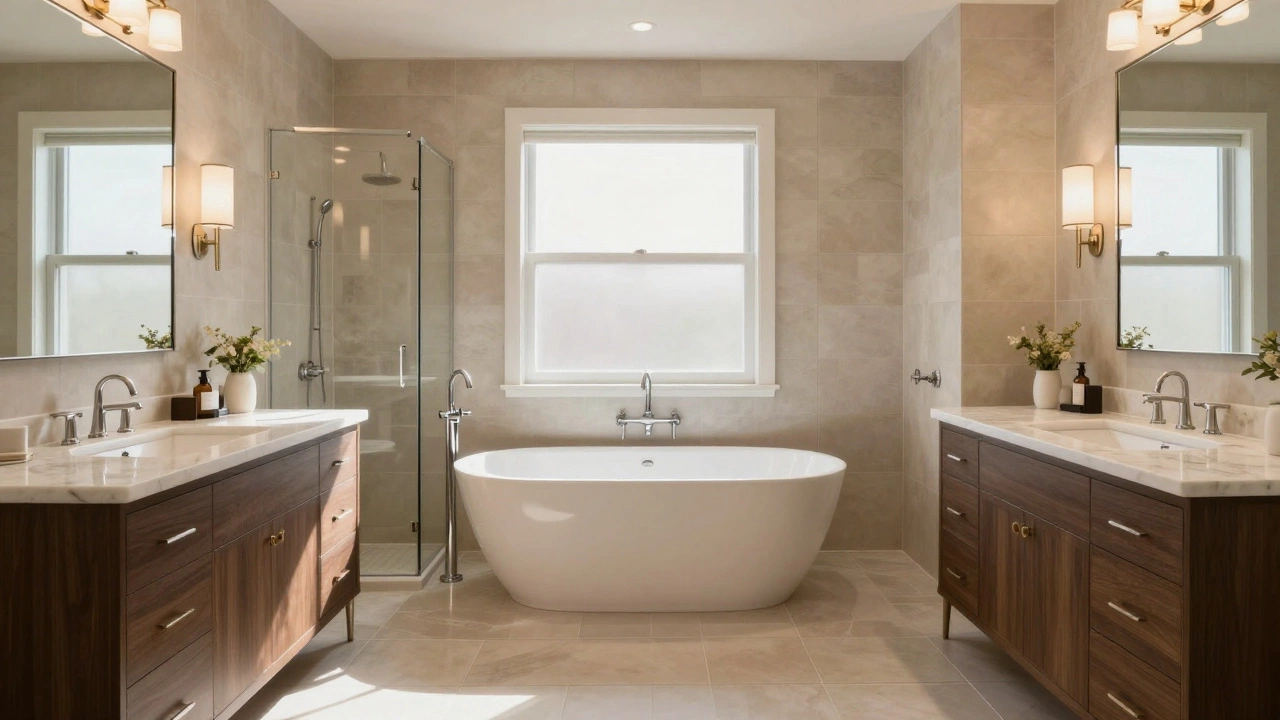
- Freestanding Bathtubs are standalone soaking tubs that are not attached to walls, often serving as a focal point in the room. While not in every home, they are a hallmark of Western luxury design. They require significant floor space but offer a spa-like experience.
- Dual Vanities are double-sink setups that allow two people to get ready simultaneously. This is extremely common in master bedrooms in the US and UK. It reflects a lifestyle where partners share morning routines efficiently.
- One-Piece Toilets are toilets where the tank and bowl are integrated into a single unit for easier cleaning and sleeker looks. Compared to older two-piece models, these are now standard in new constructions across Western countries.
- Frameless Glass Shower Enclosures are transparent shower barriers that create an open, airy feel. Western designers love glass because it makes small spaces look bigger. Sliding or hinged glass doors are preferred over heavy curtains.
Another subtle clue is the placement of mirrors. In Western bathrooms, large, wall-mounted mirrors above the sink are standard. They aren’t just for checking your hair; they reflect light to make the room feel brighter and larger. In some European homes, you might even see heated mirrors to prevent fogging-a small detail that shows a focus on user comfort.
Layouts and Spatial Arrangements
The way furniture and fixtures are arranged in a Western bathroom follows strict ergonomic rules. Building codes in places like the US (via the International Residential Code) and the UK specify minimum clearances. For instance, you need at least 21 inches of clearance in front of the toilet and 30 inches of width for a comfortable path.
Let’s look at three common Western layouts:
- The Galley Layout: Common in smaller apartments, this linear arrangement places the toilet, sink, and shower in a row. It’s efficient but can feel cramped if not lit well.
- The L-Shaped Layout: Here, fixtures are placed along two adjacent walls. This allows for better flow and is popular in mid-sized homes. You might have the shower in one corner and the vanity on the opposite wall.
- The Island Layout: Found in larger homes, this features a central island with a double vanity, surrounded by the toilet and shower areas. It’s luxurious and promotes easy movement.
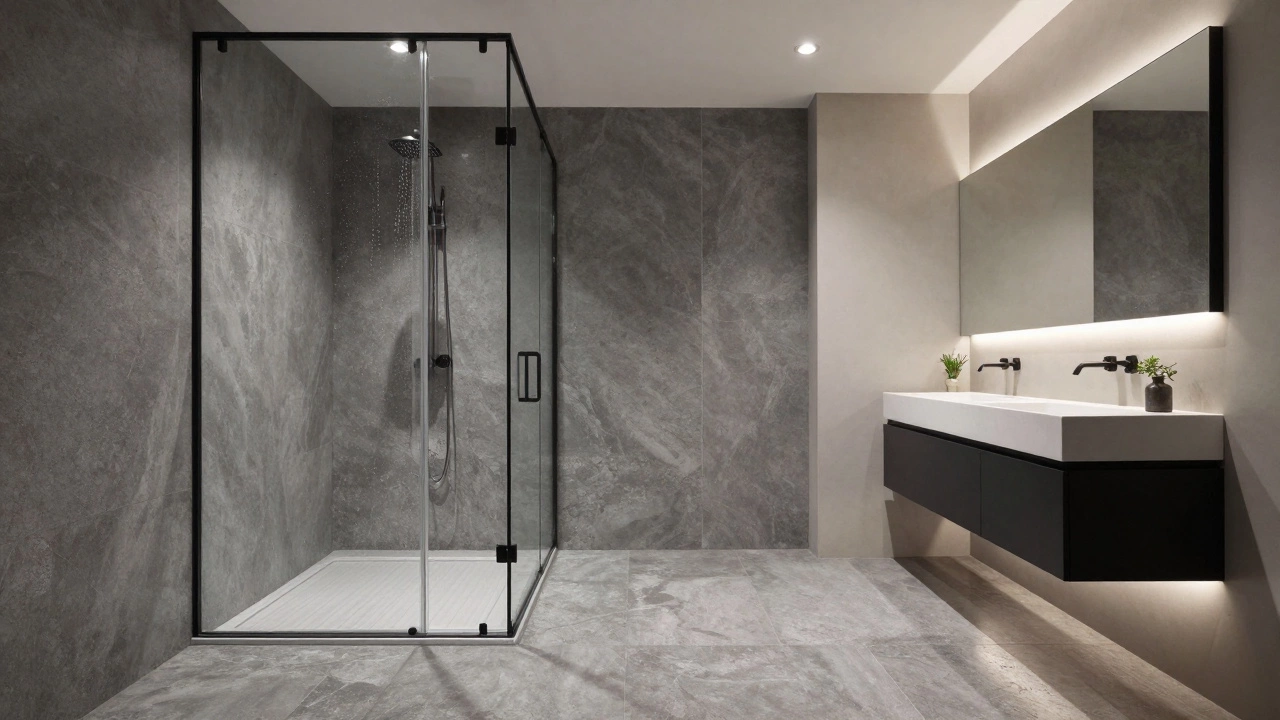
A key trend in recent years is the "wet room" concept, which originated in Europe but has gained traction globally. In a wet room, the entire bathroom floor is waterproofed, allowing the shower to be open without a door. This blurs the line between bathing and changing areas, saving space and creating a minimalist aesthetic. However, it requires careful slope planning to ensure water drains properly.
| Layout Type | Best For | Pros | Cons |
|---|---|---|---|
| Galley | Small Apartments | Space-efficient, simple plumbing | Can feel narrow, limited storage |
| L-Shaped | Mid-Sized Homes | Better flow, flexible fixture placement | Requires more square footage |
| Island | Luxury Suites | High-end feel, easy access | Expensive, needs large space |
Materials and Aesthetic Choices
When we talk about Western bathrooms, we’re also talking about materials. There’s a strong preference for surfaces that are durable, easy to clean, and visually cohesive. Tile remains king, but the style has evolved.
In the early 2000s, glossy white ceramic tiles dominated. Today, you’ll see more natural stone like marble or quartzite, especially in high-end homes. Large-format tiles (12x24 inches or bigger) are popular because they reduce grout lines, making the floor look seamless and easier to maintain. Wood-look porcelain tiles are another trend, bringing warmth to a typically cold space.
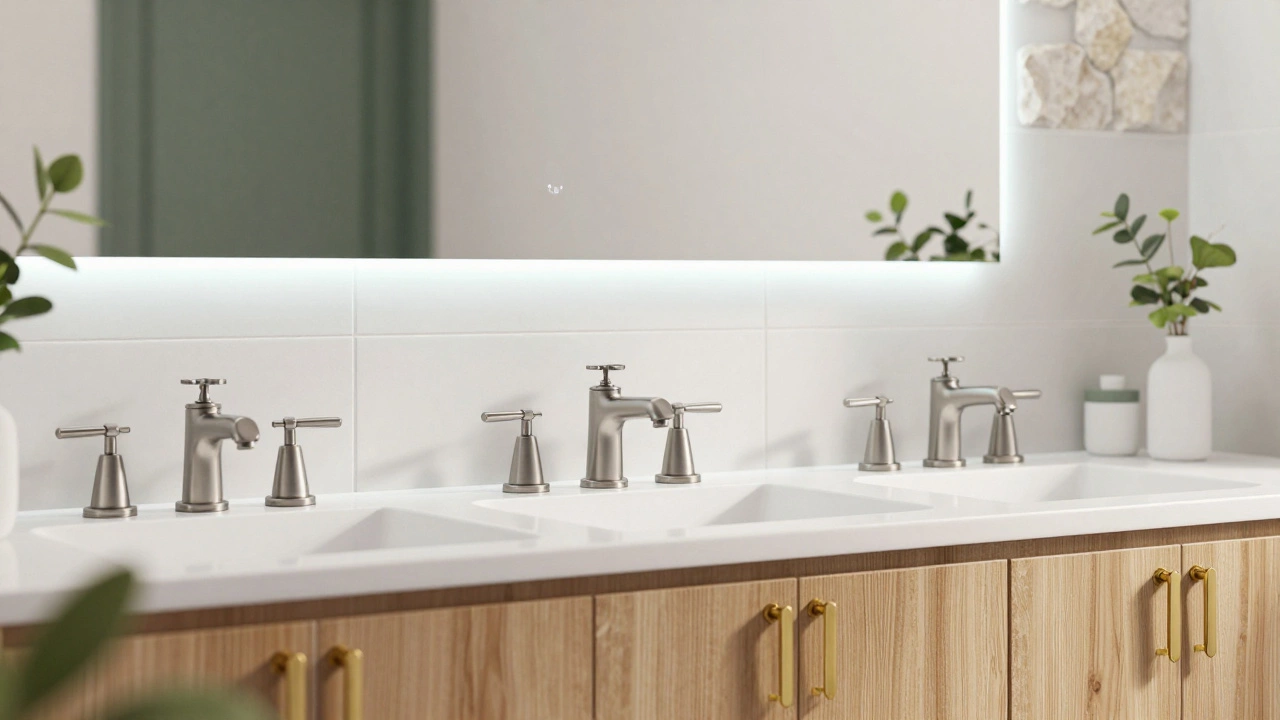
Cabinetry has also shifted. Gone are the bulky, painted wood vanities of the past. Now, floating vanities mounted on the wall are preferred. They leave the floor visible, which tricks the eye into thinking the room is larger. Materials like matte black metal, brushed nickel, or brass finishes add a touch of industrial chic or vintage elegance, depending on the vibe you want.
Lighting plays a huge role too. Western bathrooms rarely rely on a single overhead bulb. Instead, layered lighting is used: recessed ceiling lights for general illumination, task lighting around the mirror for grooming, and accent lights to highlight architectural features or plants. LED strips under cabinets or behind mirrors provide a soft glow that enhances the mood.
Cultural Nuances and Regional Variations
Not all Western bathrooms are created equal. There are subtle differences between American, British, and Australian designs.
In the United States, bathrooms are often larger, with a focus on spaciousness and high-tech features like bidet seats and smart mirrors. Master suites frequently include a separate water closet (a small room just for the toilet) to mask noise and odors.
In the United Kingdom, bathrooms tend to be more compact due to smaller housing footprints. You’ll often see combination units where the shower is over the bath, maximizing vertical space. Storage is critical, so built-in shelves and mirrored cabinets are common.
Australia leans towards outdoor-inspired designs, with natural textures and earthy tones. Due to the climate, ventilation is a major concern, so exhaust fans and skylights are prioritized to prevent mold and humidity buildup.
Understanding these nuances helps when designing or renovating. If you’re in a small city apartment, borrowing ideas from UK layouts might save you space. If you have a sprawling suburban home, US-style zoning could enhance your daily routine.
Common Mistakes to Avoid
Even with the best intentions, many homeowners mess up their Western bathroom designs. Here are pitfalls to watch out for:
- Ignoring Clearance: Placing the toilet too close to the vanity or shower can make the room feel claustrophobic. Always check local building codes for minimum distances.
- Poor Ventilation: Without adequate airflow, moisture will damage walls, ceilings, and mirrors. Install a high-quality exhaust fan that vents outside, not just into the attic.
- Overcomplicating Lighting: Too many dim switches or mismatched bulbs can confuse users. Stick to a simple, intuitive control system.
- Neglecting Storage: A beautiful bathroom becomes chaotic quickly if there’s nowhere to put towels, toiletries, and cleaning supplies. Incorporate hidden storage wherever possible.
Another mistake is choosing fixtures solely based on looks. A freestanding tub looks stunning, but if you don’t have enough hot water capacity or floor reinforcement, it’s impractical. Always balance aesthetics with functionality.
Future Trends in Western Bathroom Design
As we move through 2026, several trends are shaping the next generation of Western bathrooms. Sustainability is no longer a buzzword; it’s a requirement. Low-flow toilets, rainwater harvesting systems, and eco-friendly materials are becoming standard.
Smart technology is also integrating deeper. Imagine a mirror that displays your schedule, weather, and news while you brush your teeth. Or a shower that learns your preferred temperature and adjusts automatically. These features are moving from luxury niches to mainstream options.
Accessibility is another growing focus. Universal design principles-like grab bars, wider doors, and step-free showers-are being incorporated into mainstream designs, not just for elderly users. This ensures bathrooms remain usable for everyone, regardless of age or ability.
Finally, biophilic design is gaining traction. Bringing nature indoors through live plants, natural stone, and organic shapes creates a calming environment. In a world where stress levels are high, the bathroom is evolving from a utilitarian space to a wellness retreat.
What is the main difference between a Western and an Eastern bathroom?
The main difference lies in zoning and privacy. Western bathrooms typically separate functions (showering, grooming, toileting) into distinct areas with dedicated fixtures, emphasizing individual privacy. Eastern bathrooms may combine functions in smaller spaces or prioritize communal washing areas, focusing on efficiency and minimalism.
Do Western bathrooms always have bathtubs?
No. While bathtubs are common in master suites, many secondary bathrooms in Western homes feature shower-only stalls to save space and improve accessibility. The trend toward "wet rooms" also eliminates the need for a traditional enclosed tub.
How much space do I need for a standard Western bathroom?
A minimum of 36 square feet is recommended for a functional half-bath (toilet and sink). A full bath with a shower should ideally be at least 40-50 square feet to allow for comfortable movement and storage. Larger master suites can range from 80 to 200+ square feet.
Are dual vanities necessary in a Western bathroom?
They are not strictly necessary but are highly desirable in master bedrooms. Dual vanities reduce morning congestion by allowing two people to use the sink simultaneously. In guest or powder rooms, a single vanity is usually sufficient.
What materials are most popular in modern Western bathrooms?
Popular materials include large-format porcelain tiles, natural stone (marble, quartzite), and wood-look ceramics. For cabinetry, matte-finished woods or laminate with waterproof cores are common. Fixtures often feature brushed nickel, matte black, or brass finishes.
Is a wet room considered a Western bathroom feature?
Yes, though it originated in Europe, the wet room has become a staple in modern Western design, particularly in urban apartments. It involves waterproofing the entire floor and using open showers without doors, promoting a minimalist and accessible layout.