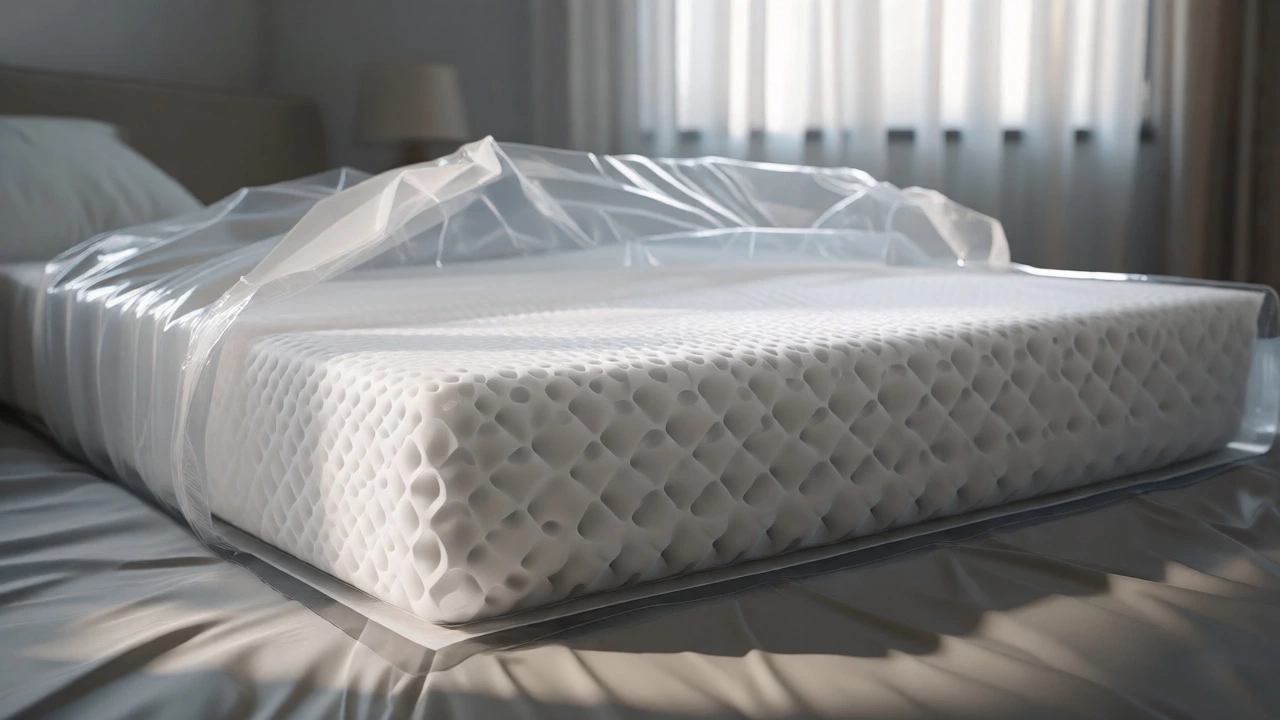
Mattress Break-In Estimator
New mattresses need time to adjust to your body. Use this tool to estimate how long your specific setup will take to reach optimal comfort.
Select options and click calculate to see your estimated timeline.
Your Estimated Break-In
Initial Adjustment:
--
Full Comfort Reached:
--
Why This Matters
New materials are compressed during shipping. Memory foam cells need to re-expand, and springs need to settle into padding. Ignoring the bedding period often leads to premature returns of perfectly good products. Consistent use is key—skipping nights extends the process indefinitely.
You just spent a small fortune on a new bedding set or a fresh mattress. You unbox it, place it on the frame, and slide under the covers, expecting instant cloud-like bliss. But instead of sinking into perfect support, you feel... off. Maybe it’s too firm. Maybe it feels hollow. Or perhaps your back just doesn’t feel right yet. Before you start Googling return policies, pause. You might be experiencing what industry experts call the bedding period, also known as the break-in period, which is the time required for new mattresses and pillows to soften and adjust to your body weight.
This isn't a defect. It's physics. New materials, especially foams and fibers, are compressed during manufacturing and shipping. They need time to expand, relax, and mold to your specific shape. Ignoring this phase often leads to premature returns of perfectly good products. Let’s break down exactly how long this takes, why it happens, and how to speed it up without ruining your sleep.
The Science Behind the Break-In
Why does a brand-new mattress feel different from one that’s been used for six months? The answer lies in material density and compression memory. When manufacturers package a memory foam mattress, they vacuum-seal it, compressing the cellular structure by up to 90%. This saves space and reduces shipping costs, but it leaves the foam cells collapsed. Once opened, these cells slowly re-expand and regain their elasticity.
For innerspring mattresses, the issue is slightly different. The steel coils are tightly wound and may feel rigid until they settle into the surrounding padding layers. Hybrid models combine both issues: the foam needs to decompress while the springs need to shift slightly within their encasements. Even traditional innerspring mattresses with pocketed coils require a bedding period for the fabric cover to stretch and the top comfort layers to conform to the sleeper's profile.
Your body plays a role, too. Every night, your heat and weight act as a slow-motion molding tool. Your body temperature warms the viscoelastic foam, making it more pliable. Over time, the foam creates a custom contour map of your shoulders, hips, and lumbar region. This process cannot be rushed significantly without compromising the structural integrity of the materials.
How Long Does the Bedding Period Last?
There is no single answer because "new" means different things for different materials. However, most manufacturers agree on general timelines. If you’re wondering if your mattress is defective after three nights, you’re likely jumping the gun. Here is a realistic breakdown based on material type:
| Material Type | Initial Adjustment | Full Break-In | Common Sensation |
|---|---|---|---|
| Memory Foam | 3-7 Days | 30-60 Days | Firmness, slow response |
| Latex | 1-3 Days | 14-30 Days | Bouncy but stiff |
| Innerspring/Hybrid | 1-2 Weeks | 30-45 Days | Coil noise, uneven surface |
| Airbeds | N/A (Adjustable) | Immediate | Leakage checks needed |
| Pillows (Down/Alternative) | 1-2 Nights | 7-14 Days | Flatness, clumping |
Notice that memory foam takes the longest. This is because high-density polyurethane foam has a higher viscosity than latex or spring systems. If you have a thick comfort layer (4 inches or more), expect the upper end of that timeline. Thin foam toppers over an old bed will break in much faster, often within a week, because there is less material to decompress.

Signs You Are Still in the Bedding Period
How do you know if the discomfort is normal break-in pain or a genuine product flaw? Look for these specific indicators. During the first two weeks, it is common to experience mild pressure points that disappear when you change positions. If you wake up with sore shoulders that vanish after an hour of movement, that is typical. The foam hasn't fully softened around your joint curvature yet.
Another sign is a slight chemical smell, known as off-gassing. While not strictly a physical sensation of the bedding period, it accompanies the expansion of volatile organic compounds (VOCs) as the foam opens up. This odor usually fades within 48 to 72 hours. If the smell persists beyond a week, ventilate the room heavily. If the smell is accompanied by headaches or respiratory irritation, consider returning the product, as this may indicate poor-quality adhesives rather than standard break-in effects.
You might also notice the mattress feels "hotter" than usual. New foam layers trap heat more effectively before they have settled and created micro-channels for airflow. As the bedding period progresses, the material structure stabilizes, and breathability often improves slightly.
How to Speed Up the Process
Can you force the mattress to break in faster? Yes, but with caution. The goal is to accelerate material relaxation without damaging the core support. Passive waiting works, but active engagement helps.
- Walk on it: Remove the sheets and walk gently across the entire surface of the mattress. Do this for 5-10 minutes daily. This mechanical action helps release tension in the foam cells and settles the springs. Avoid jumping, as this can damage coil encasements.
- Apply heat: Memory foam responds to temperature. Taking a warm shower right before bed, or using a heated blanket on a low setting for 30 minutes, can make the foam more pliable. This allows your body weight to imprint the foam more deeply during the initial sleep sessions.
- Sleep on it consistently: This sounds obvious, but many people switch between their old couch and the new bed. Consistency is key. The materials need repeated exposure to your specific weight distribution to form a permanent contour. Skipping nights extends the bedding period indefinitely.
- Rotate the mattress: Unless your manufacturer explicitly says "no-flip," rotate your mattress head-to-foot every week during the first month. This ensures even wear and prevents one side from breaking in faster than the other.
Avoid using heavy weights like stacks of books or gym plates to weigh down the mattress. This can crush the support core unevenly, leading to permanent body impressions before the material has had a chance to recover naturally.

Pillows and Duvets: The Forgotten Components
We often focus so much on the mattress that we ignore the rest of the bedding ecosystem. Pillows have a bedding period too. Down and down-alternative pillows come out of the bag flat and lumpy. The feathers or synthetic clusters need to fluff up and distribute evenly. Toss them in the dryer on low heat with tennis balls for 20 minutes to accelerate this process. After about a week of nightly use, they will reach their optimal loft.
Duvet inserts behave similarly. Synthetic fills compress during packaging. Washing them before first use (if the care label permits) can help remove factory residues and allow the fill to expand. Cotton sateen sheets also stretch slightly after the first wash and sleep cycle, becoming softer and fitting the mattress corners better. If your fitted sheet pops off constantly in the first few days, give it a week. The elastic bands often relax and grip better after being stretched over the mattress corners repeatedly.
When to Call Customer Service
The bedding period has limits. If you are still miserable after 30 days of consistent use, something is wrong. Most reputable brands offer a trial period of 90 to 120 nights specifically to account for this adjustment phase. Use this window wisely.
Contact support if you notice:
- Visible sagging: If the center dips more than 1.5 inches (check with a straight edge), this is a defect, not break-in.
- Unpleasant odors: Strong chemical smells lasting longer than two weeks.
- Structural failure: Coils poking through the fabric or loud creaking noises that don't subside.
- Allergic reactions: Persistent skin irritation or sneezing that correlates directly with sleeping on the new bedding.
Remember, comfort is subjective. If you prefer a very firm sleep surface, a softening memory foam mattress might never feel "right" to you, even after the bedding period ends. In that case, the issue isn't the break-in; it's a mismatch of preference. Review your purchase criteria before initiating a return.
Is the bedding period the same for all mattress types?
No. Memory foam typically requires 30-60 days to fully break in due to its dense, viscoelastic nature. Latex mattresses break in faster, usually within 2-4 weeks, because natural rubber is more resilient and responsive. Innerspring and hybrid models fall in between, taking about 30 days for the comfort layers to settle over the coils.
Can I sleep on my new mattress immediately?
Yes, you can sleep on it immediately. There is no need to wait for it to expand fully before use. In fact, using it helps the break-in process. Just ensure you allow adequate ventilation for any off-gassing odors to dissipate, which usually takes 24-48 hours.
Why does my new mattress feel harder than the display model?
Display models in stores have been slept on or tested by hundreds of customers, effectively completing their bedding period. Additionally, store temperatures are often warmer, making foam softer. Your new mattress is cold and uncompressed, making it feel firmer. It will soften as it adjusts to your home environment and body heat.
Does walking on the mattress really help?
Yes, gentle walking helps mechanically agitate the foam cells and settle the spring components. It accelerates the relaxation of compressed materials. However, avoid jumping or standing on one spot for too long, as this can cause uneven wear or damage to the support core.
What if the mattress gets softer over time?
All mattresses soften slightly during the bedding period. This is normal. However, if the mattress becomes excessively soft and loses support (creating a hammock effect), it may be a sign of low-density foam or a defect. Check the warranty terms regarding sagging depth.