Tableware Terminology Quiz
How well do you know your kitchen vocabulary? Answer these questions to test your understanding of tableware terms.
Quiz Results
You’re at a fancy dinner party, or maybe just trying to buy a new set of dishes online, and you hit a wall. You know what the things are, but do you know what they’re called? Is that thing under your coffee mug a "base"? Is the whole collection of bowls and plates "dinnerware" or "crockery"? The confusion is real, and honestly, it’s mostly because English has borrowed half its vocabulary from French and the other half from Germanic roots, creating a mess of synonyms for simple household items.
The short answer? The collective term for cups, saucers, and plates is tableware. But if you want to sound like you actually know what you’re talking about when you’re shopping or hosting, you need to understand the specific hierarchy. It’s not just about semantics; using the right terms helps you find exactly what you need, whether you’re looking for bone china in London or durable stoneware for a family home in Oxford. Let’s break down the actual names, the differences between them, and why nobody seems to agree on one single word for "stuff you eat off."
The Umbrella Term: Tableware vs. Dinnerware
First, let’s clear up the biggest misconception. Many people use "tableware" and "dinnerware" interchangeably, but they aren’t identical. Tableware is the broad category that includes all items used to set a table and serve food. This encompasses plates, bowls, cups, saucers, serving dishes, and even glassware and cutlery (though cutlery is often separated out). If it sits on the table during a meal, it’s generally tableware.
Dinnerware, on the other hand, is a subset of tableware specifically designed for eating individual portions. Think of the plate in front of you, the bowl for your soup, and the cup for your tea. When you buy a "16-piece dinnerware set," you’re getting plates and bowls, but likely not the serving platters or the salt shakers.
Then there’s Crocery (or Crockery), a term more common in the UK and Australia than in the US. In British English, "crockery" refers specifically to ceramic items-plates, cups, saucers, and bowls made of earthenware, stoneware, or porcelain. If you say "I broke my crockery," everyone knows you mean the fragile ceramic bits, not your silver forks. In American English, this term is rarely used; Americans stick with "dishes" or "china."
Breaking Down the Trio: Cup, Saucer, and Plate
Now that we have the big picture, let’s look at the specific items mentioned in the query. Each has a precise definition and a few variations you should know.
The Cup
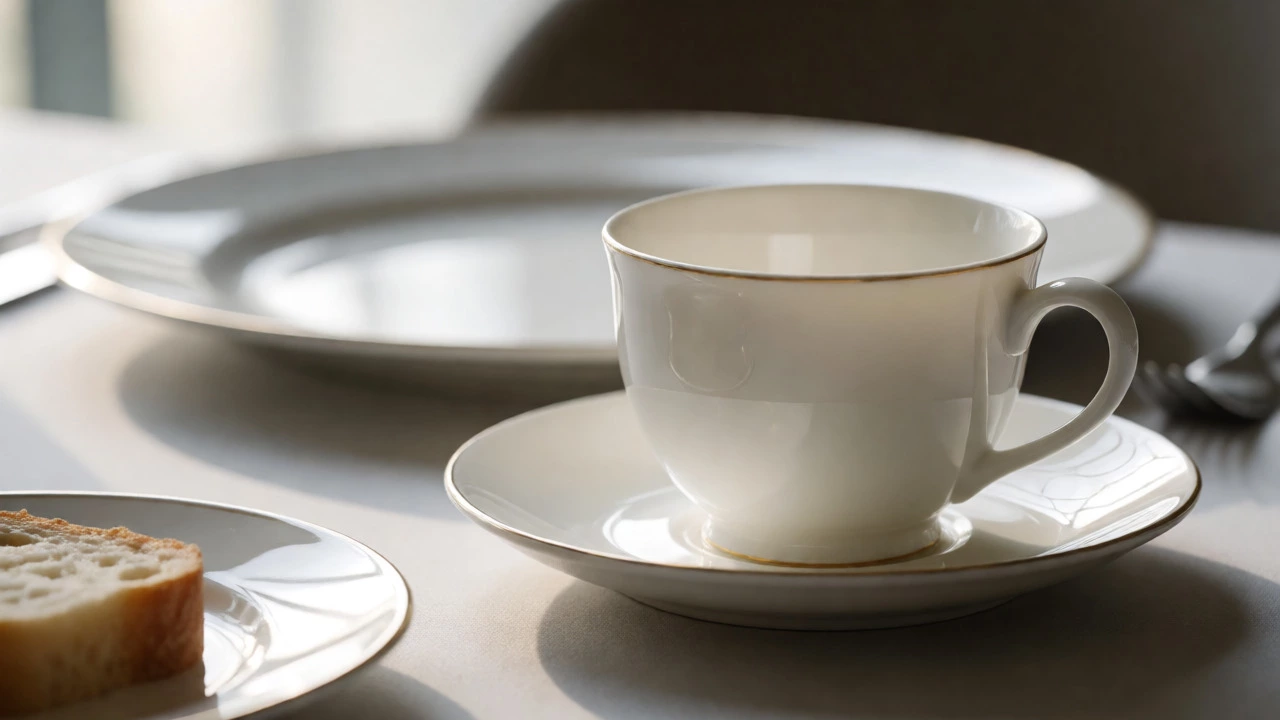
A Cup is a small, open container with a handle, primarily used for hot beverages like tea, coffee, or hot chocolate. Unlike a mug, which is usually larger, cylindrical, and thicker-walled, a cup is typically smaller, thinner, and designed to be held with one hand while resting on a saucer. There are distinct types:
- Teacup: Small, wide-rimmed, shallow. Designed to cool tea quickly.
- Coffee Cup: Slightly taller and narrower than a teacup, often holding 4-6 oz.
- Espresso Cup: Tiny, thick-walled to retain heat, holding only 1-2 oz.
- Mug: Technically not a "cup" in formal settings. Larger, no saucer, straight sides.
The Saucer
The Saucer is a small, shallow dish placed under a cup. Its original purpose wasn’t just aesthetic; it was functional. Historically, you’d pour hot liquid into the saucer to cool it down before drinking. Today, it serves three main jobs: catching drips, providing a stable base for the cup, and offering a place to rest a spoon. A saucer is always paired with a cup. If you see a large flat dish without a cup, it’s not a saucer-it’s a plate.
The Plate
A Plate is a flat, circular dish used for serving food. Plates come in various sizes, and using the wrong size can make a meal look awkward. Here’s the standard hierarchy:
- Bread and Butter Plate: Small (5-7 inches), used for bread rolls or butter.
- Dessert Plate: Medium-small (7-9 inches), for cake or fruit.
- Lunch/Salad Plate: Medium (9-10 inches), for lighter meals.
- Dinner Plate: Large (10-12 inches), the main workhorse for the entrée.
- Charger Plate: Very large (13-14 inches), decorative, stays on the table throughout the meal as a base.
Material Matters: Why the Name Changes
Here’s where it gets tricky. The material often dictates the name. You wouldn’t call a plastic lunchbox a "plate" in a fine dining context, and you wouldn’t call a gold-plated charger a "dish." Understanding materials helps you identify what you’re buying.
| Material | Common Term Used | Characteristics | Best For |
|---|---|---|---|
| Porcelain/Bone China | China | Thin, white, translucent, delicate | Formal dinners, weddings |
| Stoneware | Dinnerware/Dishes | Thick, durable, glazed, heavy | Everyday family meals |
| Earthenware | Crockery/Pottery | Porous (unless glazed), rustic, softer | Casual dining, baking |
| Melamine | Plastic Dishes | Lightweight, unbreakable, colorful | Kids, outdoors, pools |
| Glass | Glassware/Crystal | Transparent, shiny, fragile | Drinks, desserts, salads |
In the UK, if you buy a set of high-end ceramic plates, you’ll often see them labeled as "Bone China." Bone ash gives the ceramic its whiteness and strength. In the US, people might just call it "fine china." If you buy sturdy, thick plates for daily use, they’re likely "stoneware." Knowing this distinction saves you from buying a $200 set of bone china that shatters the first time your toddler drops it.
Flatware vs. Tableware: Don’t Mix Them Up
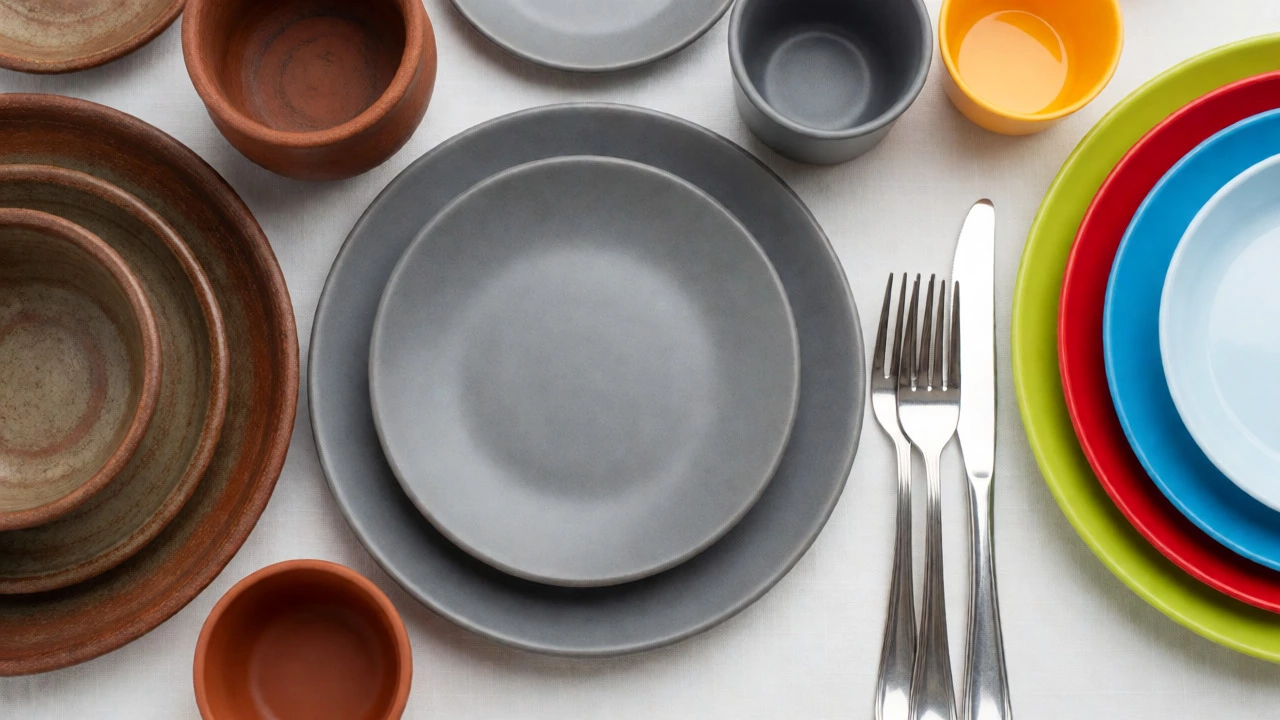
A common mistake is including knives, forks, and spoons in the "tableware" conversation without distinguishing them. These are Flatware (US) or Cutlery (UK/EU). Flatware is strictly the tools you hold in your hands to manipulate food. Tableware is the stuff you put food *on* or *in*. Glassware is another separate category for drinks.
Why does this matter? Because when you shop for a "complete setting," retailers often sell these separately. A "dinnerware set" will never include forks. A "flatware set" will never include plates. If you want everything, you’re looking for a "place setting" bundle, which combines tableware, flatware, and sometimes glassware.
Regional Differences: UK vs. US Terminology
Since I’m writing this from Oxford, I have to point out the linguistic divide. If you’re an American reading this, some terms will feel foreign. If you’re British, some American terms might seem overly casual.
- Plates: Both use "plate." No issue here.
- Cups: Both use "cup," but Brits specify "tea cup" vs. "coffee cup" more rigidly. Americans might just say "mug" for both.
- Saucers: Both use "saucer," but in the US, they’re becoming less common in casual settings. In the UK, a cup without a saucer is still considered slightly informal or incomplete for afternoon tea.
- The Whole Set:
- UK: "Crockery" or "China" (if fancy).
- US: "Dishes," "Dinnerware," or "China" (if fancy).
- Forks/Knives:
- UK: "Cutlery." (Note: "Silverware" in the UK implies actual silver, which is expensive.)
- US: "Silverware" (even if stainless steel) or "Flatware." "Cutlery" is understood but sounds pretentious.
If you’re buying online, check the shipping destination. A "crockery set" sold in the US might be mislabeled or searched incorrectly by locals who don’t use the term. Conversely, searching for "silverware" in London might lead you to antique shops selling solid sterling rather than modern stainless steel.
How to Buy the Right Set Without Regret
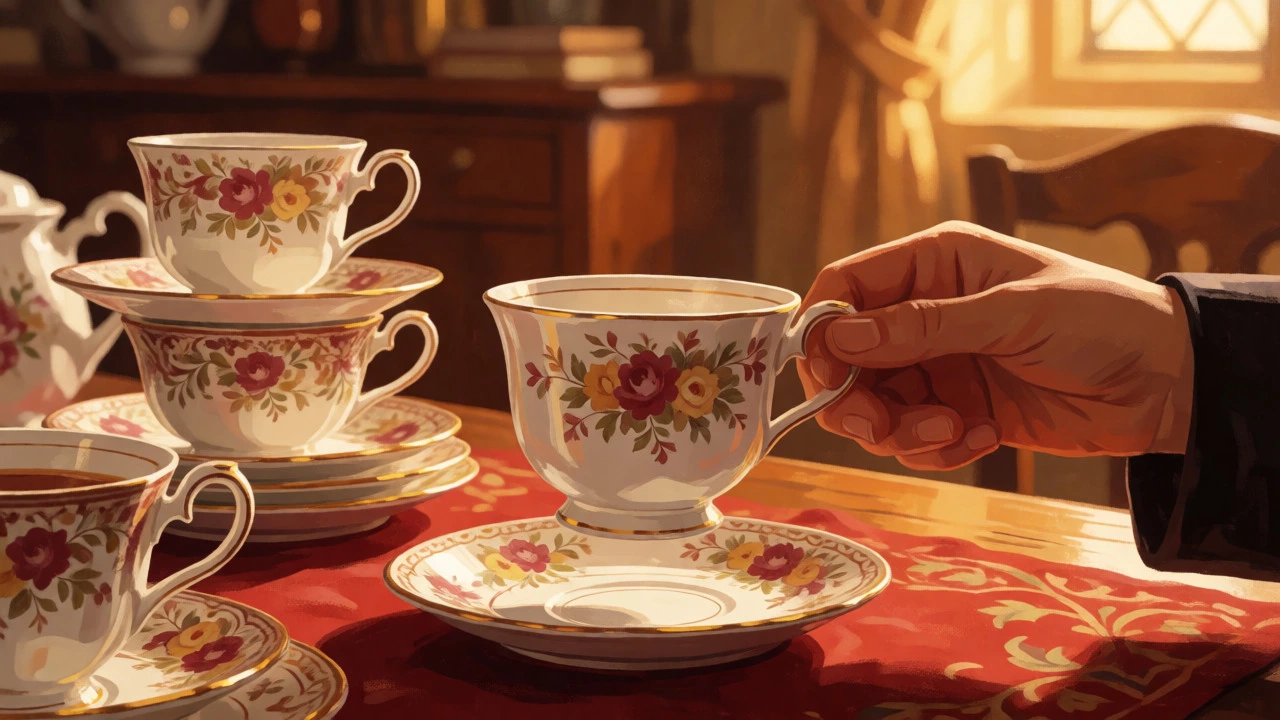
So, you’ve got the vocabulary. Now, how do you apply it? Buying tableware is expensive, and returns are a hassle. Here’s a quick decision tree based on your lifestyle.
1. Define Your Use Case: If you host formal dinners twice a year, invest in Bone China. It looks elegant, is lightweight, and stacks well. Store it carefully. If you have kids or pets, go for Stoneware or Tempered Glass. They survive the dishwasher and the occasional drop.
2. Check the Dimensions: Don’t assume "dinner plate" means the same size everywhere. Measure your existing plates. Standard modern dinner plates are trending larger (11-12 inches) compared to the traditional 10-inch. If you have small cabinets, oversized plates won’t stack safely. Also, check the depth. A "soup plate" or "deep plate" has higher sides to contain liquids. A regular dinner plate is flat. If you eat pasta often, get deep plates.
3. Match the Saucer to the Cup: This sounds obvious, but mismatched sets are common. Ensure the saucer diameter is at least 1 inch wider than the cup’s rim. This prevents spills from hitting the tablecloth. If you’re mixing and matching vintage pieces, this is crucial.
4. Consider the Finish: Matte finishes look modern and hide fingerprints, but they can stain if not cleaned properly. Glossy finishes are easier to clean and wipe down but show every smudge. For everyday use, glossy is practical. For display, matte is stylish.
Common Mistakes People Make
One frequent error is using a dessert plate for a full dinner. It looks sparse and unappetizing. Another is stacking plates incorrectly. Always stack similar shapes together. Placing a charger plate (large, decorative) on top of a dinner plate (functional) hides the design. Chargers go *underneath* the dinner plate and stay on the table until the end of the meal.
Also, don’t confuse a "bowl" with a "plate." Bowls are for soups, cereals, and pastas. Plates are for solids. Using a flat plate for soup leads to messy edges and slippery ingredients sliding off. If you love risotto, invest in wide, shallow bowls (often called "coupes") rather than deep soup bowls.
Final Thoughts on Kitchen Vocabulary
Language evolves, and so do kitchen habits. The strict rules of Victorian table setting have loosened, but the basic terminology remains useful. Knowing that a saucer is for catching drips, a charger is for decoration, and stoneware is tougher than porcelain helps you navigate both social situations and shopping carts. Next time someone asks, "What are those called?", you can confidently say, "They’re part of my stoneware dinnerware set, specifically the 10-inch dinner plates and matching saucers for my espresso cups." See? Simple, accurate, and impressively specific.
What is the difference between a cup and a mug?
A cup is typically smaller, thinner, and has a narrower rim, designed to be used with a saucer. A mug is larger, cylindrical, has thicker walls to retain heat, and is usually used without a saucer. Mugs are for casual use; cups are for formal or traditional tea/coffee service.
Is "crockery" the same as "tableware"?
No. "Crockery" specifically refers to ceramic items like plates, bowls, and cups. "Tableware" is a broader term that includes crockery, but also glassware, cutlery/flatware, and serving utensils. All crockery is tableware, but not all tableware is crockery.
What is a charger plate used for?
A charger plate is a large, decorative base plate (13-14 inches) that stays on the table throughout the meal. It adds elegance and color but is not used for eating directly. Food plates are placed on top of it.
Why are saucers included with cups?
Saucers serve three purposes: they catch drips from the cup, provide a stable surface for the cup to sit on, and offer a place to rest a spoon. Historically, they were also used to cool hot beverages by pouring liquid into them.
What is the difference between dinnerware and flatware?
Dinnerware consists of the vessels you eat from (plates, bowls, cups). Flatware (or cutlery) consists of the tools you use to eat (forks, knives, spoons). They are sold and categorized separately.