Bathroom Readiness Checklist
Select the options that apply to your situation to generate a customized shopping list. We prioritize hygiene and safety over aesthetics.
Your Customized Shopping List
You walk into a new or renovated bathroom and feel that immediate sense of emptiness. It’s just tiles, a sink, and a toilet. Where do you start? The problem isn’t a lack of options; it’s the overwhelming noise of "must-haves" versus what you actually use daily. Most people buy too many decorative trinkets and not enough functional tools, leading to cluttered counters and moldy corners within months.
Here is the truth: a fully equipped bathroom is not about filling every shelf. It is about creating a system for hygiene, storage, and comfort. If you are setting up a new space or resetting an old one, this guide cuts through the marketing fluff to tell you exactly what belongs in your room, based on real usage patterns rather than catalog photos.
The Non-Negotiable Hygiene Zone
Start with the things you touch every single day. These aren't optional extras; they are the core function of the room. Without these, you cannot effectively clean yourself or maintain basic health standards.
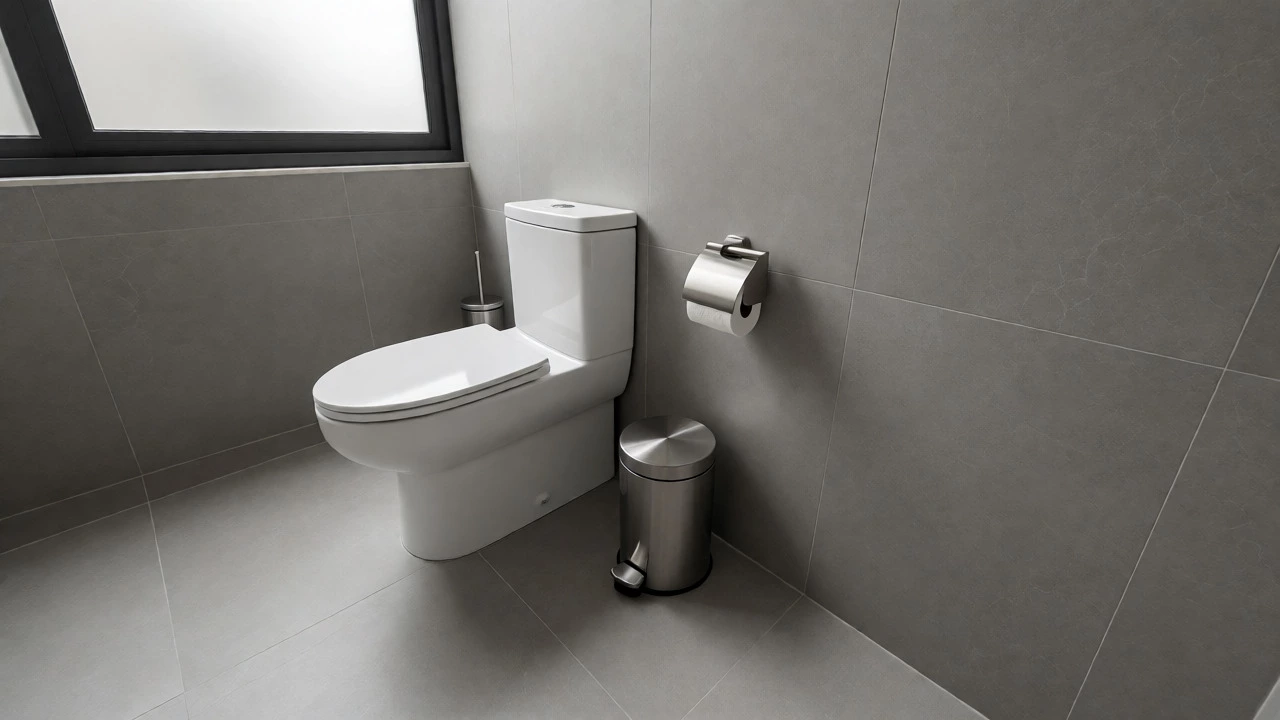
First, look at your toilet paper holder. It sounds trivial, but placement matters. If it’s too low, you’re bending awkwardly. If it’s too far forward, you’re twisting. The standard rule is 8-12 inches in front of the toilet bowl center and 26 inches from the floor. Next, consider the trash can. A small, lidded bin is essential for disposing of feminine products, cotton swabs, and dental floss. Open bins smell quickly. Choose one with a pedal mechanism so you don’t have to touch it with wet hands.
| Item | Category | Why It Matters |
|---|---|---|
| Toilet Brush & Holder | Essential | Hygiene requires regular scrubbing; keep it enclosed to hide bristles. |
| Hand Soap Dispenser | Essential | Pump dispensers reduce waste and bacteria transfer compared to bars. |
| Shower Caddy | Essential (if no niche) | Prevents shampoo bottles from sliding off slippery shelves. |
| Decorative Tray | Optional | Nice for visuals, but often collects dust and water spots. |
Storage That Survives Humidity
Bathrooms are humid environments. Wood warps, metal rusts, and cheap plastic cracks. When choosing storage solutions, prioritize materials that resist moisture. This is where most DIY projects fail-people buy beautiful wicker baskets that turn black with mold after six months.
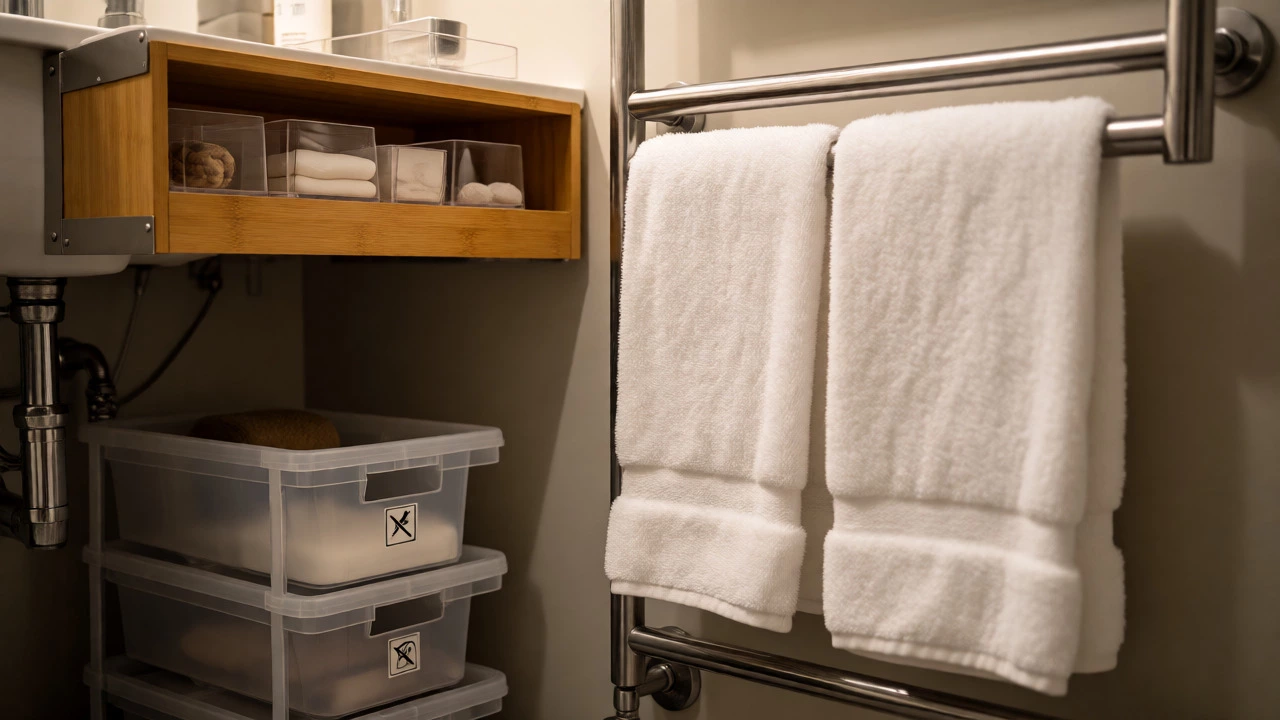
Focus on vertical space. Wall-mounted cabinets or floating shelves keep items off the damp floor. If you rent and can’t drill holes, tension rods inside shower stalls or over-the-door organizers are lifesavers. For under-sink storage, use stackable bins. They allow you to access lower items without unstacking everything. Label them if you share the space; it stops the "whose toothpaste is this?" arguments.
A critical but often overlooked item is the towel bar. Not just any bar-one that allows air circulation. Towels left bunched up on a hook stay damp and grow mildew. A double-bar rack lets two towels hang side-by-side, drying faster. If you have limited wall space, heated towel rails are worth the investment in colder climates like Oxford winters. They dry towels overnight and add warmth to the room.
Lighting and Mirrors: Function Over Form
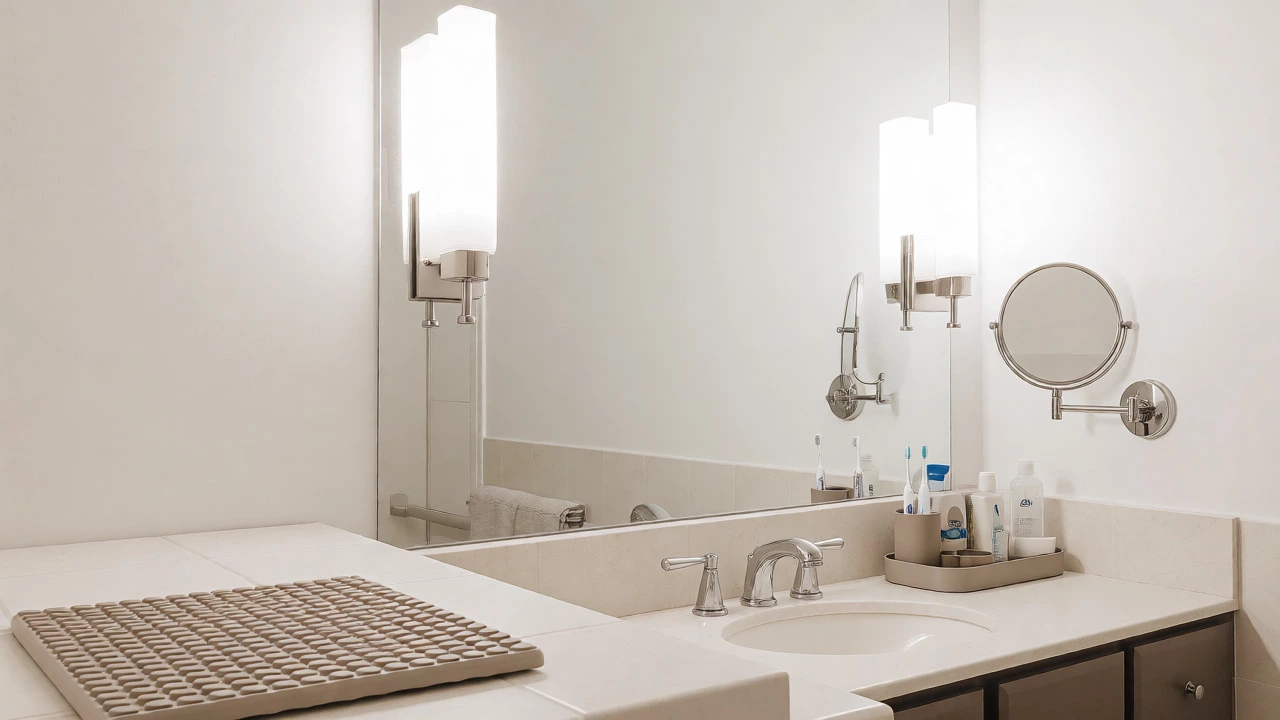
You spend time grooming here. Bad lighting makes you miss spots when shaving or applying makeup. Standard overhead lights cast shadows under your eyes and nose. The fix is cross-illumination. Place lights on either side of the mirror, not above it. This eliminates shadows on your face.
Your mirror should be large enough to see your full upper body, not just your head. A fog-free mirror is a luxury, but a simple anti-fog spray works well for standard mirrors. Keep cleaning supplies nearby. Microfiber cloths and glass cleaner should be stored in a caddy near the sink, not hidden away. If you have to walk out of the bathroom to get cleaner, you won’t clean the mirror regularly.
Consider adding a magnifying mirror on a suction cup mount. It’s useful for detailed tasks like plucking eyebrows or checking skin issues. Store it in a drawer when not in use to prevent dust accumulation.
Safety and Comfort Essentials
Falls are the leading cause of injury in bathrooms. Wet tiles are slippery, especially around the tub and shower entry. You need traction. Non-slip mats are mandatory inside the shower and directly outside the tub. Avoid small rugs that bunch up; choose larger bath mats with rubber backing that grip the floor.
For households with children or elderly members, grab bars are not just for hospitals. Install them in the shower and next to the toilet. Ensure they are anchored into studs, not just drywall anchors, which can pull out under weight. Test them by pulling hard before trusting them.
Temperature control matters too. A small exhaust fan reduces humidity, preventing paint peeling and mold growth. Run it during showers and for 20 minutes after. If your fan is noisy or weak, replace it. Modern fans are quieter and more efficient. Pair this with a hygrometer if you live in a very damp area; aim for humidity levels below 50% to stop mold spores from settling.
Personal Care and Grooming Tools
This section varies wildly by household, but there are universal truths. Everyone needs a place for their daily routine items. Consolidate these into a dedicated zone. Use drawer dividers for cosmetics, razors, and hair ties. Loose items in a drawer become a tangled mess within days.
Electric toothbrush chargers need a spot near an outlet but away from direct water splash zones. Consider a countertop organizer with compartments for toothbrushes, toothpaste, and mouthwash. This keeps the sink edge clear for washing hands.
Do not forget first aid. A small, waterproof box containing band-aids, antiseptic wipes, pain relievers, and tweezers belongs in the bathroom. Check expiration dates annually. Expired medication loses potency and can be unsafe.
- Razor stand: Keeps blades dry and prevents rust.
- Hair dryer holder: Frees up counter space and organizes cords.
- Cotton bud jar: Better than loose bags; easier to dispense.
The "Nice-to-Have" Trap
Marketing pushes scented candles, fancy soap dishes, and matching sets. While they look good in magazines, they require maintenance. Scented candles can trigger allergies. Matching sets force you to replace all items if one breaks. Stick to neutral, durable pieces that match your existing decor style without dictating it.
If you want fragrance, use a plug-in diffuser or a reed diffuser instead of open flames. They last longer and pose less fire risk. For soap, liquid hand soap in a refillable pump is more hygienic than bar soap on a dish, which becomes soggy and breeds bacteria between uses.
Air quality is another factor. Bathrooms trap odors. Charcoal bags or baking soda boxes absorb smells better than sprays that mask them. Place them behind the toilet tank or on a high shelf where they won’t get knocked over.
Final Setup Strategy
Don’t buy everything at once. Start with the hygiene essentials and safety items. Live in the space for a week. Note what frustrates you. Is your towel always wet? Add a second rack. Do you run out of toilet paper constantly? Get a larger holder. This iterative approach saves money and ensures every item earns its place.
Remember, the goal is a bathroom that functions seamlessly. It should support your morning rush and your evening wind-down without friction. Prioritize durability and ease of cleaning over aesthetics. A clean, organized bathroom feels larger and more inviting than a cluttered one, regardless of size.
How many towels do I really need per person?
Aim for three sets per person: one in use, one in the wash, and one spare. This accounts for unexpected guests or laundry delays. Choose quick-drying microfiber or thin cotton blends if your bathroom lacks ventilation.
What is the best material for bathroom storage?
Stainless steel, aluminum, and treated bamboo are top choices. Stainless steel resists rust completely. Aluminum is lightweight and corrosion-resistant. Bamboo is sustainable but must be sealed properly to withstand humidity. Avoid untreated wood or particleboard.
Do I need a medicine cabinet if I have drawers?
Yes, for visibility and accessibility. Medicine cabinets keep items off the counter and protect them from steam if sealed properly. Drawers are better for bulkier items like hairdryers or extra toiletries. Use both for optimal organization.
How often should I replace my toothbrush?
Every three to four months, or sooner if bristles fray. Replace immediately after illness to avoid reinfection. Electric toothbrush heads also follow this timeline unless worn down faster.
Is a bidet attachment worth installing?
Many users report improved hygiene and reduced toilet paper usage. Installation is usually straightforward with basic plumbing skills. However, ensure your toilet shape fits the attachment model. It adds complexity to cleaning routines initially but pays off in long-term comfort.