Sofa Value & Lifespan Calculator
Stop looking at the price tag and start looking at the Cost Per Year. Use this tool to see if spending more now actually saves you money over time.
Budget Option Short Term
Luxury Option Investment
The Big Living Room Gamble
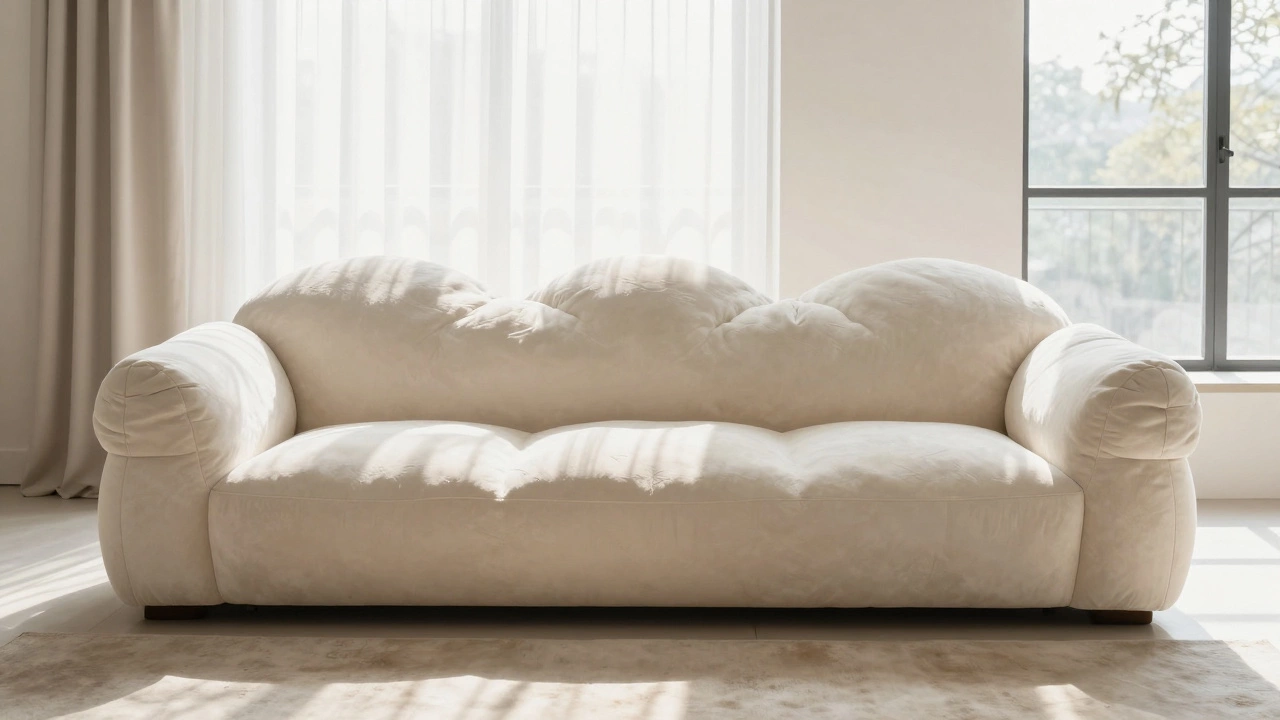
You're standing in a showroom, and you've found it: the perfect sofa. It looks like a cloud, feels like a dream, and costs as much as a decent used car. Now comes the internal battle. Do you drop three thousand pounds on a piece of furniture, or do you buy the budget version and replace it in three years when the cushions go flat? The truth is, price doesn't always equal quality, but there is a very specific point where spending more actually saves you money over a decade.
When we talk about luxury sofa options, we aren't just talking about a fancy brand name or a designer label. We're talking about the engineering hidden beneath the fabric. Most people buy sofas based on how they look in a catalog, but the real value lives in the skeleton and the stuffing. If you're deciding whether to splurge or save, you need to know exactly what you're paying for so you don't end up with an overpriced piece of particle board.
Quick Takeaways for Your Budget
- Budget (<$800/£600): Great for short-term rentals or guest rooms; usually features engineered wood and polyester fill.
- Mid-Range ($800-$2,000/£600-£1,500): The sweet spot for most; often uses kiln-dried hardwoods and better fabric blends.
- High-End (>$2,000/£1,500): Long-term investments; typically features solid hardwood frames, high-density foam, and top-grain leathers.
The Skeleton: Why the Frame Matters
If you want to know if a sofa is worth a high price tag, start with the frame. In the world of furniture, Kiln-Dried Hardwood is wood that has been oven-dried to remove moisture, preventing the frame from warping or cracking over time. It's the gold standard. If a salesperson mentions "engineered wood" or "plywood," they're talking about compressed wood chips and glue. It's cheap and light, but it's prone to snapping under pressure.
A high-end sofa usually employs Solid Oak or Maple. These materials aren't just strong; they're heavy. A good rule of thumb? Lift one end of the sofa. If it feels surprisingly light, it's likely made of cheap materials. A heavy sofa is usually a sign of a sturdy, long-lasting frame. When you pay a premium, you're essentially paying for the peace of mind that your couch won't develop a mysterious lean to the left after eighteen months.
The Science of the Sit: Springs and Foam
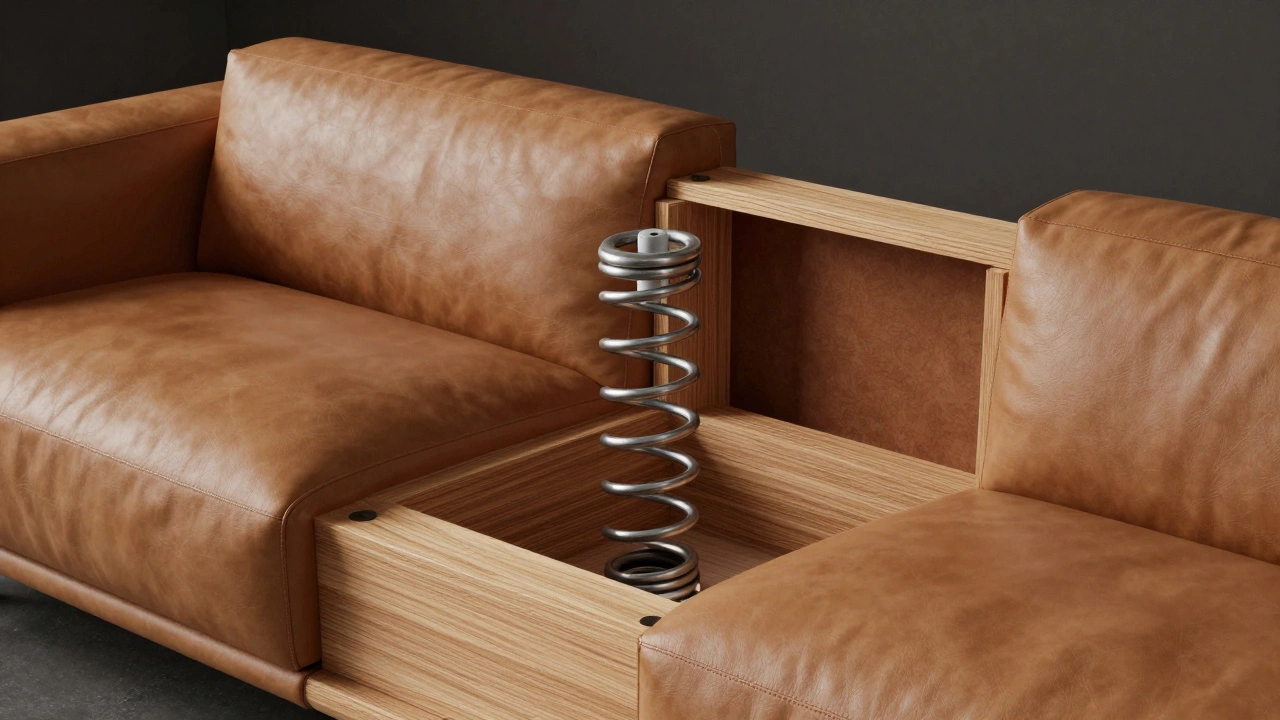
Ever sat on a sofa that felt great for five minutes and then left you feeling like you'd been sitting on a gym mat? That's a failure of the suspension system. Cheap sofas use Sinuous Springs, which are essentially S-shaped wires stretched across the frame. While decent, they can sag over time if they aren't reinforced.
The real luxury option is Eight-Way Hand-Tied Springs, a method where springs are tied together in eight directions by a craftsman. This creates a consistent level of support across the entire seat. It's a labor-intensive process, which is why it drives the price up. If you spend 8 hours a day on your couch, this is where the extra money is actually justified.
Then there's the cushioning. Most budget sofas use a single block of low-density polyurethane foam. It feels soft at first but loses its shape quickly. High-end pieces often use High-Resiliency (HR) Foam or a mix of down feathers and foam. HR foam bounces back to its original shape much faster, meaning your sofa won't look "deflated" after a year of Netflix marathons.
| Feature | Budget Option | Luxury Option | Impact on Life Span |
|---|---|---|---|
| Frame Material | Particle Board / Plywood | Kiln-Dried Hardwood | High (Structural Integrity) |
| Support System | Webbing or Basic Sinuous Springs | Eight-Way Hand-Tied Springs | Medium (Comfort Retention) |
| Cushion Fill | Low-Density Poly-Foam | HR Foam / Down Wrap | Medium (Aesthetics/Feel) |
| Fabric Quality | 100% Polyester | Top-Grain Leather / Performance Linen | High (Wear and Tear) |
Fabric Choices and the 'Rub Count'
You can have the strongest frame in the world, but if the fabric rips, the sofa is ruined. When shopping for a high-end sofa, look for the Martindale Test, which is a standardized test used to measure the abrasion resistance of upholstery fabrics. This is often referred to as the "rub count."
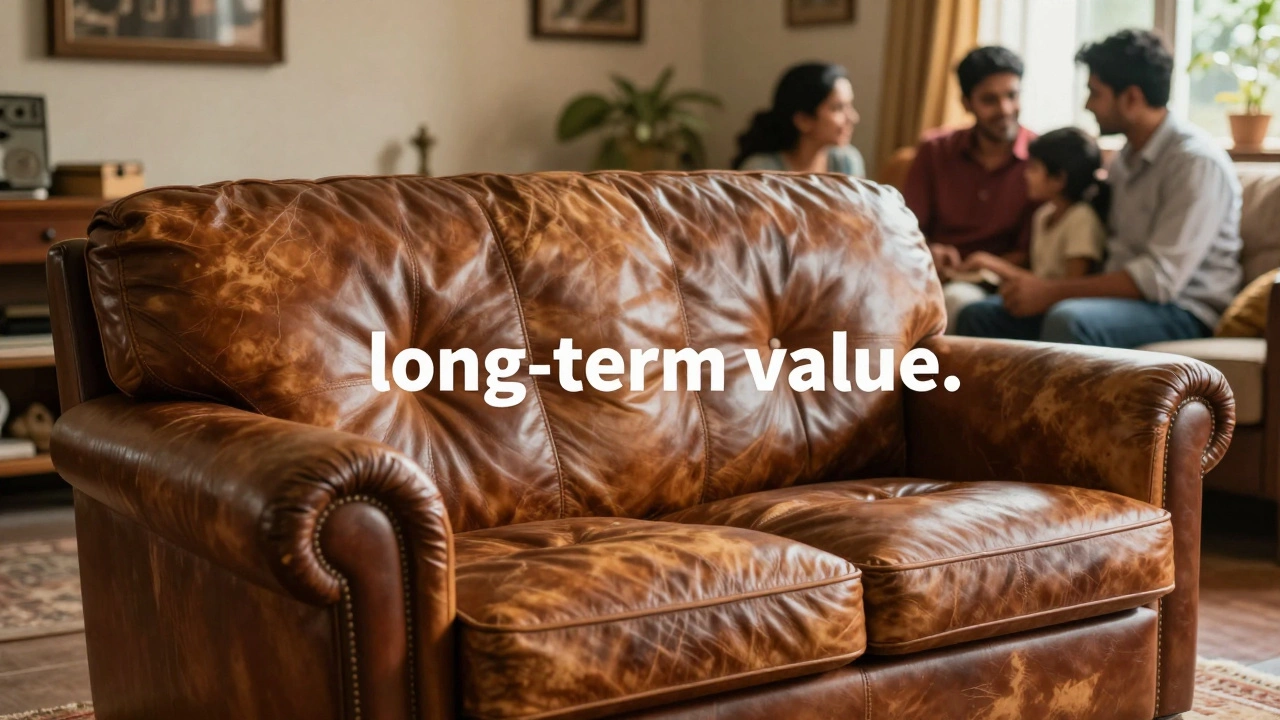
For a sofa that sees daily use, you want a rub count of at least 20,000 to 30,000. If you have pets or kids, aim for 40,000+. Budget sofas often use fabrics with low rub counts that pill, fade, or tear within two years. Investing in Top-Grain Leather is a classic move here; unlike bonded leather (which is essentially leather scraps glued together and often peels), top-grain leather develops a patina and actually looks better as it ages.
When is Spending More a Mistake?
Let's be honest: not every expensive sofa is actually good. There is a massive difference between "quality" and "luxury branding." You'll often find sofas in high-end boutiques that cost a fortune simply because they have a famous designer's name on them, yet they use the same sinuous springs as a mid-range store. If the price jump is based on the brand rather than the build (hardwood, hand-tied springs, high rub count), you're paying for a logo, not a legacy.
Another pitfall is the "too-perfect" look. Some incredibly expensive sofas are designed for showrooms, not living rooms. They use fabrics that look stunning but are impossible to clean and frames that are too rigid for actual lounging. If you're spending a lot, make sure the sofa is built for your specific lifestyle, not for a magazine shoot.
The Cost-Per-Year Calculation
Think of your sofa as a long-term utility. If you buy a $600 sofa that lasts 3 years, your cost is $200 per year. If you buy a $2,400 sofa that lasts 15 years, your cost is $160 per year. When you look at it this way, the expensive sofa is actually the cheaper option. This is the core of the "Buy Once, Cry Once" philosophy.
However, this only works if you plan to stay in your current style and home for a while. If you're in a transitional phase of life-maybe you're renting a flat for a year or you're expecting a toddler who will inevitably use the cushions as a canvas for crayons-the high-end investment is a risk. In those cases, a mid-range piece with removable, washable covers is the smarter move.
Final Checklist Before You Buy
Before you swipe your card for a high-ticket item, run through these quick checks. Don't be afraid to ask the salesperson for specifics; if they can't tell you what the frame is made of, they aren't selling a quality product.
- Check the joints: Are they glued, screwed, or dowelled? Dowelled and glued joints are the strongest.
- Test the bounce: Press firmly into the seat. Does it return instantly, or does it leave a dent?
- Feel the weight: Is the piece substantial, or does it feel like it could blow away in a breeze?
- Verify the leather: If it's leather, is it top-grain, or is it "bonded" or "vegan" (which is often just plastic)?
- Ask about the warranty: A company that offers a 10-year warranty on the frame is confident in its build.
What is the most important part of a sofa's construction?
The frame is the most critical part. A kiln-dried hardwood frame ensures the sofa won't warp or sag over time, providing the structural foundation for everything else. Without a solid frame, high-quality fabric and foam won't matter because the whole piece will eventually collapse or lean.
Is leather always better than fabric?
Not necessarily. It depends on your lifestyle. Top-grain leather is incredibly durable and easy to wipe clean, making it great for families. However, some high-performance synthetic fabrics are now engineered to be stain-resistant and more breathable than leather, and they often offer more variety in color and texture.
What does 'kiln-dried' actually mean?
Kiln-drying is a process where wood is placed in a controlled oven to remove moisture. This prevents the wood from shrinking or expanding later, which is what causes joints to loosen and frames to creak or warp over time.
Should I care about the 'rub count' of a sofa?
Yes, absolutely. The rub count (from the Martindale test) tells you how many times a piece of fabric can be rubbed before it starts to wear through. For a main living room sofa, look for at least 20,000 rubs to ensure the fabric doesn't pill or tear within a few years.
Can I tell if a sofa is high-quality just by sitting on it?
Sitting on it gives you a feel for the comfort, but not the quality. A cheap sofa can feel incredibly soft at first because it uses low-density foam that collapses easily. To judge quality, you need to look at the frame materials, check the weight, and ask about the spring system.