
Bedding Size Optimizer
Find the perfect fit for your bed. This tool analyzes your mattress specs and sleeping habits to recommend the optimal duvet size and sheet type.
You’ve just bought a new duvet that promises cloud-like softness and thermal regulation. It feels incredible in the shop. But when you get home and try to stuff it into your existing duvet cover, something’s wrong. The corners bulge. The fabric pulls tight across the middle. Or worse, the duvet slides around inside a cover that’s too big, leaving cold patches at your feet.
This is the classic "size up" dilemma. Should you buy bedding one size larger than your mattress? Should your duvet be bigger than your bed frame? The answer isn't a simple yes or no-it depends entirely on what kind of sleeper you are, how hot you run, and whether you share the bed with someone who steals covers.
The Physics of Sleep: Why Standard Sizing Fails
Most people buy bedding based on their mattress dimensions. If you have a Queen (152cm x 203cm) mattress, you buy a Queen duvet. Simple, right? Not quite. Mattress sizes refer to the sleeping surface, but comfort extends beyond the edges. When you sleep, you move. You turn. You stretch. If your duvet exactly matches your mattress width, any movement toward the edge exposes you to air.
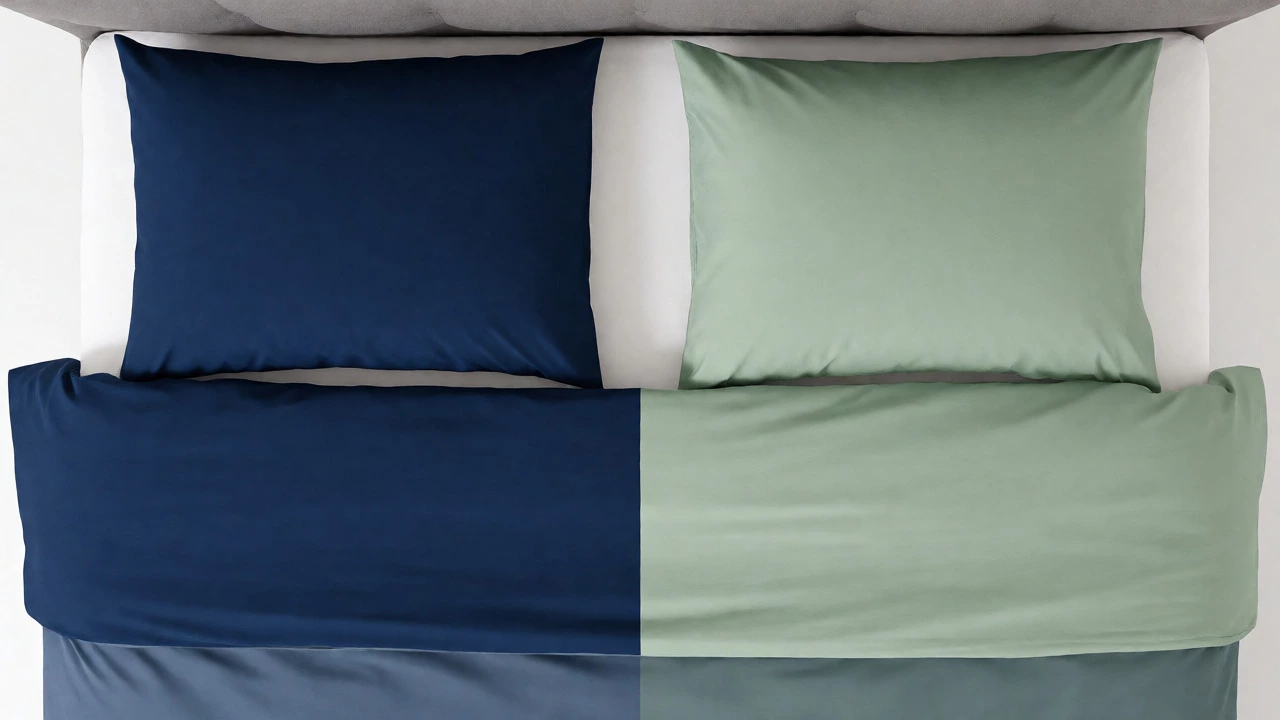
Sizing up solves this by creating what interior designers call "draping." Extra fabric allows the duvet to hang over the sides of the bed, creating a cocoon effect. This isn't just aesthetic; it’s functional. That extra drape acts as an insulation buffer. If you roll to the edge, you’re still covered. If your partner kicks the blanket off their side, the excess material can bridge the gap.
However, there’s a trade-off. Too much extra size means excess fabric bunching up under your legs, which can feel restrictive. The sweet spot is usually 10-15cm wider than the mattress for single sleepers, and significantly more for couples.
Duvet vs. Cover: The Critical Mismatch
Here is where most people make a costly mistake. They confuse the size of the insert (the duvet itself) with the size of the cover. These two items must work together, but they don’t always match perfectly out of the box.
Duvet inserts are filled with down, feathers, or synthetic fibers that compress when stuffed into a cover. A 240x220cm duvet might technically fit a 240x220cm cover, but if the fill power is high, it will look lumpy and uneven. Conversely, if the cover is too large, the duvet will slide to the bottom, leaving your shoulders exposed.
A good rule of thumb from years of testing bedding in Oxford’s damp winters: your duvet cover should be roughly 5-10% smaller than the duvet insert. This tension keeps the duvet taut and evenly distributed. If you’re considering sizing up your duvet, ensure you also upgrade the cover to match the new volume, not just the flat dimensions.
| Sleeping Style | Mattress Width | Recommended Duvet Width | Why? |
|---|---|---|---|
| Solo Sleeper (Cold) | Single (90cm) | Double (135cm) | Allows for wrapping and heat retention without feeling confined. |
| Solo Sleeper (Hot) | Single (90cm) | Single (90cm) | Prevents overheating from excess fabric trapping body heat. |
| Couple (Standard) | Queen (152cm) | King (180cm) | Provides individual zones; prevents one person stealing all the covers. |
| Couple (Large) | Super King (180cm) | Emperor (215cm) | Essential for preventing the "tug-of-war" during deep sleep. |
The Hidden Factor: Mattress Depth
While everyone focuses on length and width, mattress depth is the silent killer of fitted sheets. Modern mattresses, especially hybrid and memory foam models, have gotten thicker. A standard UK fitted sheet pocket is often only 25-30cm deep. Many luxury mattresses now sit at 35cm or even 40cm.
If you buy a "sized up" duvet but stick with standard sheets, you’ll face daily frustration. The fitted sheet will pop off the corners every time you change position. To fix this, you need to measure your mattress height before buying anything. Look for "deep pocket" sheets explicitly labeled for 35cm+ depths. Some brands offer specific "Extra Deep" ranges that go up to 45cm. Ignoring this attribute leads to constant re-making of the bed, which ruins the cozy vibe you paid for.
When NOT to Size Up
Bigger isn’t always better. There are three specific scenarios where sticking to standard sizing-or even going smaller-is the smarter choice.
- Small Bedrooms: In compact spaces, like many student flats in Oxford or city apartments, a massive Super King duvet can overwhelm the room visually. It also makes making the bed a physical chore. If your bedroom is under 10 square meters, stick to a King or Queen to maintain visual balance.
- High Heat Sleepers: If you wake up sweating, extra layers of fabric trap moisture. A slightly smaller duvet allows for better airflow around the limbs. Consider using a lighter tog rating instead of a larger size to manage temperature.
- Travel and Storage: Large duvets require industrial-sized washing machines and massive storage bags. If you live in a rental with limited closet space, a bulky Emperor duvet becomes a logistical nightmare during seasonal swaps.

The "Scandinavian Method": Two Singles for One Couple
If you share a bed, the ultimate solution to sizing issues isn't a giant King duvet-it's two separate singles. Known as the Scandinavian method, this involves placing two Single (135x200cm) duvets on a Double or Queen bed.
Why does this work? Each person gets their own independent thermal zone. Your partner can use a heavy winter weight while you use a light summer weight. No more fighting over the covers. Plus, washing two small duvets is easier than wrestling one huge one. The only downside? A slight gap between them. You can solve this by using a wide, double-width duvet cover that holds both inserts, or simply accepting the center line as a feature, not a bug.
Practical Checklist Before You Buy
Before you click "add to cart," run through this quick audit. It saves money and return shipping fees.
- Measure Your Mattress: Don't trust the label. Use a tape measure for length, width, and crucially, height.
- Check Your Current Setup: Do your current sheets pop off? Is your duvet sliding? These are signs your current sizing strategy is failing.
- Evaluate Your Partner: Are they a cover stealer? If yes, size up aggressively or switch to the two-single method.
- Inspect Your Washing Machine: Can your machine handle a 240x260cm duvet? Most domestic front-loaders struggle with anything over 14kg dry load. If not, factor in dry cleaning costs.
- Consider the Frame: Does your bed have a headboard that blocks access to the top corners? Make sure the extra size doesn't create awkward gaps behind the pillow area.
Sizing up in bedding is less about following a rule and more about customizing your environment. For solo sleepers, a modest increase in width adds comfort without clutter. For couples, it’s often the difference between restless nights and restful ones. Measure twice, consider your habits, and choose the size that lets you sleep, not just fit.
Does a larger duvet make the bed look messy?
Not necessarily. While excessive fabric can bunch up, properly sized draping actually looks more luxurious and hotel-like. The key is ensuring the duvet fits snugly within its cover so it doesn't shift around independently. If it looks messy, check if your cover is too large for the insert.
How do I know if my fitted sheet pockets are too shallow?
If the elastic pops off the corners during the night, or if the sheet rides up the side of the mattress, the pockets are too shallow. Measure your mattress thickness including any toppers. If it exceeds 30cm, you need "deep pocket" or "extra deep" sheets specifically designed for thicker profiles.
Is it worth buying a bigger duvet for a guest bed?
Yes. Guest beds are often used by adults who may be taller or broader than the previous owners. A standard single duvet can feel cramped for a tall adult. Upgrading to a small double (120x200cm) on a single frame provides extra comfort and warmth without taking up significant storage space.
Can I wash a super king duvet at home?
It depends on your machine's capacity. Most standard UK washing machines have a 7-9kg drum. A super king duvet, especially down-filled, absorbs water and becomes extremely heavy. Check the care label; if it says "commercial laundry recommended," take it to a laundromat with large-capacity machines to avoid damaging your washer or ending up with a damp, mildewy duvet.
What is the best bedding size for tall people?
Tall individuals (over 6ft/183cm) should prioritize length over width. Standard UK duvets are 200cm long, which leaves feet uncovered for those over 6'2". Look for "Long" or "XL" options, typically 220cm or 230cm in length. Even if you sleep alone, a longer duvet ensures full coverage regardless of sleeping position.