Rug Quality Assessment Calculator
Rug Assessment
Quality Assessment
0%
Key Quality Indicators
- Knots 100+ knots/sq in = High Quality
- Material Natural wool or silk = Premium
- Dyes Natural dyes = Authentic
- Pile 6-12mm = Ideal depth
- Fringe Handmade fringe = Quality indicator
Buying a rug isn’t just about color or pattern-it’s about what’s underneath. A cheap rug might look fine at first, but after a year or two, it starts to fray, fade, or flatten. An expensive one? It lasts decades, gets better with age, and often becomes a family heirloom. So how do you really tell if a rug is expensive? It’s not about the price tag. It’s about the details most people overlook.
Look at the knots
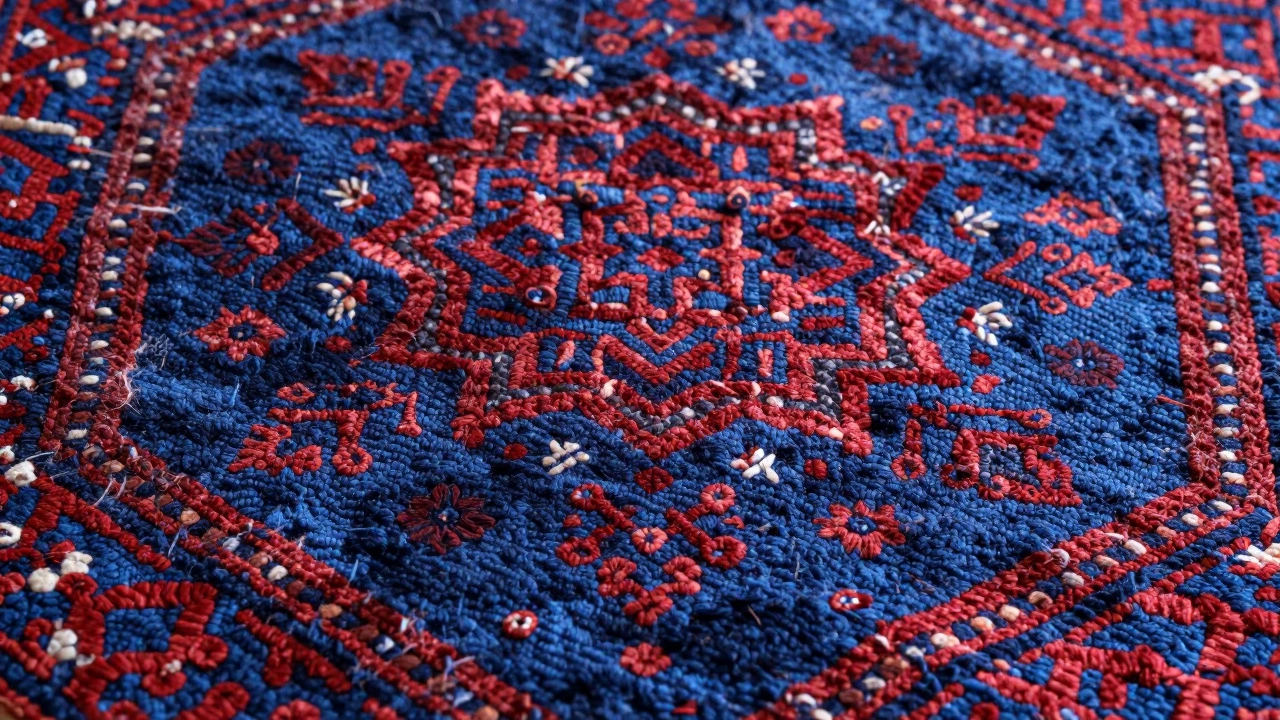
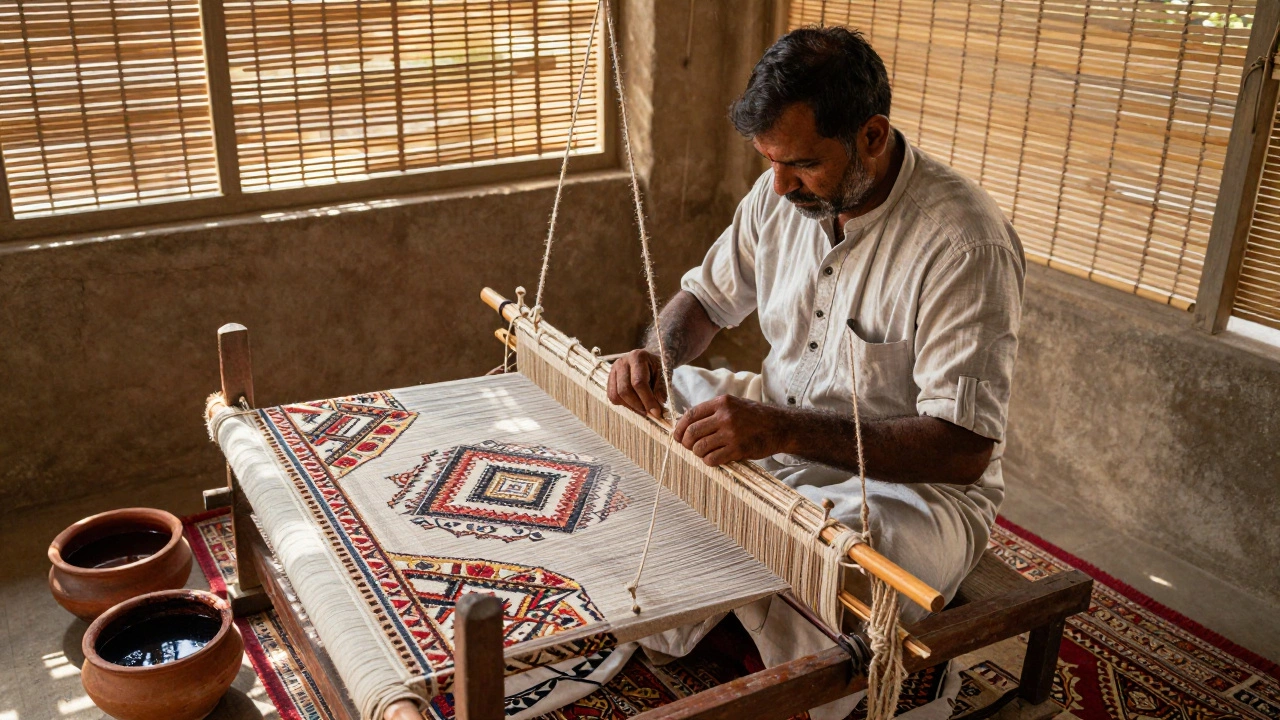
The number of knots per square inch is the single biggest indicator of a rug’s quality. Hand-knotted rugs, especially from places like Iran, India, or Turkey, can have anywhere from 50 to over 500 knots per square inch. A rug with 100 knots or more is considered high-end. Why does this matter? More knots mean tighter weaving, finer patterns, and longer durability. A rug with 150 knots per square inch can take a single weaver six months to a year to finish. That kind of labor doesn’t come cheap. If you see a rug with loose, uneven knots or a backing that looks glued or stitched instead of woven, it’s machine-made-and not worth the premium price.
Check the material
Not all wool is created equal. The best rugs use hand-spun wool from sheep raised in mountainous regions, like the Kurdish areas of Iran or the Himalayas. This wool has a natural lanolin content that makes it stain-resistant and resilient. Synthetic fibers like polyester or nylon? They’ll look shiny at first, but they flatten fast and hold odors. Silk is another sign of luxury. Pure silk rugs are rare and expensive because silk is delicate to weave and requires extreme precision. You can test wool by pulling a small strand from the edge-if it smells like burning hair when you light it (carefully!), it’s real wool. Synthetic fibers melt and smell like plastic.
Examine the dye
Expensive rugs use natural dyes made from plants, insects, and minerals. Think indigo, madder root, cochineal, or walnut shells. These dyes age beautifully, developing a soft patina over time. Synthetic dyes, on the other hand, are bright at first but fade unevenly under sunlight. Hold the rug up to a window. If the colors look flat or overly saturated, especially in reds and blues, it’s likely chemically dyed. Natural dyes have subtle variations-no two shades are exactly the same. That’s not a flaw; it’s proof of authenticity. A 1920s Persian rug with faded, mellow tones can be worth more than a brand-new one with bold, artificial colors.
Feel the pile
Run your hand over the surface. A high-quality rug feels dense, springy, and slightly rough to the touch. It shouldn’t feel slick or slippery like a carpet from a big-box store. The pile should have depth-usually between 6mm and 12mm for a fine rug. If you can see the backing clearly through the fibers, the rug is poorly woven or too thin. Also, flip it over. The pattern on the back should mirror the front, with clean, tight knots. If the back looks messy or blurry, it’s a sign of rushed work or low-end production.
Smell it
Yes, really. Smell the rug. A genuine handmade rug should smell like wool, earth, or nothing at all. If it smells like chemicals, glue, or plastic, it’s been treated with synthetic backing or adhesives. Many cheap rugs use latex glue to hold the fibers together, which breaks down over time, causing the rug to curl or shed. A high-end rug is stitched or woven without glue. You’ll rarely find this in stores, so if you’re buying online, ask the seller for a sample swatch or a photo of the back. Reputable dealers will send one without hesitation.
Check the fringe
The fringe isn’t just decorative-it’s an extension of the rug’s warp threads. On a true hand-knotted rug, the fringe is part of the structure, not sewn on afterward. If the fringe is glued, stitched, or looks like it was added later, the rug is likely machine-made. Real fringe should be long, slightly uneven, and match the rug’s color and texture. It should also be tied off at the ends with simple knots, not sewn with machine thread. A rug with well-made fringe is a sign the weaver took pride in every part of the piece.
Compare the price to the size
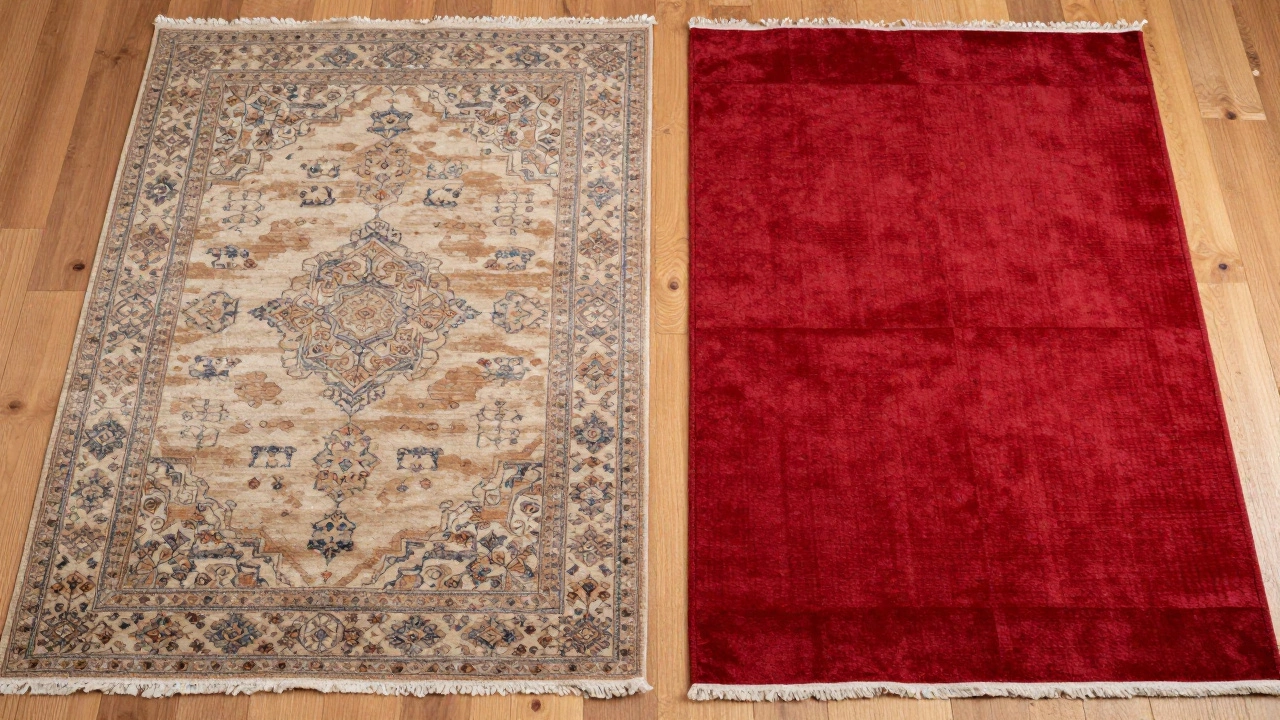
There’s no magic formula, but here’s a rule of thumb: a hand-knotted wool rug under $200 per square meter is almost always too cheap. A 5x8 rug (40 square feet) made with fine wool and 150+ knots per square inch? That should cost at least $1,500 to $3,000. If you see a rug labeled "Persian" or "antique" for under $500, it’s either a fake or a mass-produced copy. Authentic rugs from Iran, Afghanistan, or Nepal aren’t cheap to make. Labor costs alone can be $1,000 or more per rug. If the price seems too good to be true, it usually is.
Why does this matter?
Expensive rugs aren’t just decorative-they’re investments. A well-made rug can last 50 to 100 years. It can be passed down, cleaned, and restored. A cheap rug? It gets thrown out after a few years, adds to landfill waste, and costs more in the long run because you keep replacing it. The real value of a rug isn’t in how it looks on Instagram-it’s in how it holds up under your feet, through seasons, and over time.
What to avoid
Don’t fall for labels like "Oriental," "luxury," or "handmade" without proof. These words are used loosely. Look for specifics: knot count, fiber type, origin, and dye method. Avoid rugs sold at flea markets or online marketplaces with no return policy. Reputable sellers provide documentation-sometimes even photos of the weaver or workshop. If they can’t explain where it’s from or how it was made, walk away.
Can a rug be expensive even if it’s not old?
Yes. While antique rugs often command high prices due to rarity and craftsmanship, modern hand-knotted rugs made with fine wool, natural dyes, and high knot counts can be just as expensive. A new rug from a master weaver in Herat, Afghanistan, with 200 knots per square inch and silk accents can easily cost $5,000 or more. Age isn’t the only factor-quality is.
Is silk always a sign of an expensive rug?
Not always. Pure silk rugs are luxurious and expensive, but many rugs use silk only in the design details-like floral patterns or borders-while the base is wool. These are still high-end, but not as costly as all-silk rugs. A rug that’s 100% silk is rare and delicate, often used for wall hangings rather than floor use. If a rug claims to be all silk and is priced under $1,500 for a 6x9 size, it’s likely fake or synthetic.
How do I know if a rug is hand-knotted and not machine-made?
Look at the back. Hand-knotted rugs have a clear, detailed pattern on the reverse side, matching the front. Machine-made rugs have a fuzzy or blurry back, often with a fabric backing glued on. Also, hand-knotted rugs have uneven edges and slightly irregular patterns. Machine-made rugs are perfectly uniform. If the fringe is stitched on instead of being part of the weave, it’s almost certainly machine-made.
Can I clean an expensive rug myself?
Light vacuuming is fine, but deep cleaning should be left to professionals. Expensive rugs can shrink, bleed, or lose color if washed with the wrong chemicals. Use a vacuum without a beater bar and avoid steam cleaners. If the rug gets stained, blot it gently with cold water and mild soap-never rub. For anything beyond spot cleaning, take it to a rug specialist who understands natural dyes and wool fibers.
Are all Persian rugs expensive?
No. "Persian" just means made in Iran, but not all Iranian rugs are high quality. Many are machine-made or use synthetic fibers and dyes. True Persian rugs are hand-knotted, use natural wool and dyes, and come from specific weaving regions like Kashan, Tabriz, or Isfahan. A genuine Persian rug will often have the weaver’s signature or a regional motif. If it’s labeled "Persian style" or "Persian-inspired," it’s probably not authentic.