Farmhouse Bathroom Budget Estimator
Calculate your renovation budget based on the elements from the article. Prices are estimates for mid-range materials.
Estimated Budget
Most people think a farmhouse bathroom means old wood and chipped porcelain, but that’s not the whole story. A real farmhouse look isn’t about copying a catalog - it’s about warmth, texture, and a quiet sense of history. You don’t need a 1920s farmhouse to pull this off. Even a modern bathroom can feel like it’s been there for generations if you focus on the right details.
Start with the basics: color and walls
The foundation of any farmhouse bathroom is color. Think soft whites, warm greys, and creamy beiges. Avoid anything too bright or cool. A wall painted in a matte finish like Benjamin Moore’s White Dove or Sherwin-Williams’ Agreeable Gray gives you that lived-in, slightly worn-in look. If you’ve got plaster walls or uneven surfaces, don’t fix them. A little texture adds character. In fact, many old farmhouses had walls that weren’t perfectly smooth - and that’s part of the charm.
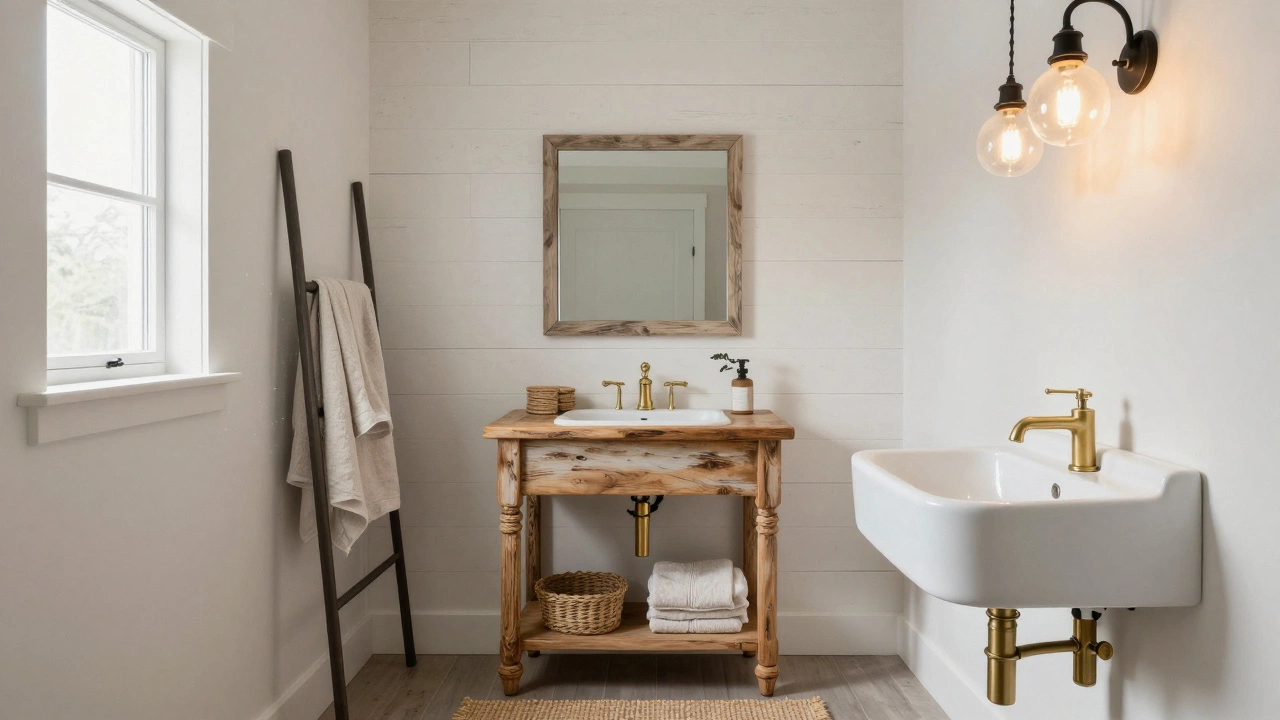
For a deeper farmhouse feel, consider shiplap. Not the glossy, pre-finished kind you see in magazines, but real, reclaimed wood planks with nail holes and saw marks. Install them vertically on one wall behind the vanity or around the mirror. It doesn’t have to cover the whole room. One accent wall is enough to anchor the look.
Choose the right fixtures
Farmhouse sinks are iconic, but they’re not the only thing that matters. The real trick is mixing old and new. A deep, apron-front sink in white ceramic or fireclay is classic. Pair it with a single-handle faucet in brushed brass or oil-rubbed bronze. Avoid chrome. It looks too modern. Brass doesn’t have to be shiny - a patinaed finish ages beautifully and matches the weathered wood you’ll be using.
Lighting matters too. A wrought iron or blackened steel pendant over the sink gives instant farmhouse cred. Look for fixtures with glass shades - seeded glass or milk glass - that soften the light. If you’re replacing overhead lighting, skip the flush mount. A hanging lantern or two dangling from a chain adds depth and warmth.
Wooden vanity with character
Your vanity is the centerpiece. Skip the sleek, handle-less cabinets. Go for a solid wood vanity, preferably with visible grain and a distressed finish. Reclaimed barn wood is ideal, but you don’t need to pay a fortune. Many local salvage yards have old doors, beams, or shelving that can be turned into a custom vanity. A simple two-drawer unit with turned legs and a thick wooden top works better than a bulky, modern one.
Don’t hide the plumbing. Expose the pipes under the sink. Wrap them in braided rope or paint them the same color as the vanity. It’s not messy - it’s intentional. Real farmhouses didn’t hide their pipes; they made them part of the design.
Add texture with towels and rugs
Textiles are where the farmhouse feel comes alive. Use thick, absorbent towels in natural colors - oatmeal, sage, navy, or charcoal. Look for woven cotton or linen. Avoid patterned towels unless they’re simple stripes or checks. Drape them over a wooden ladder rack or a wrought iron hook. The more they look like they’ve been used, the better.
For the floor, choose a jute or sisal rug. Not the synthetic kind. Real natural fiber. It’s coarse underfoot, which feels authentic, and it absorbs water better than you’d think. Place it in front of the sink or tub. If you’re worried about moisture, look for rugs with a rubber backing or rotate them every few weeks.
Storage that looks like it belongs
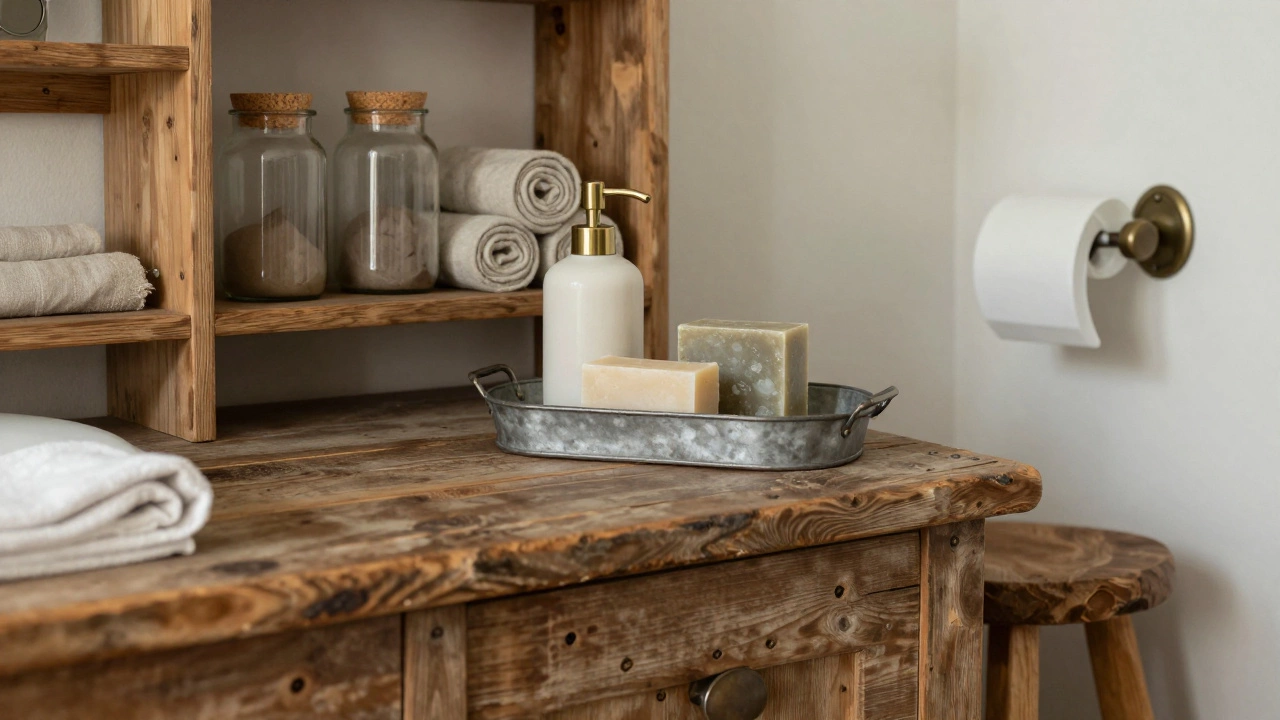
Farmhouse bathrooms don’t hide their stuff - they show it off. Open shelving made from wood or iron is key. Use floating shelves to display jars of cotton balls, rolled towels, or ceramic soap dispensers. You can even use vintage wooden crates or metal buckets as storage. A galvanized metal tray on the counter holds toothbrushes and hand soap. It’s functional and pretty.
Don’t use plastic bins. They kill the vibe. Instead, look for glass jars with cork lids or stoneware crocks. Even a simple ceramic pitcher for extra towels adds a touch of rural elegance.
Details that make the difference
The little things matter. A vintage mirror with a wooden frame - even if it’s a reproduction - adds instant age. Hang a framed botanical print or an old farm map. A small wooden stool by the tub doubles as a step or a place for a candle.
Use candles in amber glass jars. The scent should be subtle - lavender, cedar, or unscented. Avoid synthetic air fresheners. They smell artificial. A bowl of dried lavender or eucalyptus on the windowsill works better.
Even the toilet paper holder counts. Go for a brass or black iron wall-mounted holder. No plastic. No hidden rolls. Let it be seen. It’s not about being minimalist - it’s about being honest about what you use.
What not to do
Don’t go overboard. Farmhouse style isn’t clutter. It’s curated. One wooden ladder, one vintage mirror, one ceramic soap dish - that’s enough. Too many pieces make it look like a thrift store explosion.
Avoid modern glass showers. If you must have one, frame it with wood trim or use a shower curtain in natural linen. Glass is clean, but it’s cold. Farmhouse is warm.
And please - no stainless steel appliances. No touchless faucets. No LED mirrors. These things have their place, but not here. This isn’t a spa. It’s a bathroom that feels like it’s been passed down.
Real examples that work
In a small Oxford bathroom, a homeowner replaced a white plastic vanity with a salvaged oak one from a 19th-century barn. She painted the walls White Dove, added a black iron pendant, and hung linen towels on a copper rod. She used a ceramic soap dispenser from a local potter and placed a wooden stool under the window. The total cost? Under £500. The result? A space that feels older than the house itself.
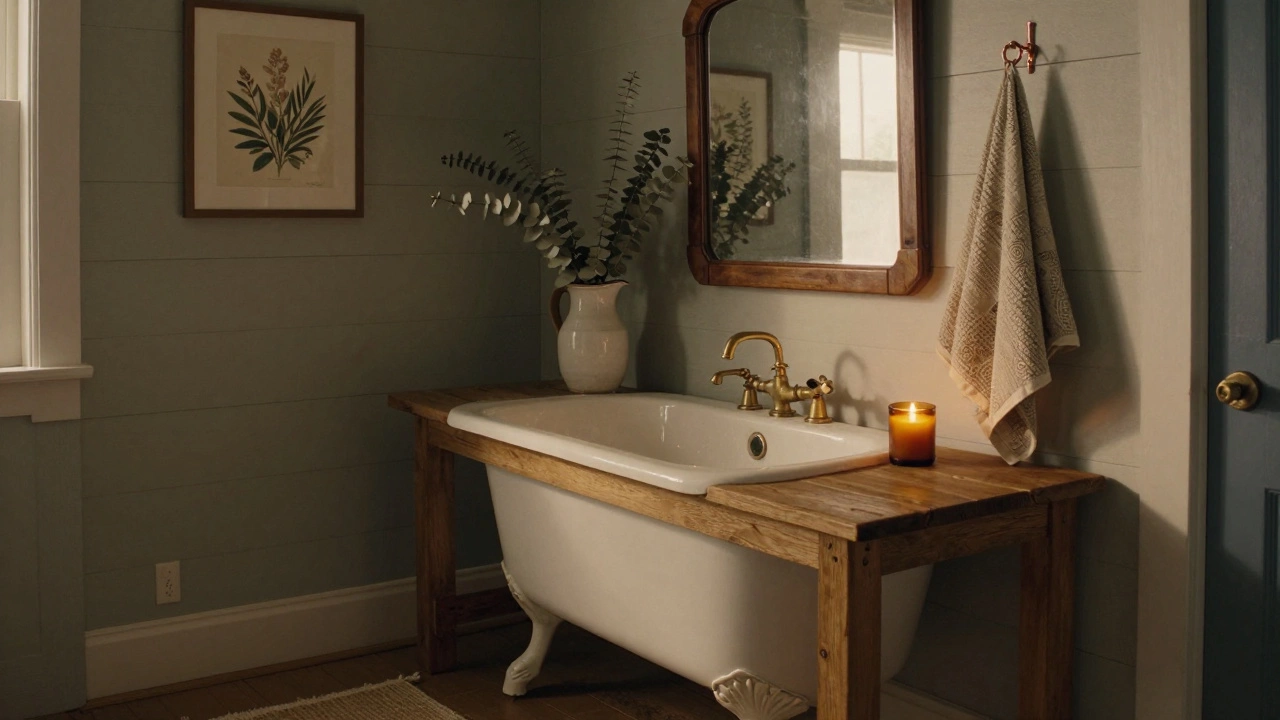
Another person in rural Yorkshire used a repurposed kitchen island as a vanity. She sanded it down, stained it with walnut, and added two wooden drawers. She kept the original brass hardware. The sink? A vintage clawfoot tub repurposed as a washbasin. It’s not practical for daily use, but it’s the centerpiece - and everyone notices it.
Start small, think big
You don’t need to rebuild your whole bathroom. Swap out the mirror. Change the towel hooks. Add one wooden shelf. Paint the walls a warmer white. These small moves add up. The goal isn’t perfection - it’s presence. A farmhouse bathroom isn’t about looking like a magazine spread. It’s about feeling like you’ve come home after a long day.