Home Storage Efficiency Calculator
Storage Audit Results
Current Usable Capacity: cubic ft
Potential Optimized Capacity: cubic ft
Recommended Actions:
Efficiency Score: /100
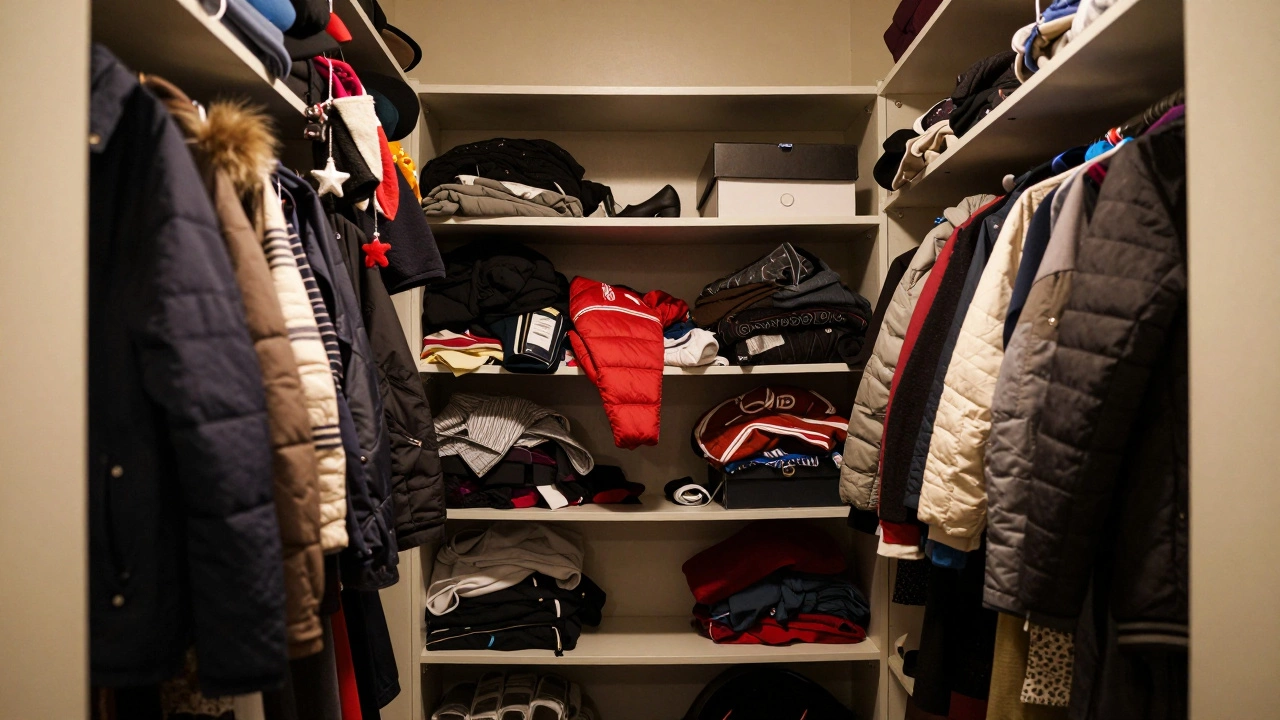
It starts with a single shoebox. You shove it into the back of your wardrobe because you need to get out the door. Three months later, that box is buried under winter coats, seasonal decorations, and a pile of laundry you swore you’d fold last Tuesday. You open the door, sigh, and close it again. Sound familiar?
We often blame ourselves for being messy or disorganized. But more often than not, the problem isn’t your habits-it’s your home storage system. When the infrastructure of your house fights against how you actually live, chaos becomes inevitable. Understanding the specific structural and psychological failures in our homes is the first step toward fixing them permanently.
The Vertical Void: Ignoring Wall Space
The most glaring error in residential design is the tendency to treat walls as decorative surfaces rather than functional assets. Most people fill their floor space with furniture and then wonder why they have nowhere to walk. This is the "horizontal bias"-the assumption that storage must sit on the ground.
Consider the average hallway. It’s a dead zone. Yet, by installing simple shelving or hooks up to the ceiling height, you can reclaim square footage without losing an inch of floor area. The problem arises when we buy low-profile cabinets or short bookshelves that leave two feet of empty air above them. That unused vertical space is wasted potential. If you’re constantly tripping over bins or struggling to find floor room for a new chair, look up. The solution is rarely to add more width; it’s to add height.
The One-Size-Fits-All Fallacy
Generic storage units are designed for generic lives, but nobody lives generically. A standard plastic drawer unit might look great in a catalog, but does it fit your awkwardly shaped pantry? Does the depth match your baking sheets, or do they stick out like broken ribs?
This mismatch creates "dead zones" inside cabinets. When you use uniform containers for irregular items, you end up with gaps where nothing fits. These gaps accumulate dust and forgotten items. The fix isn’t buying more boxes; it’s measuring your items first. If your pots are tall and narrow, wide shallow drawers will waste half their volume. Customizing your storage dimensions to your actual inventory eliminates these inefficiencies immediately.
Invisible Inventory: The Opacity Problem
There is a direct correlation between visibility and usage. If you cannot see what you own, you assume you don’t have it. This leads to duplicate purchases and hoarding. Opaque plastic bins are the enemy of organization. They create a "black hole" effect where contents vanish from memory until you desperately need that one specific cable or holiday ornament.
Clear containers solve this instantly. Even better, labeling opaque bins with detailed descriptions (not just "Miscellaneous") forces you to categorize items logically before storing them. The problem isn’t just clutter; it’s cognitive load. Every time you have to dig through three bags to find a spatula, you pay a mental tax. Transparent storage removes that friction, making maintenance effortless.
The Seasonal Shuffle Trap
Many homeowners treat storage as a static entity, ignoring the cyclical nature of life. Winter boots take up prime real estate in July. Summer linens gather dust in January. This seasonal mismatch forces you to either keep bulky items accessible year-round (wasting space) or bury them deep in attics and basements (creating retrieval nightmares).
The solution is dynamic zoning. Keep current-season items within easy reach-eye level and waist height. Store off-season goods in high shelves, under beds, or in climate-controlled external units if necessary. Rotating your storage layout twice a year prevents the "archaeological dig" scenario where you spend twenty minutes hunting for a sweater because it was packed away six months ago.
Poor Lighting and Accessibility
You wouldn’t read a book in a dark room, so why organize a closet without light? Dark corners become dumping grounds. Items placed in shadowed areas are less likely to be noticed, cleaned, or used. Over time, these spots become repositories for broken electronics, expired medications, and miscellaneous junk.
Install motion-sensor LED strips inside deep cabinets and wardrobes. This simple upgrade transforms hidden spaces into usable inventory. Additionally, consider accessibility. High shelves require ladders; low shelves require kneeling. Both are barriers to good habits. Keep frequently used items in the "golden zone"-between shoulder and hip height. Reserve extreme heights and depths for rare-use items only.
Psychological Anchors: Sentimental Clutter
Not all storage problems are physical. Some are emotional. We hold onto tickets, gifts, and heirlooms not because we use them, but because letting go feels like losing part of ourselves. This sentimental weight manifests as physical bulk. Shoeboxes full of old letters occupy valuable shelf space while gathering dust.
Digital archiving is the modern answer to sentimental overload. Scan photos, documents, and memorabilia. Store the originals in a small, dedicated fireproof box, not scattered across every cabinet in the house. By reducing the physical footprint of memories, you free up space for things you actually interact with daily. It’s not about forgetting; it’s about curating.
| Problem Area | Typical Mistake | Effective Solution | Impact |
|---|---|---|---|
| Vertical Space | Short shelves leaving air gaps | Floor-to-ceiling shelving | Reclaims 30-50% more capacity |
| Container Fit | Uniform bins for mixed items | Measured, custom-fit organizers | Eliminates dead zones |
| Visibility | Opaque, unlabeled boxes | Clear bins + detailed labels | Reduces search time by 80% |
| Seasonality | All items stored together | Rotating seasonal zones | Improves daily accessibility |
| Lighting | Dark cabinet interiors | Motion-sensor LED strips | Prevents "dumping ground" syndrome |
The Kitchen Cabinet Conundrum
Kitchens are the epicenter of storage failure. Deep base cabinets are notoriously difficult to navigate. Items pushed to the back disappear forever. This is known as the "back-of-cabinet blind spot." Standard shelves exacerbate this by creating layers of obscurity.
Replace fixed shelves with pull-out drawers or lazy Susans. Drawers bring the back of the cabinet to the front with a single motion. Lazy Susans rotate corner units, which are otherwise wasted space. If you can’t remodel, use clear, stackable bins labeled by category. This ensures that even if an item is at the back, you know exactly where it is and can retrieve it without moving everything else.
Bathroom Bottlenecks
Bathrooms face unique challenges: humidity, limited space, and a mix of bulky towels and tiny toiletries. Humidity warps wood and rusts metal, making material choice critical. Plastic and stainless steel are superior here.
The biggest mistake is storing everything at once. Do you really need five bottles of shampoo visible on the counter? Use over-the-door organizers for travel-sized items and keep bulk supplies in airtight containers in a linen closet. Ventilation is key. Poor airflow leads to mold growth in storage areas, ruining clothes and papers. Ensure your bathroom storage has ventilation gaps or use moisture-absorbing products like silica gel packets.
Living Room Clutter Creep
Living rooms suffer from "clutter creep"-the gradual accumulation of remote controls, magazines, toys, and blankets. Open coffee tables become catch-alls. The problem is a lack of designated "homes" for transient items.
Create a "landing strip" for everyday objects. A basket for remotes, a tray for keys, a hook for scarves. If an item doesn’t have a specific place, it won’t return there. Closed storage is best for visual noise. Baskets and ottomans with lids hide the mess while keeping essentials accessible. The goal is to maintain a calm visual environment, which reduces stress and encourages tidiness.
Bedroom Wardrobe Woes
Wardrobes are often too shallow for pants hangers but too deep for shirts, causing wrinkles. Hanging rods are usually installed at a standard height, ignoring user stature. Tall individuals struggle to reach the top; shorter ones waste space below.
Adjust hanging rods to suit your height. Install double rods to maximize vertical hanging space. Use slim velvet hangers to save width. Fold sweaters instead of hanging them to prevent stretching. Categorize by type, then by color. This visual consistency makes getting dressed faster and reduces decision fatigue. Don’t forget the space under the bed-it’s perfect for off-season clothing in vacuum-sealed bags.
How to Audit Your Current Storage
Before buying anything, conduct a storage audit. Walk through each room and ask:
- Is this item used weekly? If yes, is it within arm’s reach?
- Is this container full? If no, combine items into fewer, larger bins.
- Is this space dark or hard to access? If yes, move essential items elsewhere.
- Does this item belong here? If no, relocate it to its primary zone.
This process reveals inefficiencies quickly. You’ll likely find that 20% of your storage effort solves 80% of your clutter problems. Focus on high-traffic areas first: kitchen, entryway, and main bedroom.
When to Call in the Pros
Sometimes, DIY solutions hit a wall. Structural limitations, such as load-bearing walls or odd architectural angles, require professional input. Home organizers can provide objective perspectives and custom design plans. Look for certified professionals who understand ergonomics and spatial psychology. They can transform chaotic spaces into functional systems tailored to your lifestyle.
Why does my closet always feel messy even after organizing?
This usually happens because the storage system doesn't match your habits. If you hang clothes but the rod is too low, or if you lack visible categories, items will slip out of place. Ensure your storage reflects how you dress daily, not just how catalogs look.
Are plastic bins better than cardboard boxes for long-term storage?
Yes, plastic bins are superior for long-term storage. They resist moisture, pests, and crushing. Cardboard degrades over time, especially in humid environments like basements. For important documents, use acid-free plastic containers.
How can I maximize storage in a small apartment?
Focus on vertical space and multi-functional furniture. Use wall-mounted shelves, under-bed storage, and ottomans with hidden compartments. Choose furniture that serves dual purposes, like a sofa bed or a dining table with drawers.
What is the best way to organize a cluttered kitchen pantry?
Start by removing everything and cleaning the shelves. Group items by category (baking, snacks, canned goods). Use clear, stackable containers to see levels easily. Place frequently used items at eye level and heavier items lower down for safety.
Should I label my storage bins?
Absolutely. Labels reduce decision fatigue and ensure everyone in the household knows where items belong. Be specific-instead of "Kitchen," write "Pots & Pans" or "Baking Supplies." Use a label maker for durability and clarity.