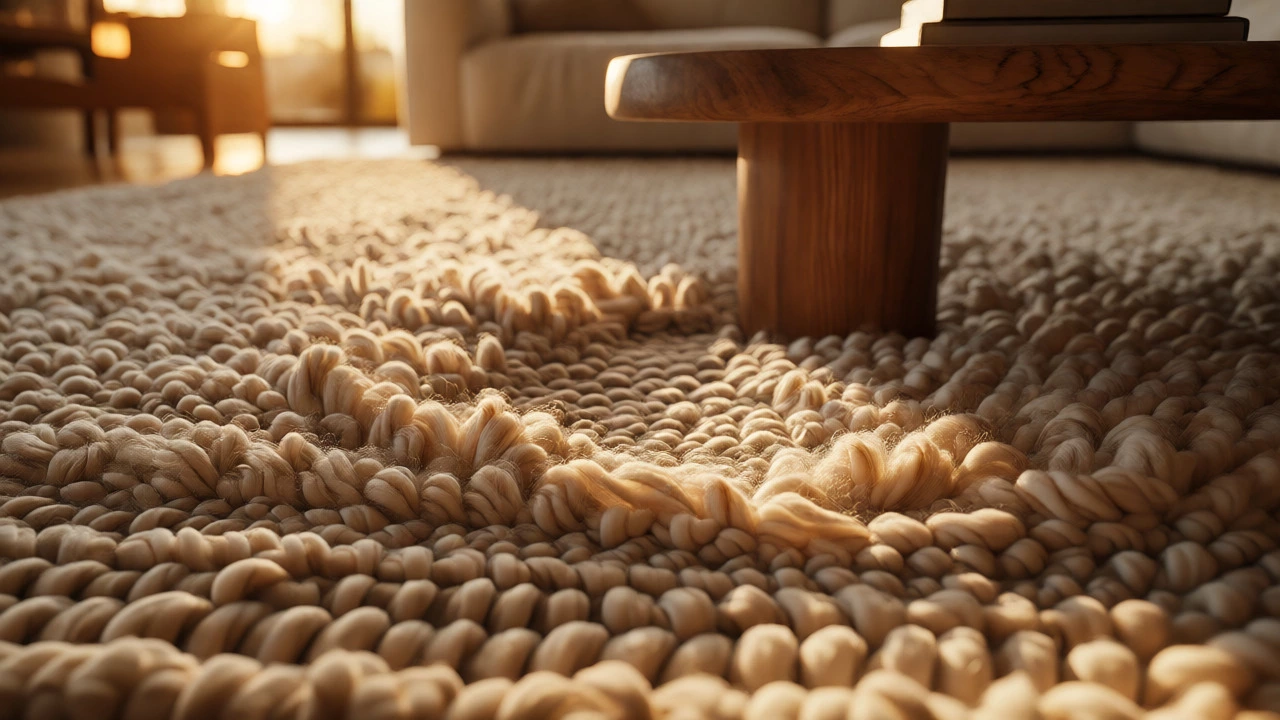
Rug Flattening Resistance Estimator
Select your rug specifications to estimate its resistance to flattening over time.
Select options and click calculate to see your rug's potential lifespan regarding pile compression.
Risk Assessment
Calculated based on fiber memory, density, and traffic.
Recommended Maintenance Tips:
You’ve just bought a gorgeous new rug. It looks plush, inviting, and expensive. But three months later, you walk into the living room and see it: flat, lifeless patches where people stand or furniture sits. The luxury is gone, replaced by something that feels cheap and tired. If you’re asking what is the best rug that doesn't flatten, you are fighting a battle against physics. Gravity, foot traffic, and heavy furniture conspire to crush fibers. But some materials fight back harder than others.
Here’s the hard truth: no rug stays perfectly fluffy forever. However, certain constructions and materials resist compression far better than others. We’ll break down exactly which rugs hold their shape, why they do it, and how to keep them looking new for years. This isn’t about buying the most expensive item; it’s about buying the right structure.
The Science of Squash: Why Rugs Flatten
To fix the problem, you need to understand the culprit. Flattening happens when the individual fibers in a rug lose their ability to spring back after being compressed. Think of your hair. If you wear a hat all day, your hair goes flat. When you take the hat off, healthy hair bounces back. Damaged or fine hair stays flat. Rug fibers work the same way.
Three main factors cause permanent crushing:
- Fiber Memory: Natural fibers like wool have high resilience. They return to their original shape easily. Synthetic fibers vary wildly. Cheap polyester often has poor memory.
- Pile Height and Density: A tall, sparse pile collapses under weight. A short, dense pile supports itself because each fiber pushes against its neighbors.
- Construction Method: Hand-knotted rugs allow fibers to shift and settle naturally. Machine-made rugs with glued tufts can degrade faster if the adhesive weakens or the backing stiffens.
If you want a rug that resists flattening, you need high density and resilient fiber. That’s the golden rule.
Material Matters: Which Fibers Bounce Back?
Not all fibers are created equal. Some are engineered for durability, while others prioritize softness at the cost of structure. Here is how the major contenders stack up against gravity.
| Material | Resilience Score (1-10) | Best For | Flattening Risk |
|---|---|---|---|
| Wool | 9 | High-traffic living areas, bedrooms | Low |
| Polypropylene (Olefin) | 7 | Kitchens, kids' rooms, outdoors | Moderate-Low |
| Sisal/Jute | 8 | Dining rooms, offices | Very Low |
| Viscose/Silk | 3 | Low-traffic decorative spots | High |
| Nylon | 8 | Hallways, stairs | Low |
Wool is the gold standard. It’s naturally crimped, which gives it structural integrity. Even if you step on it, the crimp helps it spring back. Wool also absorbs moisture, which keeps fibers flexible rather than brittle. Yes, it costs more, but a good wool rug lasts decades without going flat.
Sisal and Jute are natural plant fibers. They are incredibly stiff. You won’t get a plush feel here, but you will never have a flattened spot. These are perfect for dining rooms where chairs scrape and push. The trade-off? They can be rough on bare feet and stain easily if not treated.
Polypropylene is the budget-friendly hero. Modern manufacturing has improved its resilience significantly. It’s hydrophobic, meaning it doesn’t absorb water, so it dries fast and doesn’t mildew. While it lacks the luxurious bounce of wool, it holds up surprisingly well in high-traffic zones. Look for "heat-set" polypropylene, which has been treated to improve fiber memory.
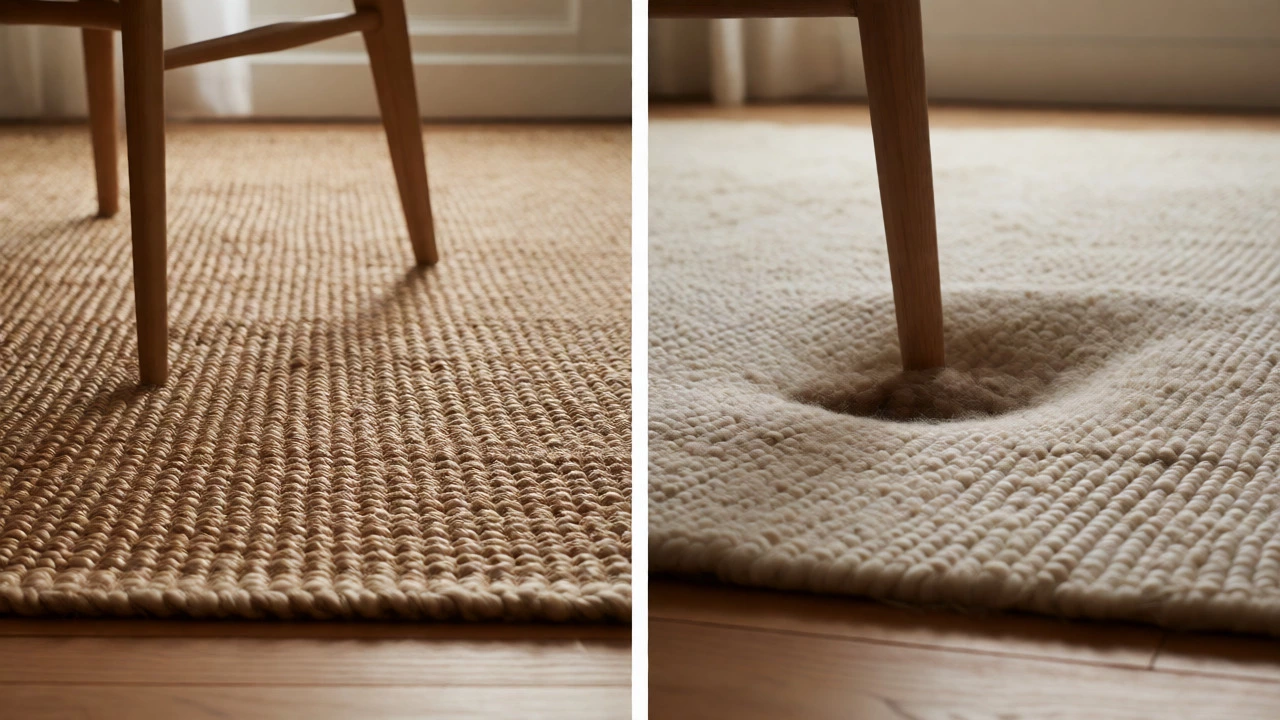
Avoid Viscose (often sold as artificial silk) if you care about flattening. It looks stunning-shimmering and deep-but it has terrible resilience. One heavy coffee table leg can leave a permanent dent. Save viscose for low-traffic hallways or decorative pieces.
Construction Secrets: Knots vs. Tufts
Material is half the battle. How the rug is made determines how those fibers behave under pressure. Two rugs can be made of identical wool, yet one flattens quickly while the other survives ten years of abuse.
Hand-Knotted Rugs: Each knot is tied individually around warp threads. This creates a dense, interlocked structure. Because there’s no glue holding the tufts in place, the fibers can move slightly under pressure and then reset. This "give" prevents permanent creasing. Hand-knotted rugs are an investment, but they are the most resistant to flattening over time.
Power-Loomed Rugs: These are machine-woven and mimic hand-knotting. Quality varies wildly. High-quality power-loomed rugs use tight weaves and dense packing. Cheap ones use loose loops that snag and collapse. Check the back: if you can see through the weave easily, it’s likely too sparse to resist flattening.
Tufted Rugs: Yarn is punched through a primary backing and glued down. This is the most common type in big-box stores. Glue degrades over time, especially with heat or humidity. Once the glue weakens, tufts loosen and mat down. If you buy tufted, look for a secondary latex backing for extra support, but expect a shorter lifespan than knotted options.
Flatweaves: Kilims and dhurries have no pile. They cannot flatten because there is nothing to flatten. They are ideal for entryways and kitchens. However, they offer less cushioning and insulation.
Design Hacks: Pile Height and Texture
You can cheat physics with design. If you love the look of a shaggy rug but hate the maintenance, choose specific textures that hide compression.
Loop Pile: Instead of cut ends, the yarn forms continuous loops. Loops are structurally stronger than cut piles. They don’t fray, and they resist crushing because the loop shape distributes weight evenly. Berber-style rugs are classic examples. They stay upright longer than cut-pile alternatives.
Textured Patterns: Choose rugs with varied pile heights or carved designs. A uniform surface shows every footprint. A textured surface hides minor indentations because the eye focuses on the pattern, not the depth. Distressed or vintage-look rugs are excellent here-they already look worn, so new flattening blends in.
Cut-and-Loop Combinations: Many modern rugs mix both techniques. The cut pile provides softness, while the loop pile adds structural backbone. This hybrid approach offers the best balance of comfort and durability.
Avoid ultra-long shags in high-traffic areas unless you plan to vacuum daily and rotate weekly. Long fibers tangle and mat together, creating irreversible knots that look like flat patches.
Maintenance: How to Keep Your Rug Upright
Even the best rug will flatten if neglected. Maintenance isn’t just about cleanliness; it’s about fiber health. Dirt acts like sandpaper, grinding fibers down. Moisture makes them limp. Here’s your routine.
Vacuum Correctly: Use a suction-only mode or turn off the beater bar for high-pile rugs. Aggressive brushes pull fibers out and cause tangling. Vacuum in multiple directions to lift crushed fibers. Do this weekly in high-traffic zones.
Rotate Regularly: Furniture legs create permanent dents. Rotate your rug 180 degrees every six months. This ensures even wear. If you have a heavy sofa, use furniture coasters or wide-leg tables to distribute weight. Never drag furniture across the rug; lift it.
Use a Rug Pad: A high-quality felt-rubber pad does two things. It cushions the rug from below, preventing it from compressing against the hard floor. It also allows slight movement, reducing stress on fibers during foot traffic. Skip thin rubber pads; they trap heat and can degrade the rug backing.
Steam Clean Annually: Professional steam cleaning lifts matted fibers by relaxing them with heat and moisture. DIY rental machines can work, but professional services use truck-mounted systems that dry faster, preventing mold. Always let the rug dry completely before walking on it.
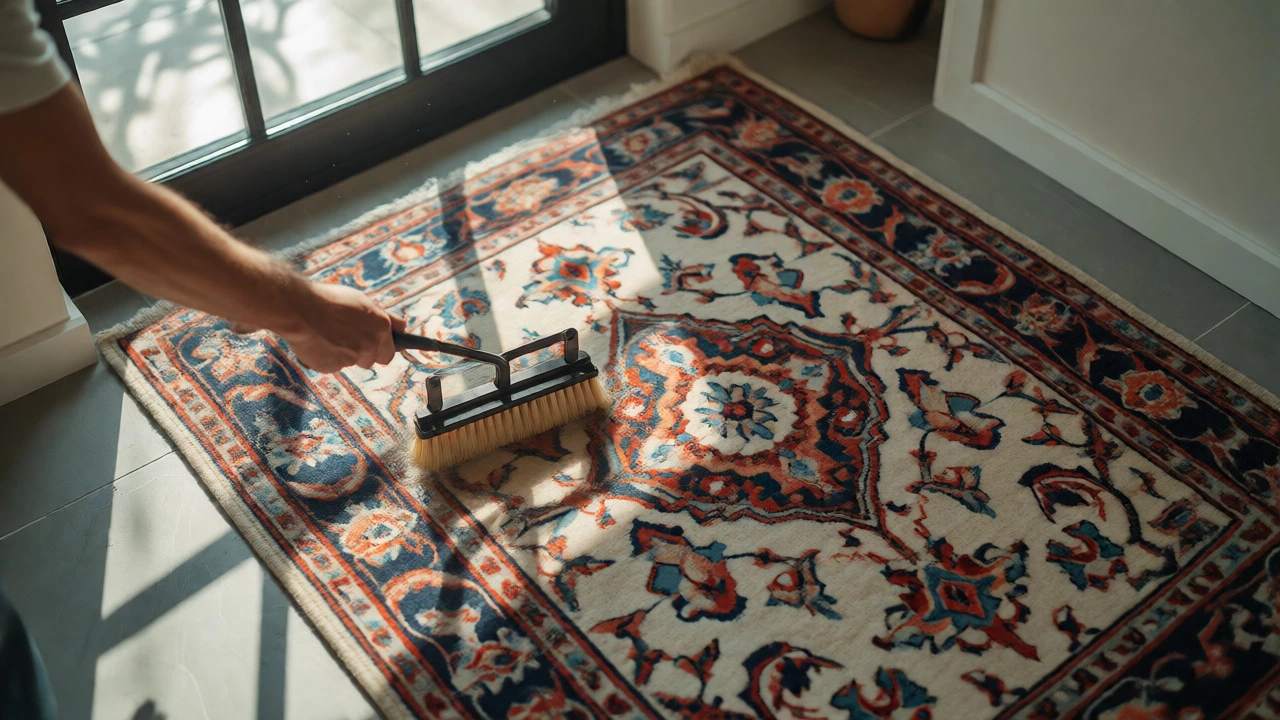
Brush High-Pile Rugs: For shags and friezes, use a pet brush or rug rake monthly. This separates tangled fibers and restores volume. It sounds tedious, but it makes a massive difference in appearance.
Real-World Scenarios: Choosing the Right Rug
Let’s apply this knowledge to common home situations.
The Living Room Hub: Kids run, dogs sleep, adults sit. You need maximum resilience. Go for a dense, short-to-medium pile wool rug or a high-quality heat-set polypropylene. Avoid long shags. Add a thick rug pad. Expect to vacuum twice a week.
The Dining Room: Chairs slide in and out. Spills happen. Sisal or jute is unbeatable here. It won’t flatten, cleans easily, and handles chair scrapes. If you prefer softer underfoot, choose a tightly woven wool flatweave. Avoid tufted rugs; the glue will fail with chair movement.
The Bedroom Retreat: Traffic is lower. You can afford luxury. A viscose or silk blend rug will stay fluffy because few people walk on it. However, if you have pets, stick to wool or nylon. Pet claws snag delicate fibers, leading to uneven flattening.
The Entryway: Mud, rain, and constant stepping. Flatweaves or outdoor-rated polypropylene are your friends. They drain well and don’t trap dirt. If you want warmth, layer a smaller, durable wool runner over a larger base rug.
Common Myths About Rug Flattening
Let’s clear up some confusion.
Myth 1: All synthetic rugs flatten faster than natural ones. False. Modern nylons and olefins are engineered for resilience. Cheap wool can flatten if poorly processed. Quality matters more than origin.
Myth 2: Heavy furniture always ruins rugs. False. Wide-footed furniture distributes weight. Thin-legged chairs cause dents. Use protectors, and you can place any rug anywhere.
Myth 3: Shag rugs are impossible to maintain. False. They require different maintenance, not more effort. Brushing replaces deep vacuuming. If you commit to brushing, shags stay voluminous.
Final Verdict: What Should You Buy?
If money is no object, buy a hand-knotted wool rug. It will age gracefully, resist flattening, and last generations. It’s the ultimate answer to "what is the best rug that doesn't flatten."
If you’re on a budget, choose a densely woven polypropylene rug with a loop pile. It’s tough, affordable, and easy to clean. Just avoid viscose and low-density tufted rugs in busy areas.
Remember, prevention beats cure. Rotate, pad, and clean regularly. With the right material and a little care, your rug can stay plush and proud for years.
Does wool really prevent flattening better than synthetics?
Generally, yes. Wool has natural crimp and elasticity, allowing fibers to spring back after compression. High-end synthetics like nylon come close, but wool typically maintains loft longer in high-traffic areas due to its superior resilience and moisture-regulating properties.
Can I fix a rug that has already flattened?
Sometimes. Steam cleaning can relax matted fibers, helping them regain volume. Brushing high-pile rugs with a pet brush can separate tangled strands. However, if the fibers are broken or the backing is degraded, the damage may be permanent. Prevention is always easier than repair.
Are shag rugs bad for high-traffic areas?
Shag rugs struggle in high-traffic zones because long fibers tangle and mat quickly. Foot traffic compacts the pile, making it difficult to restore fluffiness. If you love shag, limit it to low-traffic rooms like bedrooms or formal sitting areas where it won’t be stepped on constantly.
How often should I rotate my rug to prevent flattening?
Rotate your rug 180 degrees every six months. This ensures even wear from sunlight and foot traffic. In very high-traffic areas, consider rotating quarterly. This simple habit prevents permanent compression patterns from forming in specific spots.
Do rug pads help prevent flattening?
Yes, a high-quality rug pad provides cushioning that reduces direct pressure on fibers from the hard floor. It also allows slight movement, which helps fibers recover after compression. Felt-rubber pads are generally best for maintaining rug loft and longevity.