Most small bedrooms feel cramped not because they’re too tiny, but because stuff has nowhere to go. You’ve got clothes piling up on chairs, shoes spilling out of the closet, and boxes stacked under the bed like an afterthought. The fix isn’t buying a bigger room-it’s using every inch smarter. Here’s how real people in small UK homes have turned their tight bedrooms into tidy, functional spaces without spending a fortune.
Use the space under your bed
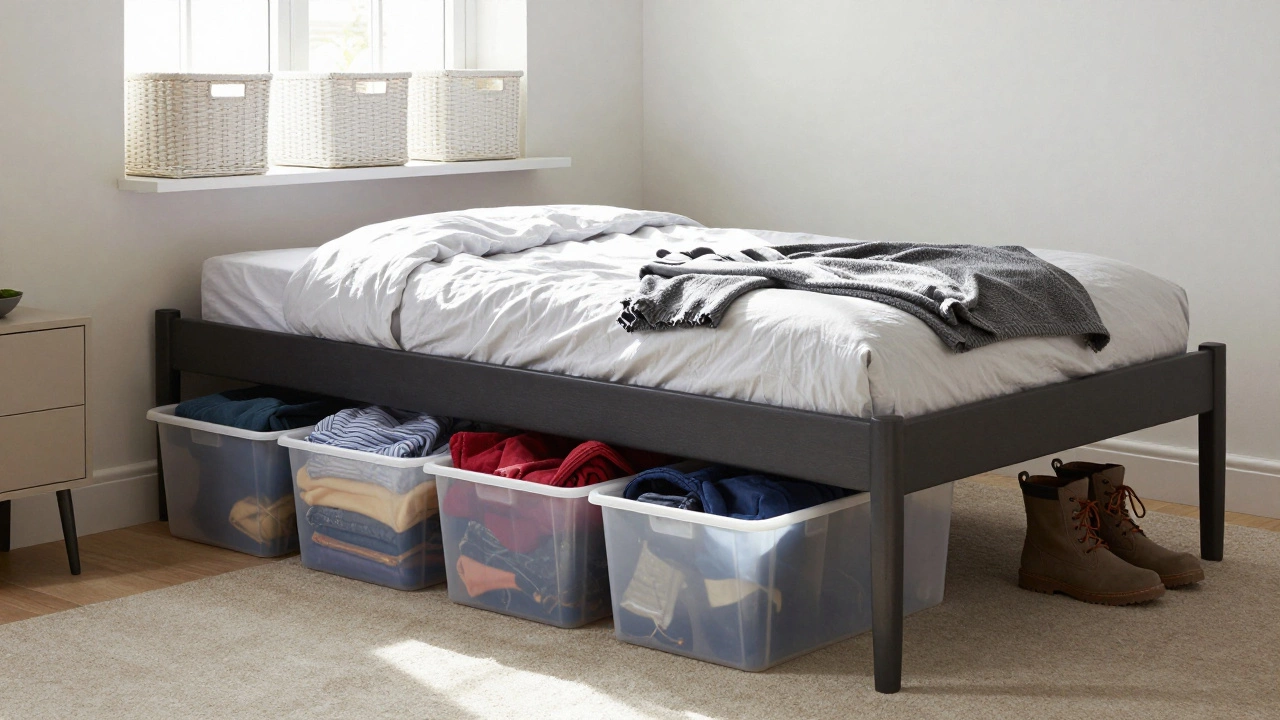
The area under your bed is the biggest wasted storage zone in most bedrooms. It’s not just for dust bunnies. Slide-out drawers, low-profile bins, or even vacuum-sealed bags can turn that dead space into serious storage. Look for beds with built-in drawers-many modern designs have them built right into the frame. If you’re keeping your current bed, get under-bed storage containers with wheels. They slide out easily and fit snugly under most beds, even if there’s only 6 inches of clearance. One woman in Brighton used four shallow plastic bins under her bed to store seasonal clothes, extra towels, and even her winter boots. She said it cut her closet clutter by half.
Go vertical with wall storage
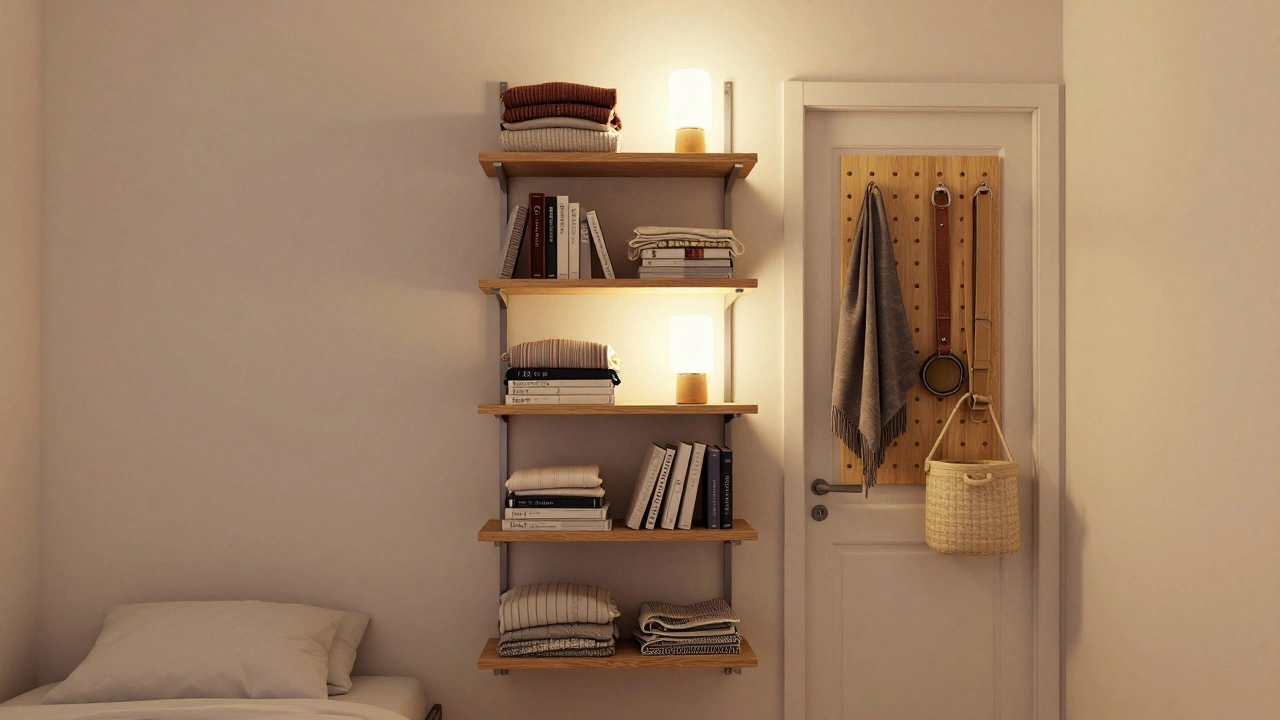
When floor space is tight, go up. Wall-mounted shelves, pegboards, and floating cabinets don’t eat up floor space. Install shelves above your door or beside your window-places you’d never think to use. A pegboard behind your door works great for hanging belts, scarves, jewelry, and even small baskets. One student in Manchester turned a blank wall next to her bed into a vertical closet using three floating shelves and a few hanging hooks. She kept her daily outfits on the top shelf, folded sweaters in the middle, and used the bottom for books and a lamp. No closet needed.
Buy a bed with storage built in
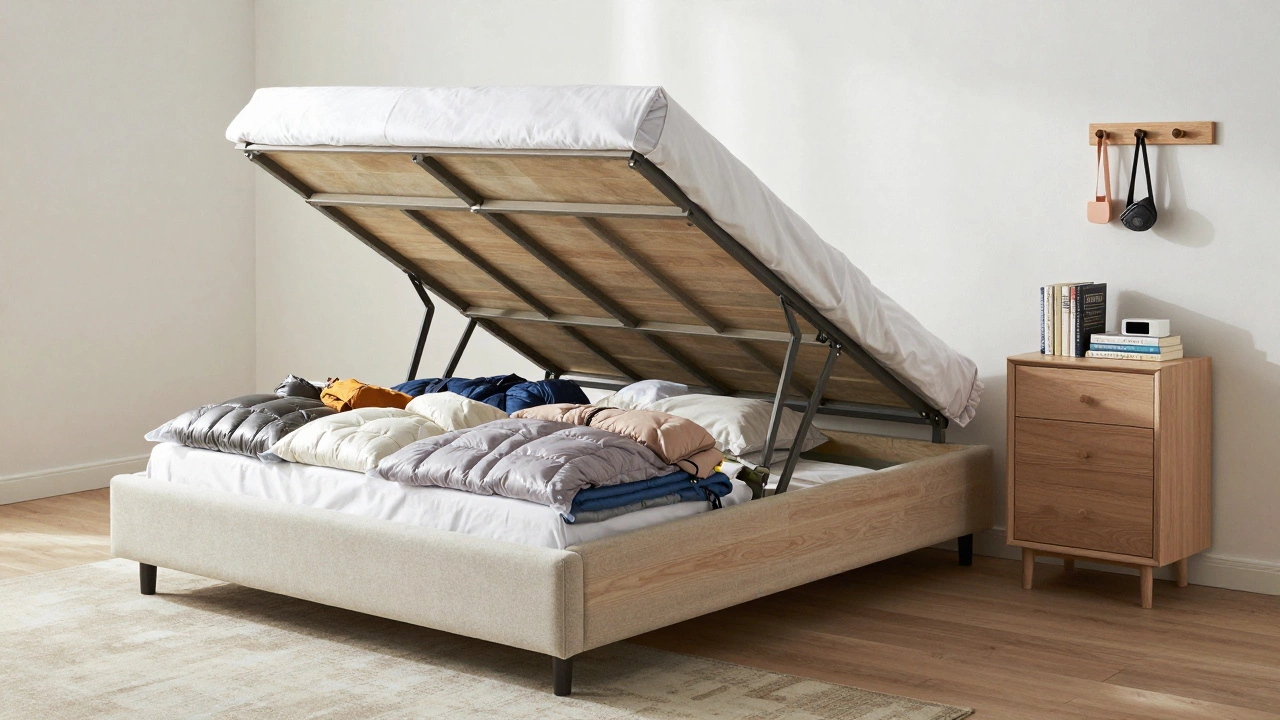
If you’re replacing your bed anyway, choose one with storage. Ottoman beds lift up to reveal a huge hidden compartment underneath-perfect for bulky items like duvets, suitcases, or off-season clothes. Some even come with hydraulic lifts so you don’t have to strain lifting the mattress. A study by the UK Furniture Association found that beds with integrated storage increased usable bedroom space by up to 30% in homes under 50 square meters. Look for models with a solid base and good weight capacity. Don’t be fooled by cheap ones that wobble-the lift mechanism needs to be sturdy. Brands like IKEA, DFS, and Made.com all offer reliable options starting around £300.
Turn your closet into a system
A closet isn’t just a hanging rod and a shelf. It’s a vertical storage tower waiting to be organized. Add double hanging rods so you can fit shirts on top and pants or skirts below. Use slim, non-slip hangers to save space. Install pull-out bins for socks and underwear-those little drawers that slide out from the side of your closet are game-changers. Add shelf dividers so folded sweaters don’t topple over. Use the top shelf for storage bins with labels. One man in Oxford cleared out his closet by replacing one bulky shelf with three narrow, adjustable ones. He now fits 50% more clothes without crowding the space.
Use furniture that does double duty
Every piece of furniture in a small room should earn its place. A bench at the foot of your bed isn’t just for sitting-it can lift open to store blankets or shoes. A nightstand with drawers holds more than a plain table. A vanity with hidden compartments doubles as a desk and a jewelry organizer. Look for pieces with hidden storage: ottomans that open, headboards with shelves, or dressers that double as desks. In a 10-square-meter flat in Bristol, a couple replaced their bedside tables with a narrow console table that had three deep drawers. It held books, chargers, and spare linens-and still left room for a lamp and a mug of tea.
Think outside the box: doors, corners, and ceilings
Don’t ignore the edges of the room. The inside of your bedroom door can hold over-the-door organizers for shoes, accessories, or toiletries. Corners are often empty-install a corner shelf unit or a triangular cabinet to use that awkward space. Even the ceiling can help. If you have high ceilings, consider a loft bed with storage underneath. Or hang a ceiling-mounted rack for rarely used items like holiday decorations or suitcases. One family in Leeds hung a ceiling rail with hooks and fabric bags to store kids’ toys and out-of-season gear. It looked clean, and the kids could reach what they needed.
Declutter first-then store
No storage hack works if you’re trying to store things you don’t need. Before you buy bins or shelves, do a quick audit. Ask yourself: Have I worn this in the last year? Do I use this more than once a month? Does this bring me joy? If the answer is no, let it go. Donate, sell, or recycle. A 2024 survey by the UK National Storage Association found that 68% of people who improved their bedroom storage did so after getting rid of at least 30% of their belongings. You don’t need to be extreme-just honest. That pile of old t-shirts? Keep two favorites. The five pairs of shoes you never wear? Give them away. Clearing space is the first step to making more.
Keep it simple and consistent
Storage looks messy when everything’s different sizes, colors, and materials. Use matching bins, baskets, or boxes. Clear plastic ones let you see what’s inside. Fabric bins look cozy and blend into the room. Label everything-even if it’s just a sticky note. Consistency reduces visual noise and makes it easier to find things. One woman in Brighton used all white woven baskets for her closet and under-bed storage. She said it made the room feel calmer, even though it was packed. Don’t mix wood, metal, and plastic unless it’s intentional. Stick to two or three materials max.
Lighting helps you see what you’ve got
Dark corners mean forgotten items. Add a small LED strip under your bed or inside your closet. Battery-powered motion-sensor lights in your storage bins make it easy to find things without fumbling. A well-lit closet feels bigger and less chaotic. One student in Glasgow installed a simple plug-in LED light bar inside her closet. She said she stopped buying duplicates because she could finally see what she already owned.
What’s the cheapest way to add storage to a small bedroom?
The cheapest way is to use what you already have. Repurpose shoe boxes as drawer dividers, use tension rods to create extra hanging space, or stack bins under the bed. Secondhand stores often have sturdy wooden crates or baskets for under £5. A set of over-the-door hooks costs less than £10 and can hold scarves, bags, or hats. Decluttering first saves you from buying storage for things you don’t need.
Can I add storage without drilling holes?
Yes. Use adhesive hooks, tension rods, over-the-door organizers, and freestanding shelves. Under-bed bins with wheels don’t need installation. Furniture with built-in storage-like ottomans or storage benches-adds space without any tools. Stick to items that rely on weight or pressure, not nails. Just make sure adhesive products are rated for the weight you’re hanging.
How do I store bulky items like winter coats or duvets?
Vacuum-seal bags are the best solution. They shrink bulky items like duvets, winter coats, and quilts by up to 70%. Store them under the bed, on top shelves, or in the back of a closet. Use breathable cotton storage bags for items you’ll need to access often-like seasonal sweaters-so they don’t get musty. Avoid plastic bins that trap moisture, especially in damp UK climates.
Should I get a bed with storage or just use bins under the bed?
If you’re replacing your bed, go for one with built-in storage. It’s cleaner, more stable, and often more spacious than under-bed bins. But if your current bed is solid and comfortable, under-bed bins work just fine. The key is clearance-make sure you have at least 6 inches between the floor and bed frame. If you have less, go for shallow, flat storage boxes instead of deep bins.
What if my bedroom has no closet?
No closet? No problem. Use a freestanding wardrobe or an open shelving unit with baskets. Hang a clothing rack on the wall or in a corner. A tall, narrow dresser can hold folded clothes and act as a nightstand. Put a hook on the back of the door for daily outfits. You don’t need a traditional closet-you need a system. One person in Oxford turned a bookshelf into a clothing station: top shelf for bags, middle for shirts, bottom for folded jeans. It worked better than her old closet ever did.
Next steps: Start small, stay consistent
You don’t need to fix everything at once. Pick one area-under the bed, the closet, or the nightstand-and tackle it this weekend. Buy one storage bin, install one hook, or sort one drawer. Do that every week. In a month, you’ll have more space than you thought possible. The goal isn’t perfection-it’s progress. A tidy room doesn’t come from buying stuff. It comes from using what you have better.