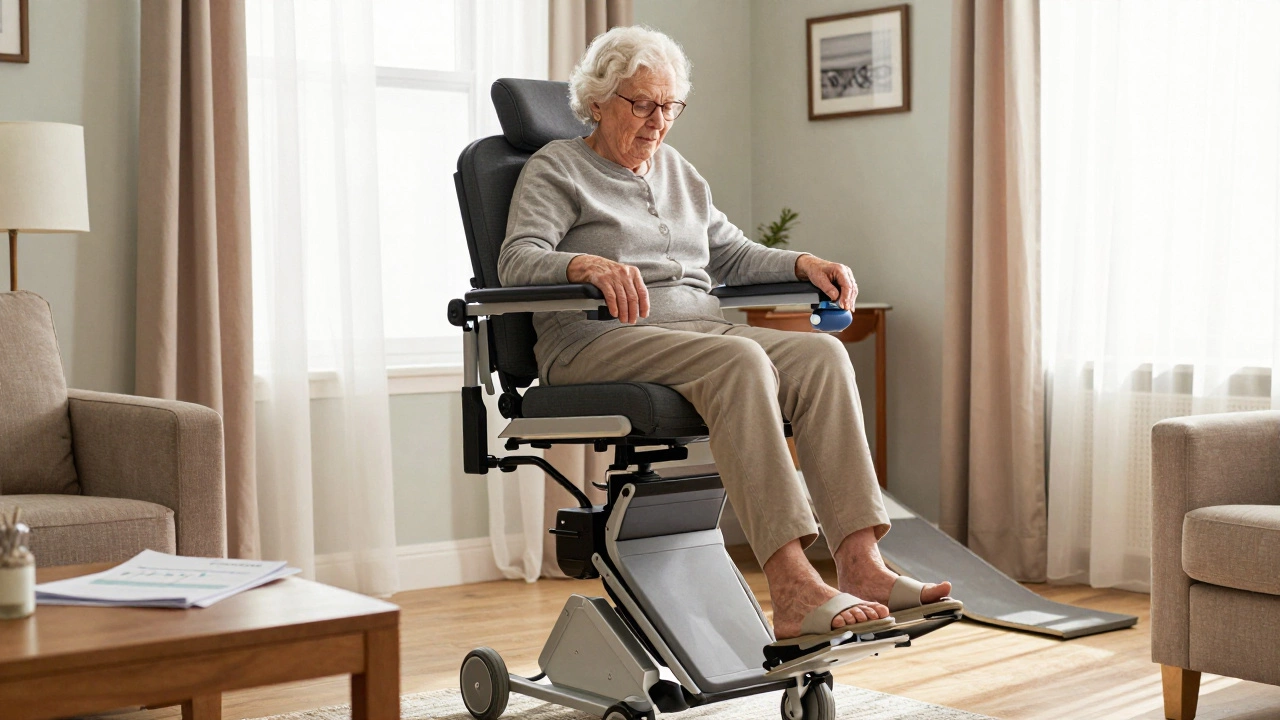
Medicare Lift Chair Cost Calculator
Is Your Lift Chair Covered?
Medicare covers lift chairs only if medically necessary and prescribed by a doctor. This tool estimates your coverage based on current Medicare rules.
Coverage Eligible
Medicare will cover your lift chair
Coverage Not Eligible
Your lift chair does not meet Medicare's medical necessity requirements.
Medicare only covers lift chairs with motorized lifting mechanisms for conditions like severe arthritis or advanced COPD.
Many seniors wonder if Medicare will cover the cost of a recliner-especially if they have trouble standing up, sitting down, or managing pain from conditions like arthritis or COPD. The short answer? Medicare might pay for a recliner, but only if it meets strict medical criteria and is classified as durable medical equipment (DME). Not every recliner qualifies. Only those that function as medical devices, not just comfort chairs, have a chance.
Medicare Part B covers equipment that’s medically necessary, prescribed by a doctor, and used in the home. A standard recliner with a pull-tab for footrests won’t cut it. But a power recliner with adjustable positioning, tilt, and lift features that help someone rise from a seated position? That’s a different story. These are often called “lift chairs” or “reclining lift chairs.” They’re designed to reduce strain on joints, prevent falls, and support breathing for people with chronic lung disease. That’s what Medicare looks for.
Here’s how it works: First, your doctor must diagnose a medical condition that makes sitting and standing extremely difficult. Common qualifying conditions include severe arthritis, neuromuscular disorders, advanced COPD, or recent hip or knee surgery. The doctor then writes a detailed prescription stating that a lift chair is medically necessary. It’s not enough to say, “It would help.” The note must explain how the chair improves mobility, reduces risk of injury, or supports essential bodily functions.
Next, the chair must be rented or purchased through a Medicare-approved DME supplier. You can’t just order one off Amazon or a furniture store and expect reimbursement. The supplier must accept assignment from Medicare, meaning they agree to bill Medicare directly and accept their payment as full payment (minus your share). If you buy from a non-approved vendor, you’ll pay everything out-of-pocket and won’t get any money back.
Medicare typically covers 80% of the approved cost after you meet your Part B deductible. For 2026, that deductible is $250. So if the lift chair costs $1,200, Medicare pays $920 (80% of $1,150 after the deductible), and you pay $280. You’ll also pay for any upgrades-like extra cushioning, heat, or massage features-that aren’t considered medically necessary. Those are extras, and Medicare won’t touch them.
What makes a lift chair eligible? It must have a motorized lifting mechanism that raises the entire seat to help the user stand. Manual recliners without lift functionality don’t qualify. The chair must also be designed for home use, not commercial or institutional settings. And it must be durable-expected to last at least three years. Medicare doesn’t cover temporary or short-term items.
Some people think a memory foam cushion or a wedge seat cushion counts. It doesn’t. While those items help with comfort or posture, they’re not classified as DME. Medicare covers cushions only if they’re part of a pressure-relieving wheelchair cushion for someone with advanced bedsores or paralysis. A simple cushion for a recliner? No coverage.
There’s a common misconception that if a chair improves quality of life, Medicare will pay. But Medicare doesn’t cover convenience or comfort. It covers function. If you can stand from a regular chair without assistance, even if it’s painful, Medicare won’t approve a lift chair. The bar is high: you must show that without the chair, you’d be at risk of falling, unable to get up, or forced to stay in bed longer than medically safe.
What about Medicaid? If you qualify for both Medicare and Medicaid, Medicaid might cover the 20% you’re responsible for, plus any upgrades. This varies by state, so check with your local Medicaid office. Some states offer additional home modification programs that might help with chair costs, especially if you’re low-income or live alone.
Many seniors try to get around the rules by buying a lift chair and submitting a claim anyway. But Medicare denies these claims 90% of the time if the documentation isn’t perfect. A vague doctor’s note, a non-approved supplier, or a chair without a motorized lift will all lead to rejection. There’s no appeal process for comfort claims. It’s strictly medical.
If you think you qualify, start by talking to your primary care doctor or a physical therapist. Ask them to evaluate your mobility and determine if a lift chair is medically necessary. If they agree, they’ll write the prescription and help you find a Medicare-approved DME supplier. Most suppliers offer free in-home consultations to assess your needs and ensure the chair fits your space and medical requirements.
Don’t assume your supplemental insurance (Medigap) will cover the rest. Some plans help with coinsurance, but not all. Check your policy. If you don’t have supplemental coverage, consider a payment plan from the supplier. Many offer 0% interest for 12-24 months, which can make the out-of-pocket cost more manageable.
There’s one last thing: Medicare doesn’t cover the cost of replacing a chair after five years, even if it breaks. You’ll need to pay for a new one yourself unless your medical condition has worsened and you qualify again. So treat it like a long-term medical investment.
If you’re unsure whether your situation qualifies, call 1-800-MEDICARE and ask for a DME coverage specialist. Have your doctor’s notes and chair specifications ready. They’ll tell you exactly what’s covered and what’s not. No guessing. No assumptions. Just facts.
Bottom line: Medicare doesn’t pay for recliners. It pays for lift chairs that help you stand. And only if you have a documented medical need, a proper prescription, and a Medicare-approved supplier. Everything else is just furniture.
Does Medicare cover any type of recliner?
Medicare only covers lift chairs-recliners with motorized lifting mechanisms that help users stand up. Standard recliners without this feature, even if they have footrests or massage functions, are not covered. The chair must be prescribed for a medical condition and meet durable medical equipment (DME) guidelines.
What medical conditions qualify for a Medicare-covered lift chair?
Qualifying conditions include severe arthritis, advanced COPD, neuromuscular diseases like Parkinson’s or MS, recent hip or knee replacement, or mobility issues that make standing from a regular chair unsafe or impossible. Your doctor must document how the chair improves your ability to move safely and independently.
Can I buy a lift chair online and get reimbursed?
No. Medicare only pays if you rent or buy the chair from a supplier that accepts Medicare assignment. Buying from Amazon, Walmart, or any non-approved vendor means you pay full price and won’t be reimbursed. Always confirm the supplier is Medicare-approved before purchasing.
Does Medicare cover cushion upgrades for the chair?
No. Medicare covers the lift mechanism and basic seating. Upgrades like memory foam, heat, massage, or custom upholstery are considered comfort features and are not covered. You’ll pay full price for any extras.
How much does Medicare pay for a lift chair?
Medicare Part B covers 80% of the approved cost after you meet your $250 deductible (2026). For example, if the chair is approved at $1,200, Medicare pays $920, and you pay $280. If your chair costs more than the approved amount, you pay the difference. Suppliers must accept Medicare’s payment as full payment.