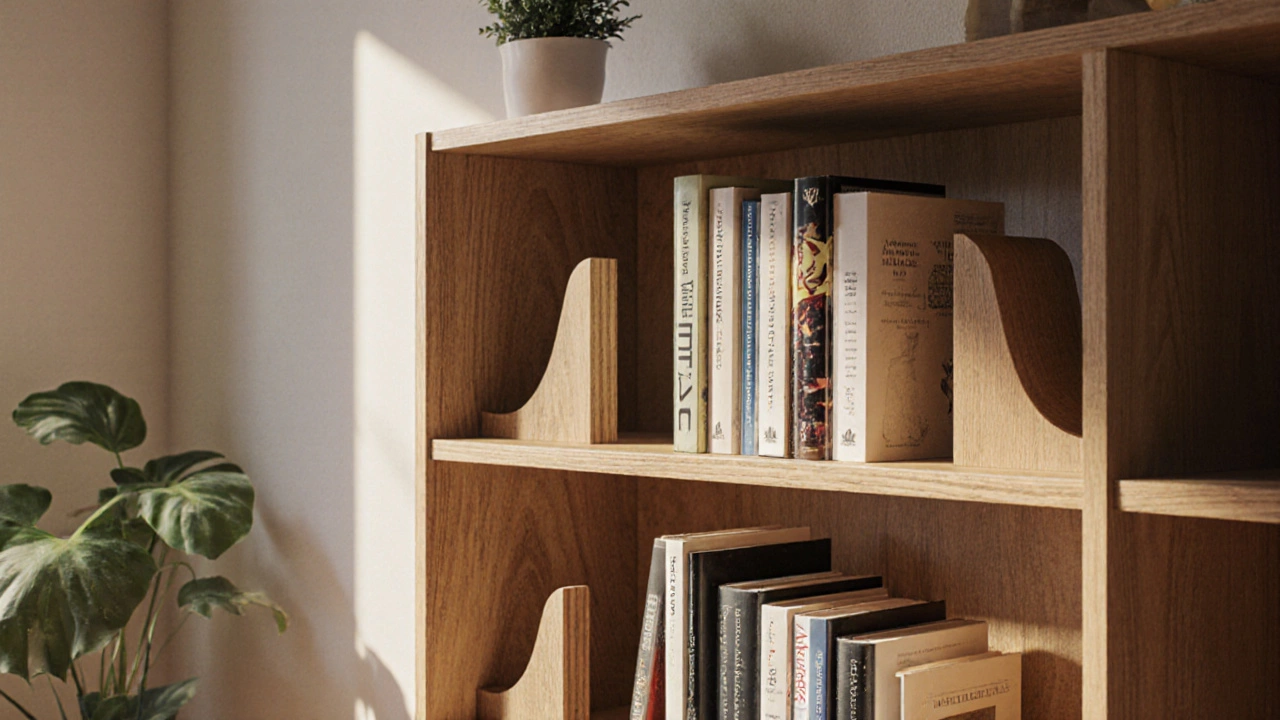
Particle Board Shelves: What They Are, How They Work, and Where to Use Them
When you need shelves that don’t cost a fortune but still hold up under everyday use, particle board shelves, a type of engineered wood made from wood chips, sawdust, and adhesive pressed into panels. Also known as chipboard, it’s the go-to material for budget-friendly storage in homes across India. You’ve probably seen them in bookshelves at IKEA, closet organizers at local stores, or even in the back of your own cupboard. They’re not solid wood, but they’re not flimsy either—if you pick the right kind and install them properly, they last.
Particle board isn’t just cheap—it’s practical. It’s lighter than plywood, easier to cut with basic tools, and takes paint or laminate well. That’s why it’s used in so many DIY shelves, custom storage units built by homeowners to fit awkward spaces. If you’re trying to fill a narrow gap above a door or build a shelf under the stairs, particle board gives you the structure without the weight. But it’s not for every job. It doesn’t handle moisture well. Don’t put it in a bathroom unless it’s sealed properly. And it won’t hold heavy tools or stacks of books if the supports are too far apart. The key? Use thick panels (at least 16mm), add edge banding to hide the rough sides, and mount them into wall studs—not just drywall.
Related materials like MDF, medium-density fiberboard, made from finer wood fibers and often smoother than particle board are better for visible surfaces, but they cost more. Plywood, layers of real wood glued together, is stronger and more moisture-resistant, but it’s heavier and pricier. So if you’re storing light items—clothes, books, decorative boxes—particle board is a smart pick. It’s the reason you can find full shelving units for under ₹2,000 in Indian markets. And with the right finish, they look clean and modern.
What you’ll find in the posts below aren’t just product listings. They’re real solutions from people who’ve faced the same problem: too much stuff, not enough space. You’ll see how to turn dead space into storage, how to pick shelves that won’t sag, and how to make even the cheapest materials look intentional. Whether you’re working with a tiny apartment in Delhi or a family home in Jaipur, the advice here is practical, tested, and focused on what actually works.