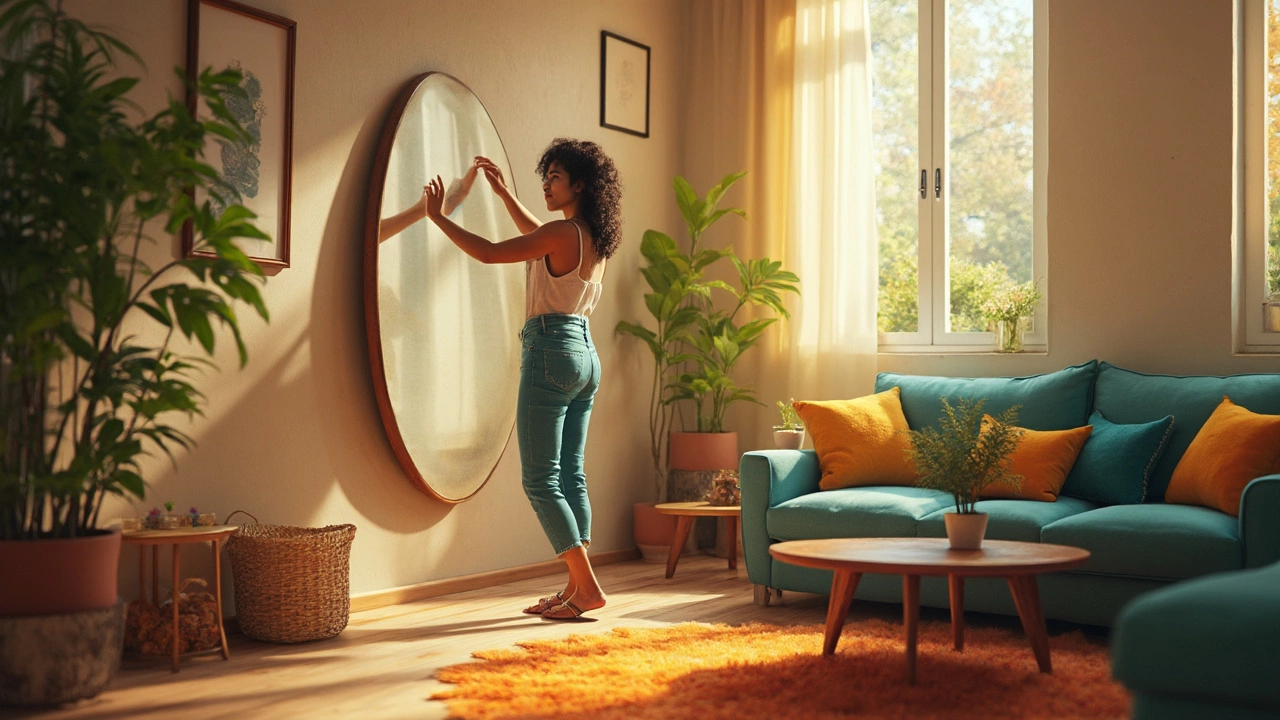
Mirrors: Types, Uses, and How to Choose the Right One for Your Home
When you think of a mirror, a reflective surface that shows an accurate image without distortion. Also known as plane mirror, it's one of the simplest and most powerful tools in home design. It’s not just glass with a backing—it’s a way to make a room feel bigger, brighter, and more intentional. A well-placed mirror can turn a dark corner into a sunlit nook, trick the eye into seeing more space, and even reflect a view you didn’t know you had.
Mirrors come in different forms, and not all of them are created equal. A plane mirror, a flat, non-curved surface that reflects light without warping is what you’ll find in most homes—it’s the standard for accuracy. Then there are decorative mirrors with frames, vintage ones with aged glass, or even large full-length mirrors that double as statement pieces. The kind you pick changes how the space feels. A thin, frameless mirror in a bathroom adds modern calm. A heavy, ornate mirror in a hallway becomes a focal point. And a mirror placed opposite a window? That’s not decoration—it’s daylight multiplication.
Where you put a mirror matters just as much as what it looks like. Put one behind a lamp, and you double the light. Put one across from a cluttered shelf, and you amplify the mess. That’s why mirror placement is a silent design rule—used by pros and overlooked by most. In small spaces, mirrors are the cheapest way to create the illusion of depth. In bathrooms, they’re part of the morning ritual. In bedrooms, they help with outfit checks and lighting balance. And yes, the way you use a mirror can even affect your eye comfort—staring at one too often in harsh light can strain your eyes, which is why smart placement considers both function and feel.
You don’t need to spend a fortune to get value from a mirror. A simple, well-placed plane mirror can do more than a dozen expensive decor items. The key is matching the mirror to the room’s purpose. A bathroom mirror needs to be practical and easy to clean. A living room mirror should complement the style, not clash with it. And if you’re working with tight space, a mirror on a door or inside a closet can unlock hidden storage potential without taking up floor space.
What you’ll find below isn’t just a list of posts—it’s a real-world guide to mirrors as they’re actually used. From why flat mirrors are called plane mirrors and how they work, to how to use them to fix lighting problems, hide clutter, or make a tiny room feel open. You’ll see how people are using mirrors in zen bathrooms, turning dead space into functional reflections, and choosing the right size and shape for their homes. No fluff. Just practical insights from real homes, real problems, and real solutions.