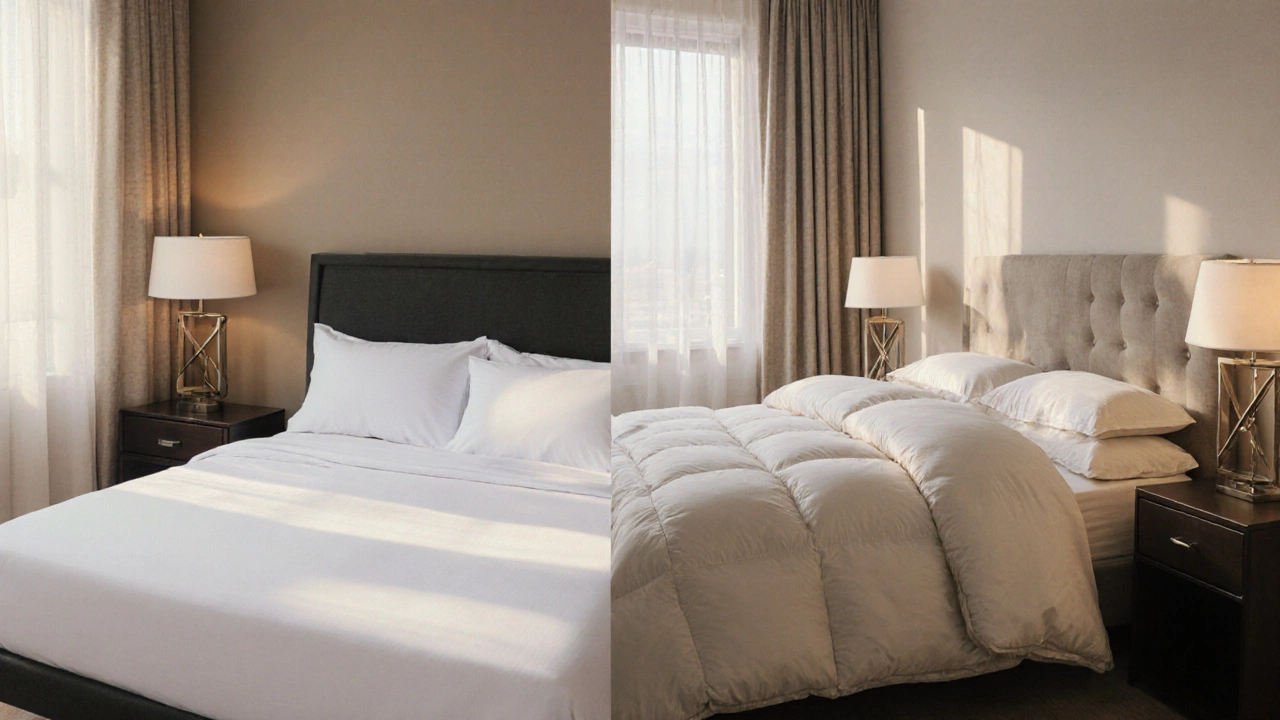
Why Europeans Skip the Top Sheet - Bedding Secrets
Explore why most Europeans skip the top sheet, covering climate, duvet culture, hygiene, and how to decide the best bedding setup for your sleep.
When we talk about top sheet, a flat, rectangular piece of fabric laid over a fitted sheet and under your blanket or duvet. Also known as flat sheet, it’s the quiet unsung hero of a good night’s sleep—not flashy, not trendy, but still essential for comfort, hygiene, and temperature control. You might think it’s outdated, especially with the rise of duvet covers and all-in-one bedding sets. But if you’ve ever woken up sweaty, tangled, or with your blanket pulled into a ball, you know a top sheet isn’t just tradition—it’s practical.
A top sheet works with your fitted sheet and bedding to create layers. The fitted sheet hugs the mattress. The top sheet sits smooth on top. Then comes your blanket, comforter, or duvet. This setup lets you adjust warmth without touching your outer layer. In summer, you can sleep under just the top sheet. In winter, you pull the duvet over it. No need to wash your whole comforter every week—just the top sheet. That’s less laundry, less wear on your expensive bedding, and better hygiene. A top sheet also keeps your duvet cover clean longer, which means fewer washes and longer life for your favorite cover.
Not all top sheets are made the same. Cotton is the most common, but the weave matters. Percale feels crisp and cool—great for hot sleepers. Sateen is softer, with a slight sheen, and holds warmth better. Linen is breathable and gets softer over time, but wrinkles easily. Thread count? Don’t get fooled. A 200-thread-count percale often feels better than a 600-thread-count sateen that’s heavy and traps heat. Look for long-staple cotton like Egyptian or Pima. It lasts longer and feels smoother after years of washing.
And yes, you can skip it. But if you’ve ever tried to sleep with a duvet directly on your skin, you know it’s not always comfortable. Duvets can be bulky, uneven, or too warm. A top sheet gives you a clean, light barrier. It’s especially useful if you share a bed. No more pulling the duvet into your side of the mattress. Just tuck the top sheet in on your side, and you’ve got your own cozy zone.
People in India, the UK, and the US still use top sheets in homes with traditional bedding setups. They’re common in hotels for a reason—clean, simple, and easy to change. Even if your bedroom is small, your storage is tight, or your style is minimalist, a top sheet doesn’t need to take up space. Fold it neatly, tuck it under your bed, or roll it in a basket. It’s one of the few bedding items that’s both functional and low-maintenance.
What you’ll find below are real, practical guides on how to use, choose, and care for top sheets—and how they fit into bigger ideas like bedroom storage, fabric choices, and sleep comfort. From figuring out the best fabric for your climate to learning how to fold one without a mess, these posts cut through the noise. No fluff. Just what works.
Explore why most Europeans skip the top sheet, covering climate, duvet culture, hygiene, and how to decide the best bedding setup for your sleep.