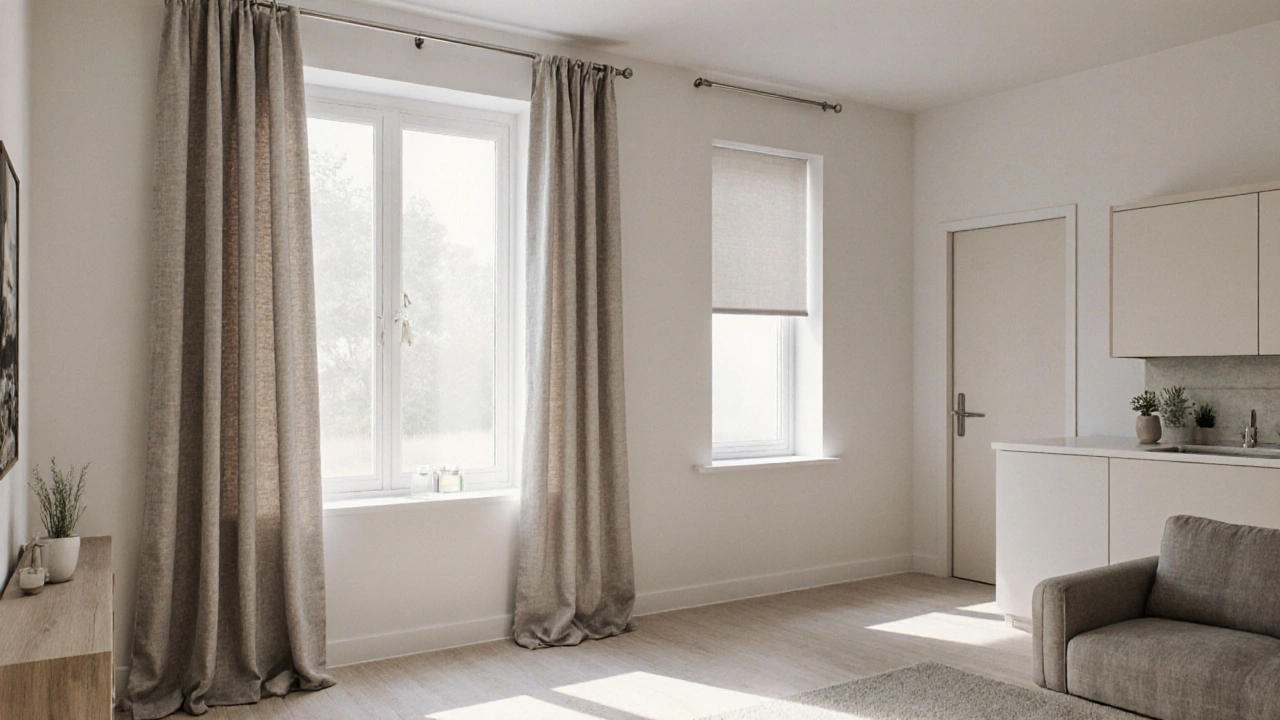
Matching Curtains: How to Choose the Perfect Pair for Your Windows
When you think about matching curtains, a pair of window treatments designed to work together in style, function, and fabric. Also known as coordinated window drapes, they’re not just about looks—they’re about creating balance in a room. Too many people buy curtains one at a time and end up with mismatched pairs that look sloppy. But the right matching curtains pull a space together without saying a word. They frame your windows, control how much light comes in, and even help with noise and temperature. It’s not magic. It’s just smart design.
What makes curtains match isn’t just color. It’s weight, texture, length, and how they hang. A heavy blackout curtain on one side and a thin sheer on the other? That’s not matching—it’s confusing. True matching means both sides behave the same way. If one pulls back smoothly, so should the other. If one filters sunlight gently, the other should too. That’s why sheer curtains, lightweight, translucent fabrics that let in soft daylight while keeping glare and prying eyes out often work best as a pair. Same with blackout curtains, thick, lined fabrics designed to block nearly all light and add insulation. They’re not just for bedrooms. Use them in living rooms if you watch TV during the day and want to cut glare.
People often forget that curtains are part of a bigger system. They interact with your windows, furniture, and even the time of day. If your sofa is a deep gray, your curtains shouldn’t be a bright white unless you’re going for contrast. If your walls are warm beige, cooler gray curtains might feel off. That’s why window privacy, the ability to see out without being seen in matters just as much as style. Layering sheer curtains behind heavier ones gives you control—you can let in morning light while keeping your afternoon conversations private. It’s a simple trick, but it changes everything.
You don’t need to spend a fortune to get matching curtains right. Many of the best setups use affordable fabrics that still look intentional. Look for curtains with the same lining, same rod pocket size, and same heading style. Even if the pattern is subtle, keeping the base fabric identical makes the pair feel like they were meant to be together. And don’t ignore the hardware. Matching rods and tiebacks help tie the whole look together.
Below, you’ll find real advice from people who’ve tried every option—from plain cotton to textured linen. You’ll learn how to pick curtains that don’t just match, but actually make your room feel more complete. Whether you’re dealing with a tiny apartment window or a tall living room bay, there’s a solution here that works for your space.