Makeup Mirror: Types, Placement, and How to Choose the Right One
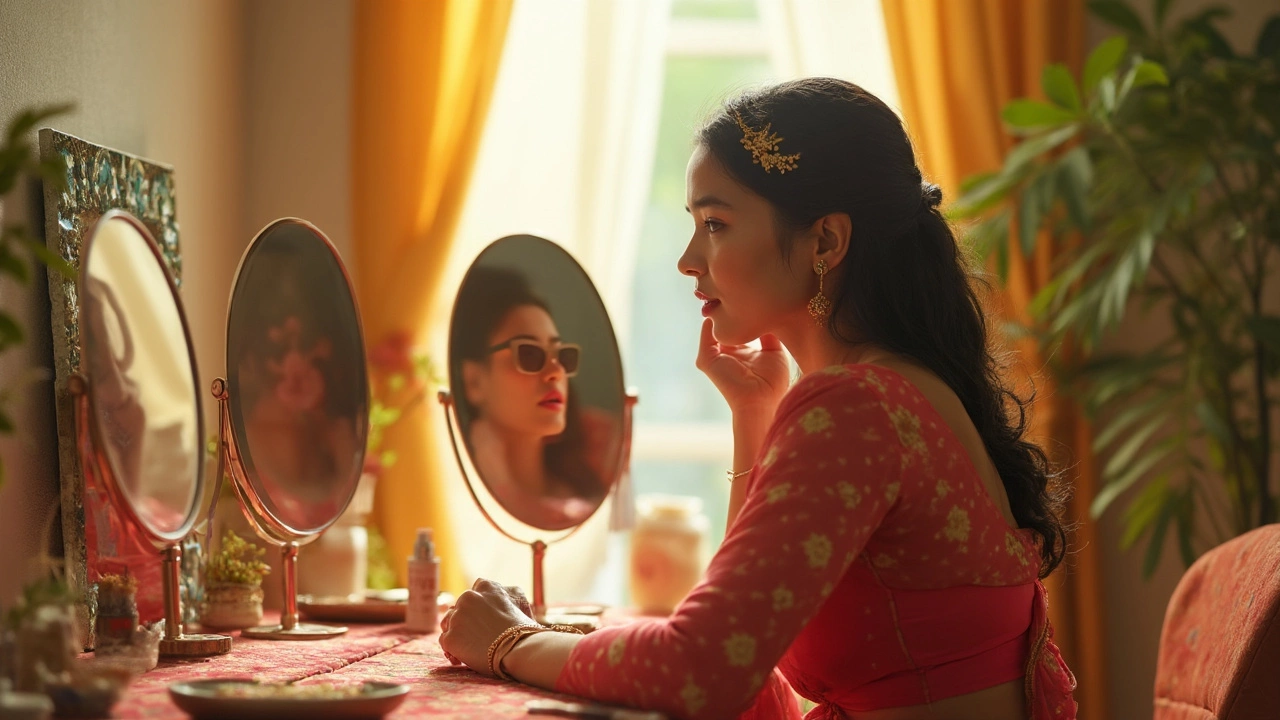
When you're getting ready, a makeup mirror, a specialized mirror designed for precise application of cosmetics, often with magnification and lighting. Also known as a vanity mirror, it’s not just a reflective surface—it’s the tool that turns guesswork into confidence. Not all mirrors are made the same. A basic flat mirror might show your face, but a good makeup mirror helps you see every lash, every blemish, every stroke of contour with clarity. That’s why placement, lighting, and magnification matter more than size.
Many people overlook how lighting, the quality and type of illumination around a mirror that affects color accuracy and shadow reduction impacts their makeup. Natural daylight is ideal, but since most of us apply makeup indoors, LED-lit mirrors are the next best thing. Look for ones with adjustable color temperatures—warm, cool, or daylight settings—so your makeup looks the same in your bathroom as it does outside. A mirror without good lighting is like driving with foggy glasses.
Then there’s magnification, the ability of a mirror to enlarge your reflection, typically ranging from 3x to 10x, for detailed work like tweezing or eyeliner. Most people think 5x is enough, but if you have fine hairs, small pores, or wear contact lenses, you might need 10x. Don’t just grab the highest number, though—high magnification narrows your view. A dual-sided mirror (1x on one side, 5x or 10x on the other) gives you flexibility. And if your bathroom is tight, a wall-mounted or freestanding mirror with a swivel base can save space without sacrificing function.
Some mirrors come with Bluetooth speakers or USB charging ports, but those are nice-to-haves. What you really need is a mirror that doesn’t distort, doesn’t flicker, and doesn’t cast shadows where you’re applying foundation. You don’t need a luxury brand—just one that’s built right. Check the frame for stability, the glass for clarity, and the base for weight so it doesn’t tip over when you lean in.
And placement? Don’t just stick it above the sink. Position it where natural light hits your face in the morning, or opposite your main light source to avoid glare. If you’re using it in low light, make sure the mirror’s own lights are bright enough to replace daylight. A mirror that’s too high or too low forces you to tilt your head, which throws off your symmetry.
What you’ll find below are real, practical posts that cover everything from how to pick the right size for a small bathroom to why some mirrors make your skin look dull under LED light. You’ll see how people are using dead space in bedrooms for mirror setups, how to match your mirror with your bathroom style, and even why some folks skip the fancy models and go for simple, flat mirrors that do the job just fine. No fluff. Just what works.