Hand-Knotted Rug: What Makes It Special and How to Choose One
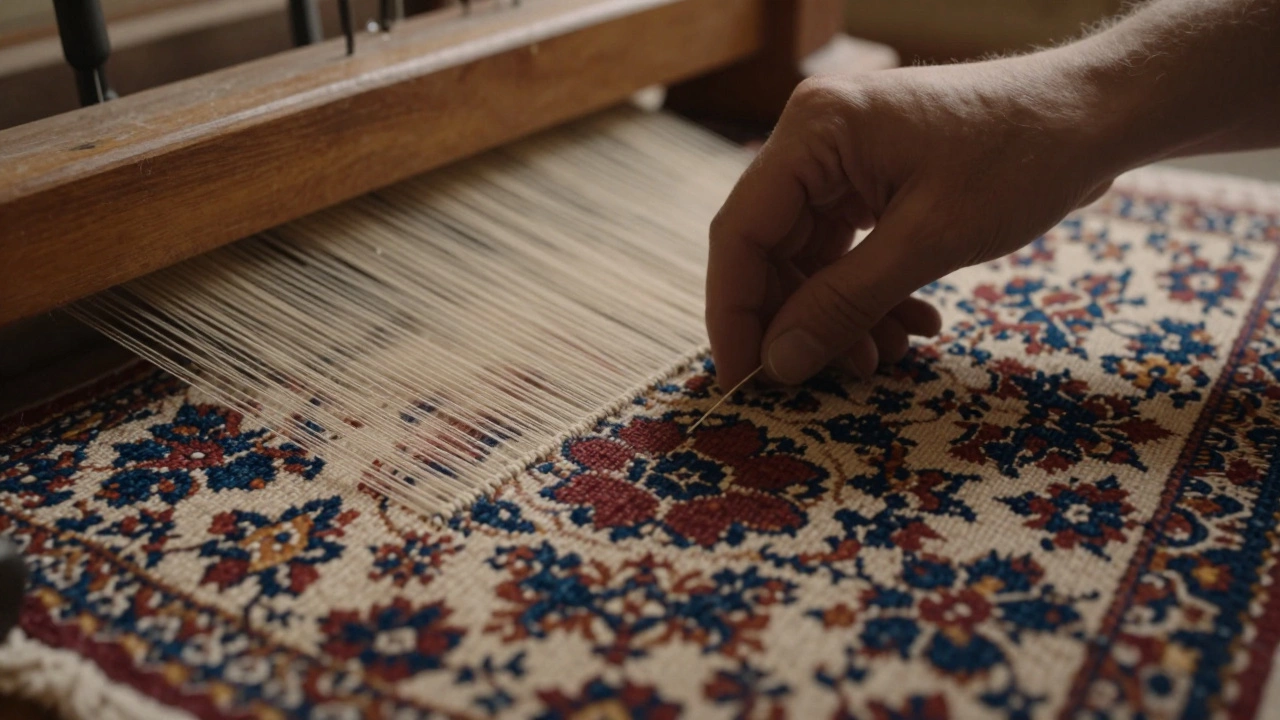
When you see a hand-knotted rug, a floor covering made by tying individual knots by hand, often using wool or silk. Also known as Persian rug, it’s one of the most durable and valuable types of area rugs you can own. Unlike machine-made rugs that are stamped out in minutes, each hand-knotted rug takes weeks—or sometimes months—to finish. That’s why they’re not just decorations; they’re heirlooms.
What sets a hand-knotted rug apart is its construction. The knots are tied one by one onto a warp thread, creating a dense, long-lasting pile. The more knots per square inch, the finer the detail and the higher the quality. You’ll often see these rugs made with wool, a natural fiber that’s soft, resilient, and naturally stain-resistant, or silk, a luxurious fiber used for intricate designs and high-end pieces. These materials don’t just look good—they hold up. A well-made hand-knotted rug can last 50, 80, even 100 years if cared for. That’s something a cheap synthetic rug simply can’t match.
These rugs aren’t just about beauty—they’re tied to culture, craftsmanship, and time. Many come from regions like Iran, India, Turkey, and Nepal, where weaving is passed down through generations. The patterns aren’t random; they often carry meaning—floral motifs for growth, geometric shapes for protection, or medallions for balance. When you buy a hand-knotted rug, you’re not just buying floor coverings—you’re supporting a tradition.
How do you know if a rug is truly hand-knotted? Flip it over. If you see the same pattern clearly on the back as on the front, it’s hand-knotted. Machine-made rugs have a woven backing with no visible knots. Also, check the edges—hand-knotted rugs have overlocked or braided edges that are part of the weave, not sewn on. And don’t be fooled by price alone. Some cheap rugs look hand-knotted but are glued or stitched. Real ones have slight imperfections because they’re made by hand, not machines.
Choosing one isn’t just about style. Think about where it’ll go. High-traffic areas like living rooms or hallways need dense knots and durable wool. Bedrooms can handle silk or softer blends. Size matters too—leave at least 12 inches of floor showing around the edges for balance. And remember: a good hand-knotted rug doesn’t need to be expensive to be quality. You can find solid pieces that fit any budget if you know what to look for.
Below, you’ll find real guides on how to pick the right one, how to clean it without ruining it, how to spot fake ones, and how to match it with your furniture. These aren’t theory pieces—they’re practical tips from people who’ve lived with these rugs, bought them, and learned what works. Whether you’re looking for a statement piece or a quiet, timeless floor layer, you’ll find what you need here.