Flat Mirrors: How to Choose, Place, and Style Them for Your Home
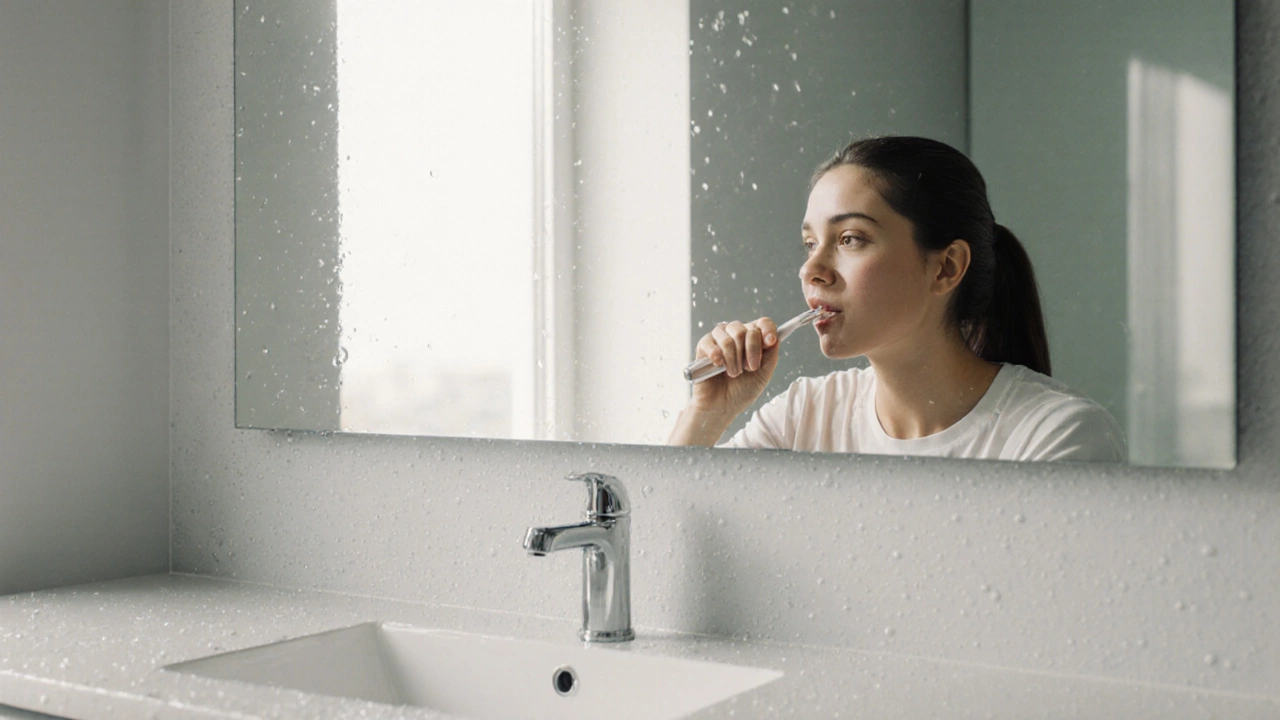
When you think of a flat mirror, a smooth, non-curved reflective surface used to enhance space and light in interiors. Also known as wall mirror, it’s one of the simplest tools to make a room feel bigger, brighter, and more intentional. Unlike ornate or convex mirrors, flat mirrors don’t distort—what you see is what you get. That’s why they’re everywhere: above vanities, beside entryways, behind sofas, even in small bathrooms where every inch counts.
Flat mirrors work because they do two things well: they reflect light and they create the illusion of depth. A mirror on a wall opposite a window can double the natural light in a room. A tall, narrow flat mirror in a hallway can make the space feel longer. And a large one behind a console table? Instantly turns a plain wall into a focal point. You don’t need fancy lighting or expensive decor—just the right mirror in the right spot.
Not all flat mirrors are the same. The frame matters—wood, metal, or frameless each gives a different vibe. A thin black frame feels modern. A thick, distressed wood frame leans vintage. And if you’re hunting for something with history, a vintage mirror, a mirror with age, patina, or handmade craftsmanship from past decades. Also known as antique mirror, it often has slight imperfections that add character can become the star of your room. You’ll find these in our collection—some with original backing, others with subtle wear that tells a story.
Placement is everything. Put a flat mirror where it catches something beautiful—a plant, a piece of art, a view outside. Avoid pointing it at a blank wall or a cluttered corner. Think of it like a window: it should reveal something worth seeing. And if you’re in a small space, a full-length flat mirror doesn’t just help you pick out clothes—it tricks the eye into thinking the room is twice as big.
People forget mirrors are functional art. They’re not just for grooming. They’re for balance, for flow, for making a cramped room feel open. That’s why you’ll see them in our posts about zen bathrooms, dead space hacks, and bedroom storage. A flat mirror can turn an unused wall above a dresser into a stylish feature. It can hide clutter by reflecting a tidy corner instead of the messy one. It can even make a tiny kitchen feel less closed-in.
And if you’re shopping for one, don’t just go by size. Check the glass quality—cheap mirrors have a greenish tint or blurry edges. Look for a sturdy backing and secure hanging hardware. A heavy mirror needs real wall anchors, not just nails. And if you’re placing it in a bathroom, make sure it’s rated for moisture. You don’t want it fogging up or rusting after a few months.
Our collection includes guides on how to identify vintage mirrors, how to use dead space for storage, and how to style windows with privacy that still lets light in—all of which tie back to how mirrors interact with your space. Whether you’re looking for a simple wall mirror to brighten a dark hallway or a statement piece to anchor a living room, the right flat mirror doesn’t just reflect your room—it improves it.
Below, you’ll find real examples of how people are using flat mirrors in their homes—not just as decorations, but as smart, practical tools for space, light, and style.