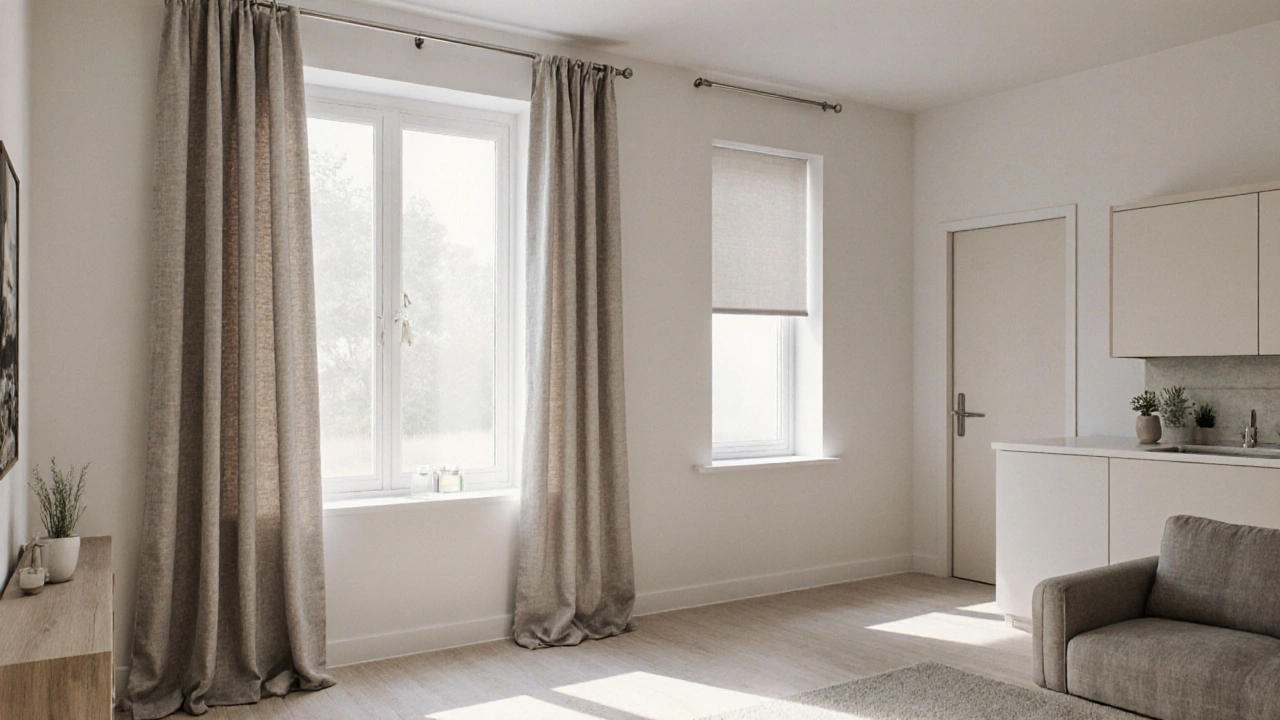
Curtain Coordination: How to Match Curtains with Your Room Style
When you think about curtain coordination, the process of choosing curtains that match your room’s color, texture, and function. Also known as window dressing, it’s not just about covering windows—it’s about tying your whole space together. Too many people buy curtains based on sale tags or pretty patterns, only to realize they clash with the sofa, the walls, or even the lighting. Good curtain coordination doesn’t mean matching everything perfectly. It means creating balance—so your room feels intentional, not random.
Think of curtains as the frame around a painting. If the frame is too busy, it steals attention from the art. If it’s too plain, the art looks lost. That’s why curtain styles, whether they’re sheer, blackout, or layered matter just as much as color. A lightweight linen curtain works for a bright living room where you want soft light. A heavy velvet drape adds warmth and privacy to a bedroom. And if you’re dealing with a small window, layered curtains—sheer underneath, blackout on top—give you control over light without sacrificing style.
Then there’s curtain colors, the shade that either blends in or stands out. Neutral tones like beige, gray, or soft white are safe because they work with almost anything. But if your room has bold furniture or art, a curtain in a muted version of that color can pull the whole look together. Don’t feel stuck with matching exactly—complementary colors often look more modern and intentional. A navy curtain with mustard yellow pillows? That’s not a mistake. That’s design.
And let’s not forget texture. A room with lots of smooth surfaces—glass tables, polished floors—can feel cold. Adding a curtain with a subtle weave, like linen or cotton twill, brings in warmth without adding clutter. On the flip side, if your room already has patterned rugs or upholstered chairs, skip busy curtain prints. Let the fabric do the talking.
People often think curtain coordination is about matching the curtains to the walls. But the real trick is matching them to the mood you want. Do you want calm? Go for soft, flowing fabrics in cool tones. Do you want energy? Try a bold stripe or a rich jewel tone. The best curtain choices don’t shout—they connect.
You’ll find posts here that break down plain versus patterned curtains, how to pick the right fabric for light control, and even how to fix mismatched curtains without replacing them. No fluff. No trends that last a season. Just real advice from people who’ve been there—trying to make a room feel like home, one curtain at a time.