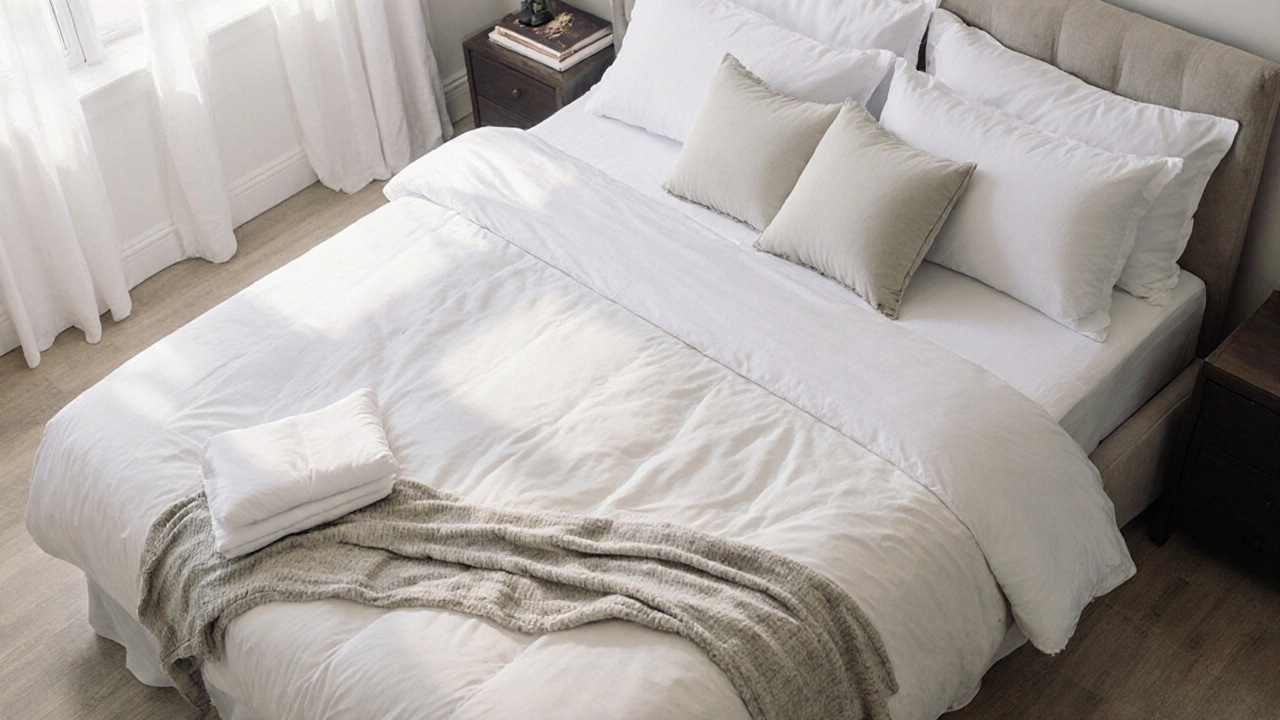
Bedding Explained: What’s Included and How to Choose the Right Set
Learn what items make up bedding, explore common fabrics, pick the right pieces for your sleep style, and master care tips for lasting comfort.
When you think of bedding, the sheets, blankets, and covers you sleep with every night. Also known as bed linen, it’s not just about looking nice—it’s about how well you sleep, how often you wash it, and whether it actually keeps you comfortable. Most people buy bedding because it looks good in a catalog, not because it fits their sleep style. But bedding isn’t one-size-fits-all. In Europe, most people skip the top sheet entirely and use just a duvet. In the U.S., you’ll see layers of fitted sheets, flat sheets, and blankets. Neither is wrong. But knowing the difference helps you pick what actually works for you.
Bedding includes more than just sheets. It’s the top sheet, the flat sheet that lies between you and your blanket or duvet, the duvet, a quilt-like cover filled with down, synthetic fibers, or cotton, pillowcases, and even mattress protectors. The real question isn’t what’s included—it’s what you need. If you sleep hot, a lightweight cotton top sheet might be your best friend. If you live in a cold climate, a thick duvet with a flannel bottom sheet could be the difference between tossing and turning or sleeping through the night. And if you hate doing laundry, skipping the top sheet entirely (like most Europeans do) cuts your washing load in half.
There’s no magic fabric or thread count that makes bedding better. It’s about fit, feel, and function. A high thread count doesn’t mean better sleep—it just means more expensive. Egyptian cotton feels soft, but if you sweat at night, it’ll trap heat. Bamboo blends breathe better. Linen is cool in summer, warm in winter, and gets softer with every wash. Your pillowcase material matters too—silk reduces friction on skin and hair, while cotton is easier to clean. And don’t forget the fit. A fitted sheet that slips off the corners every night isn’t bedding—it’s a frustration.
What you choose depends on your body, your climate, and your habits. Do you like to be wrapped up? Go for a heavier duvet. Do you kick off covers? Try a lighter setup with a blanket you can pull back easily. Do you have allergies? Look for hypoallergenic fills and washable fabrics. The best bedding doesn’t come from a brand—it comes from matching what’s on the bed to how you actually sleep.
Below, you’ll find real guides on what bedding means in everyday use, how Europeans handle it differently, how to replace just your sheets without buying a whole new set, and how to pick the right materials without getting tricked by marketing. No theory. No fluff. Just what to buy, what to skip, and why it actually makes a difference to your sleep.
Learn what items make up bedding, explore common fabrics, pick the right pieces for your sleep style, and master care tips for lasting comfort.

Class B bedding is often a mystery to many, but understanding its unique characteristics can enhance your sleeping experience. This article unpacks what sets Class B apart from other bedding categories, delving into its material quality, design, and comfort level. Readers will learn valuable tips on choosing the right Class B bedding for their needs. We also explore interesting facts about how this bedding type can affect sleep and relaxation. Useful insights ensure you're equipped to make an informed bedding choice.