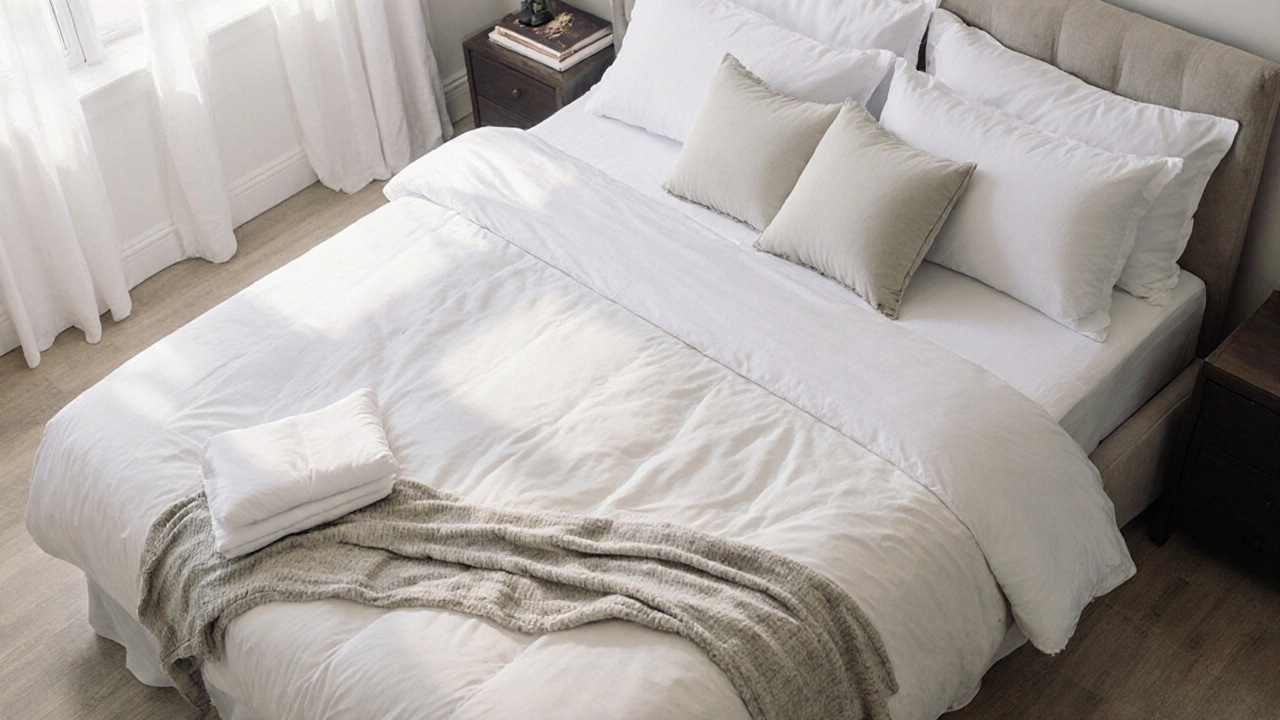
Bedding Explained: What’s Included and How to Choose the Right Set
Learn what items make up bedding, explore common fabrics, pick the right pieces for your sleep style, and master care tips for lasting comfort.
When we talk about bedding, the sheets, pillowcases, duvet covers, and blankets you sleep on every night. Also known as bed linen, it’s not just about comfort—it’s about hygiene, sleep quality, and long-term value. Most people wash their sheets once a week, but that’s only the start. True bedding care means knowing how to handle different fabrics, when to replace items, and how to protect your mattress and pillows from wear and sweat.
Your mattress protector, a thin barrier between you and your mattress is often ignored, but it’s one of the smartest investments you can make. It stops sweat, dead skin, and spills from sinking into your mattress, which means you won’t need to replace it every few years. Similarly, pillow maintenance, including fluffing, airing out, and washing every few months keeps dust mites away and prevents lumps from forming. Many don’t realize that pillows lose support after 1-2 years—even if they still look fine.
Washing sheets sounds simple, but wrong settings can shrink, fade, or tear them. Cotton and linen need cool water and gentle cycles. Synthetic blends handle heat better but can trap odors if you use too much detergent. Always check the label. And never overload the washer—bedding needs room to move. Drying on low heat or air-drying outside keeps fibers strong and prevents yellowing. If you live in a humid climate, drying sheets indoors can leave them damp and musty. That’s not just uncomfortable—it’s unhygienic.
Seasonal changes mean you’re probably switching out heavy winter duvets for lighter summer ones. But storing them wrong can ruin them. Never use plastic bins—they trap moisture and cause mildew. Instead, use breathable cotton storage bags and toss in a cedar block or lavender sachet. Keep them off the floor, away from direct sunlight, and in a cool, dry closet. Same goes for extra blankets and pillows. If you’re not using them for months, they need air, not a sealed tomb.
And here’s something most people miss: your bedding doesn’t just get dirty from sweat. It picks up lotions, hair products, pet dander, and even pollen from your skin and hair. That’s why washing pillowcases twice a week helps if you have acne or allergies. Changing your sheets regularly isn’t about luxury—it’s about control. Control over germs, odors, and sleep quality.
Some of the posts below show how Europeans skip the top sheet, why duvet covers matter more than you think, and how to spot when your sheets are past their prime. Others give you real hacks for storing bedding in small spaces, using dead space under the bed, or choosing fabrics that last. You’ll find tips on replacing just the pillow inserts, not the whole set, and how to tell if your mattress protector is still doing its job. This isn’t about fancy laundry rituals—it’s about making your bed a place that helps you rest, not one that drains your energy.
Learn what items make up bedding, explore common fabrics, pick the right pieces for your sleep style, and master care tips for lasting comfort.