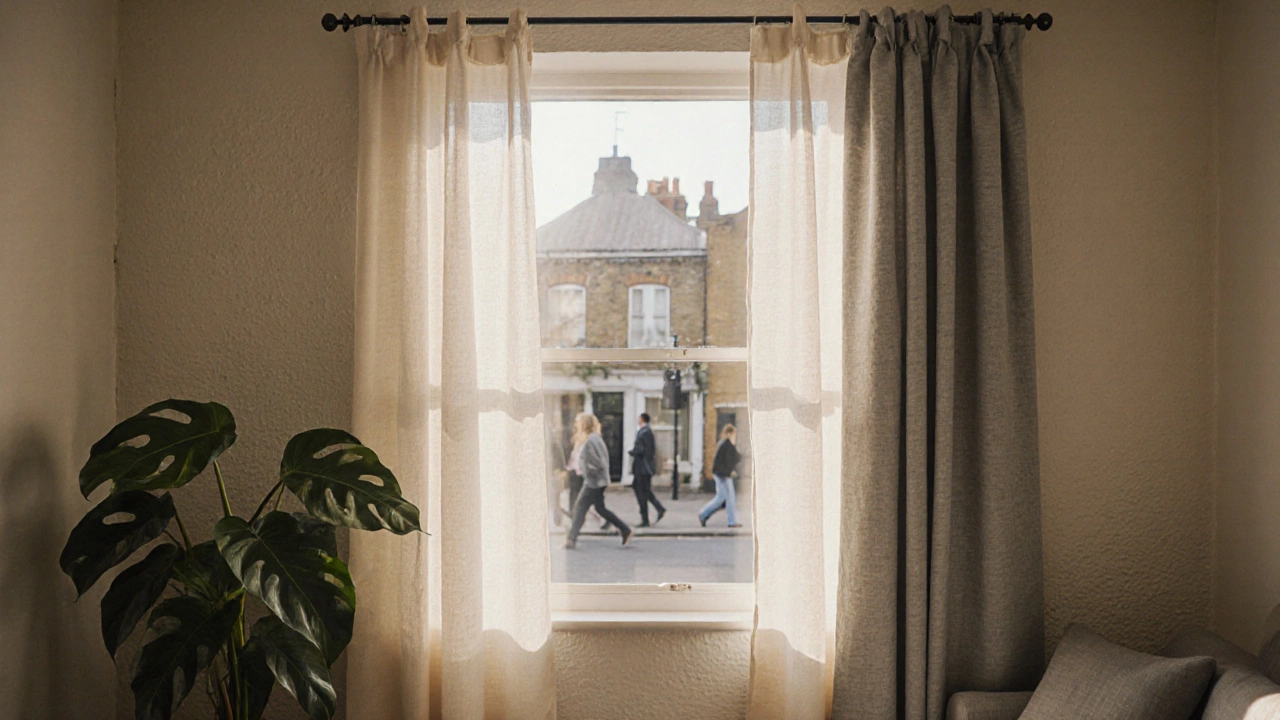
How to Make Windows Private But Still Let in Light
Learn how to keep your windows private without blocking natural light using layered curtains, privacy film, and smart fabric choices. Practical tips for homes in the UK.
When you need sunlight but not glare, light filtering curtains, a type of window covering that allows soft, diffused light into a room while reducing harsh brightness and UV exposure. Also known as sheer curtains, they’re the middle ground between blackout shades and bare windows—perfect for living rooms, bedrooms, and home offices where you want natural light without the strain. Unlike heavy drapes that block everything, these curtains let in enough brightness to make a space feel open and airy, while still giving you privacy during the day. You don’t need to close them at sunrise to keep neighbors from seeing in—they do the job quietly, without drama.
They work best when paired with other window treatments. A lot of people use them over blinds or roller shades for layered control. In the morning, you pull the blinds up and leave the light filtering curtains open. By afternoon, when the sun hits too hard, you close the curtains for a gentle glow. They’re also great for reducing fading on furniture and floors. UV rays still get through, but much slower—so your rugs, couches, and artwork last longer. If you’ve ever noticed your favorite armchair losing color after a year, light filtering curtains are one of the cheapest fixes you can make.
They’re not just about function. The texture and weave matter. Linen, cotton, and polyester blends are the most common, and each gives a different feel. Linen looks natural and slightly rumpled—great for calm, earthy rooms. Polyester is easier to clean and holds its shape better, ideal for busy homes with kids or pets. The weave determines how much light gets through: tighter weaves block more, looser ones let in more glow. You can even find ones with subtle patterns or light colors that bounce light around the room instead of absorbing it. That’s why they’re so popular in modern homes—clean lines, soft shadows, no harsh edges.
They’re also low maintenance. Most can be machine washed, unlike heavy velvet or silk drapes. No dry cleaning needed. No special hardware either—you can hang them on standard rods. If you’re renting, they’re one of the few window treatments you can take with you when you move. And if you live in a place with long, bright summers, they’re a no-brainer. You get daylight without the heat buildup. No AC running overtime just to cool down a sun-blasted room.
You’ll find them in almost every room where people spend time during the day. Kitchens use them to brighten countertops without glare on screens. Bedrooms use them to ease into the morning without an alarm clock of sunlight. Home offices use them to reduce eye fatigue while keeping the view. They’re not flashy, but they’re reliable. And in a world full of smart gadgets and overpriced decor, sometimes the simplest thing is the one that actually works.
Below, you’ll find real posts from people who’ve tried different styles, figured out what fabrics hold up over time, and learned how to layer them with other window treatments. No theory. No fluff. Just what works in actual homes.
Learn how to keep your windows private without blocking natural light using layered curtains, privacy film, and smart fabric choices. Practical tips for homes in the UK.