Is Cutlery Considered Kitchenware? Explained
Discover why cutlery belongs to kitchenware, learn the differences between flatware and cutlery, and get tips on choosing, caring for, and storing your dining tools.
When you sit down to eat, you don’t think about the dining utensils, tools like forks, spoons, and knives used to serve and eat food. Also known as cutlery, they’re the quiet heroes of every meal—holding your pasta, scooping your soup, or cutting through your steak. But not all dining utensils are made the same. Some bend after a few uses. Others feel cheap in your hand. The best ones? They last years, fit comfortably, and actually make eating better.
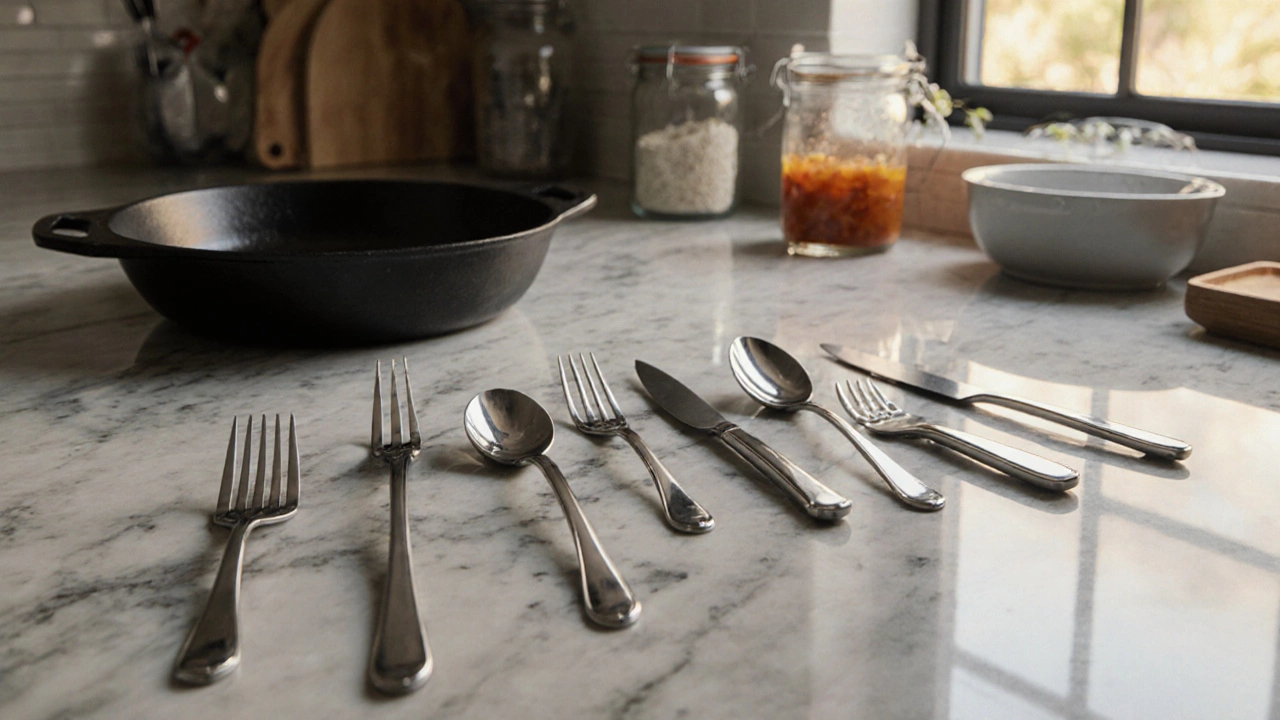
Most people buy dining utensils without thinking twice. But if you’ve ever struggled with a flimsy fork that bent on a meatloaf, or a spoon that slipped out of your grip, you know it matters. A good fork, a utensil with tines designed to pierce and hold food should have sturdy prongs and a balanced weight. The spoon, a bowl-shaped tool for scooping liquids and soft foods needs a deep, smooth bowl—not too shallow, not too wide. And a knife, a cutting tool with a sharp edge for slicing food doesn’t need to be a chef’s blade, but it should cut through butter without dragging. These aren’t fancy details—they’re basics that affect your daily experience.
People often buy dining utensils in sets, but not all sets are worth it. Some come with too many pieces you’ll never use—like fish forks or dessert spoons that just sit in a drawer. A simple set of four forks, four spoons, and four knives is usually enough for a household. Look for stainless steel that’s labeled 18/10—that means 18% chromium and 10% nickel, which resists rust and keeps its shine. Avoid plastic-coated handles; they crack over time. Weight matters too. Heavy enough to feel solid, but not so heavy it tires your hand after a meal.
You’ll also notice that dining utensils change with trends. Right now, matte finishes and rounded edges are popular—not because they’re flashy, but because they feel more natural in the hand. Some folks even mix metals: a brushed steel fork with a polished spoon. It’s not about matching perfectly—it’s about creating a table that feels like yours. And if you’ve got kids, look for utensils with thicker grips or silicone tips. They’re not just cute—they’re practical.
There’s no magic formula for picking dining utensils, but there are clues. Try holding them before you buy. Do they feel like they belong in your hand? Do they sit steady on the plate? Do they make you want to eat more slowly, savor the food? That’s the real test. The posts below show real people who’ve tested different sets, fixed broken utensils, and learned what works in small kitchens, busy households, and formal dinners. You’ll find honest reviews, smart storage hacks, and tips to make your cutlery last longer. No fluff. Just what actually helps when you’re reaching for your fork at dinnertime.
Discover why cutlery belongs to kitchenware, learn the differences between flatware and cutlery, and get tips on choosing, caring for, and storing your dining tools.