Is Cutlery Considered Kitchenware? Explained
Discover why cutlery belongs to kitchenware, learn the differences between flatware and cutlery, and get tips on choosing, caring for, and storing your dining tools.
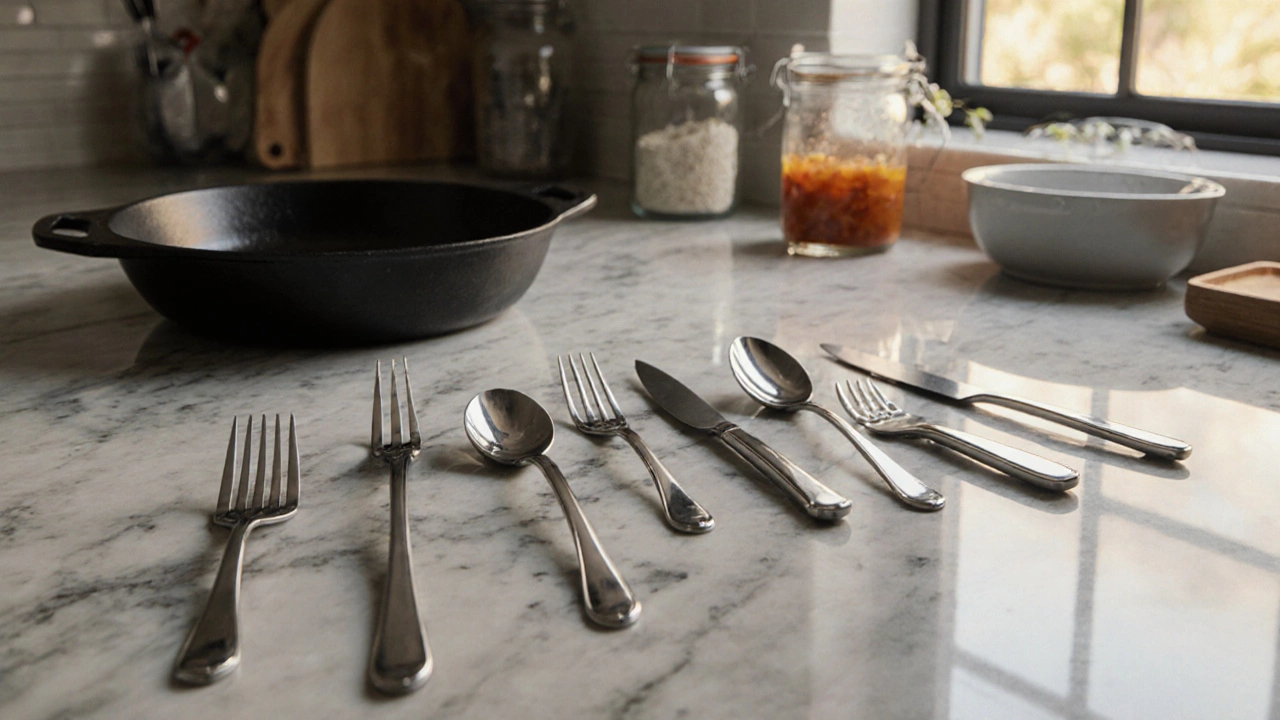
When you sit down to eat, you don’t think about the cutlery, a set of eating utensils including forks, knives, and spoons used for serving and consuming food. Also known as dining utensils, it’s the tool you reach for without a second thought—until it’s dull, flimsy, or just plain wrong for the job. Good cutlery doesn’t shout. It doesn’t need to. It just works. It feels balanced in your hand, glides through food without slipping, and lasts longer than your last kitchen renovation.
Most people buy cutlery because it’s on sale or matches their plates. But that’s like buying shoes just because they’re the same color as your socks. The real question is: does it do its job? A good fork, a pronged utensil designed to pierce and hold food should grip food, not let it slide off. A proper knife, a blade-shaped tool used for cutting, slicing, and spreading doesn’t need to be a chef’s knife—it just needs to cut butter without bending. And a spoon, a bowl-shaped utensil used for scooping and stirring liquids or soft foods should hold soup without dripping it all over your lap.
Material matters more than you think. Stainless steel is the standard for a reason—it doesn’t rust, it cleans easily, and it won’t react with acidic foods. Avoid cheap plated sets that chip after a few washes. Weight matters too. Too light, and it feels like a toy. Too heavy, and your wrist gets tired after one meal. Look for pieces that feel solid but not clumsy. The handle should fit your grip, not force you to adjust.
You don’t need twenty pieces. You need five: a dinner fork, a dinner knife, a dinner spoon, a teaspoon, and maybe a salad fork. Everything else is decoration. Real cutlery isn’t about matching sets or fancy patterns. It’s about function. It’s about the way a knife slices through a tomato without crushing it. The way a spoon doesn’t bend when you stir hot coffee. The way a fork holds a piece of pasta without letting it escape.
And it’s not just for eating. Cutlery shows up in storage hacks, kitchen organization, and even how you use dead space in your drawers. If your utensils are tangled or hard to reach, you’re wasting time every day. That’s why smart storage solutions—like drawer dividers or wall-mounted racks—start with good cutlery. You can’t organize junk. You organize what works.
What you’ll find below isn’t a list of the best cutlery brands. It’s a collection of real, practical insights from people who’ve lived with bad cutlery and finally figured out how to fix it. You’ll learn how to pick pieces that last, how to store them so they don’t clatter every time you open a drawer, and why the simplest set often outperforms the most expensive one. No fluff. No marketing. Just what actually makes a difference at the table.
Discover why cutlery belongs to kitchenware, learn the differences between flatware and cutlery, and get tips on choosing, caring for, and storing your dining tools.